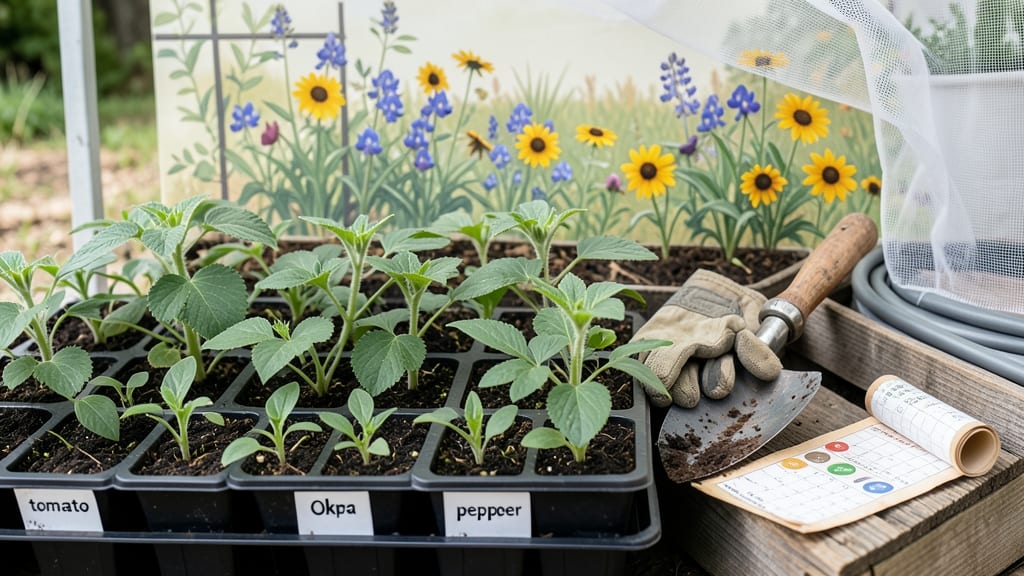
Planting a garden in Texas means timing your crops to avoid frost in the north and scorching heat in the south—get it wrong, and your hard work could vanish in days.
Texas gardeners know timing is everything—plant too early, and frost ruins your hard work; too late, and the summer heat wipes out your crops. But with the Lone Star State’s diverse climate zones, the perfect planting window varies dramatically from East to West.
Whether you’re in North Texas or the Gulf Coast, the key is knowing your last frost date and matching crops to the season. Cool-season veggies like lettuce and peas thrive in February–March, while tomatoes and peppers need the warmth of April–May.
Below, I break down the exact months to plant for your zone, how to prep your soil, and the one trick that adds 4–6 weeks to your growing season—no matter where you are in Texas.
🌱
When to Plant General Texas Garden Texas Garden
Jan
❄️
Feb
🌱
Mar
🌱
Apr
🌱
May
🌱
Jun
🌱
Jul
☀️
Aug
☀️
Sep
🍂
Oct
🍂
Nov
🍂
Dec
❄️
Texas planting zones explained: when to start seeds and transplants by region
Texas stretches from USDA Zone 6a in the Panhandle to Zone 11 along the Gulf Coast, creating wildly different planting windows. These zones—often called A through F by Texas gardeners—dictate when to start seeds indoors, transplant seedlings, and avoid frost damage.
For example, Zone A (North Texas) has a last frost date of February 15, while Zone F (South Texas) rarely sees frost at all.
Cool-season crops like broccoli and spinach thrive in Zone A and B from September to March, but in Zone E and F, you can plant them year-round.
Meanwhile, tomatoes and peppers love the heat—start them in Zone A after April 15, but in Zone F, they’ll grow happily year-round with proper watering.
Microclimates add another layer of complexity. Urban areas like Dallas and Austin can be 5–10°F warmer than rural zones due to heat islands, while high deserts like El Paso (Zone C) have cooler nights. Always adjust your planting timeline by 1–2 weeks if your yard sits in a microclimate.
Here’s a quick reference for seed-starting indoors vs. direct sowing across Texas’ zones:
| Zone |
Last Frost |
First Frost |
Start Cool-Season Seeds Indoors |
Transplant Cool-Season Crops |
Start Warm-Season Seeds Indoors |
| A (North TX) |
Feb 15 |
Dec 1 |
Jan 1–Feb 15 |
Feb 20–Mar 15 |
Mar 1–Apr 15 |
| B (Central TX) |
Feb 28 |
Nov 15 |
Feb 1–Mar 1 |
Mar 15–Apr 1 |
Mar 15–Apr 30 |
| C (West TX) |
Mar 1 |
Nov 1 |
Feb 15–Mar 15 |
Mar 20–Apr 15 |
Apr 1–May 15 |
| D (East TX) |
Mar 15 |
Nov 10 |
Feb 1–Mar 1 |
Mar 15–Apr 1 |
Mar 15–Apr 30 |
| E (Gulf Coast) |
Jan 1 |
Dec 15 |
Year-round |
Jan 1–Apr 1 |
Year-round |
| F (South TX) |
None |
None |
Year-round
Best month-by-month planting calendar for Texas gardens (cool vs. warm seasons)
Texas gardeners know timing is everything—plant too early, and frost ruins your hard work; too late, and the summer heat wipes out your crops. The key is balancing cool-season crops like lettuce and peas with heat-loving plants such as tomatoes and okra.
Since Texas spans USDA zones 6a to 11, I’ll break this down by month, adjusting for North Texas’ shorter growing season and South Texas’ longer heat.
For North Texas (zones 7b-8a), focus on early spring and fall planting, while South Texas (zones 9a-11) can extend warm-season crops later.
Always check your last frost date (typically mid-February in North Texas, January in South Texas) and first frost date (December in North, November in South) to plan around these critical windows.
1
January–February (Cool Season)
North Texas: Start cool-season veggies indoors (lettuce, spinach, kale). Transplant broccoli and cabbage after last frost risk passes (mid-February).
2
March–April (Warm Season Prep)
All Zones: Sow warm-season crops like tomatoes, peppers, and cucumbers 4–6 weeks before last frost. Harden off seedlings for transplanting in May.
3
May–June (Peak Warm Season)
North Texas: Plant okra, sweet potatoes, and southern peas after soil warms (70°F+). South Texas: Extend planting into July for heat-tolerant crops like black-eyed peas.
4
July–August (Summer Maintenance)
All Zones: Succession plant bush beans and zucchini for continuous harvests. Mulch heavily to retain moisture and protect roots from heat stress.
5
September–October (Fall Cool Season)
North Texas: Plant spinach, radishes, and carrots 6–8 weeks before first frost. South Texas: Extend planting into November for greens like collards.
6
November–December (Winter Prep)
All Zones: Plant garlic and onions for spring harvest. Cover winter greens with row fabric to protect from light frosts in North Texas.
In North Texas, prioritize early spring and fall planting due to shorter frost-free seasons. For example, sow peas and lettuce in March and broccoli in September to avoid heat stress. Meanwhile, South Texas gardeners can push limits: plant tomatoes in April and sweet potatoes in June for extended harvests.
Pro tip: Use succession planting every 2–3 weeks for crops like bush beans and lettuce to maximize yields. Always water deeply in the morning to prevent fungal diseases, especially during Texas’ humid summers.
With this calendar, you’ll avoid the common pitfalls of frost damage or heat stress while keeping your garden productive year-round.
🌱
★★★★★4.6(15 reviews)
|