
Watering
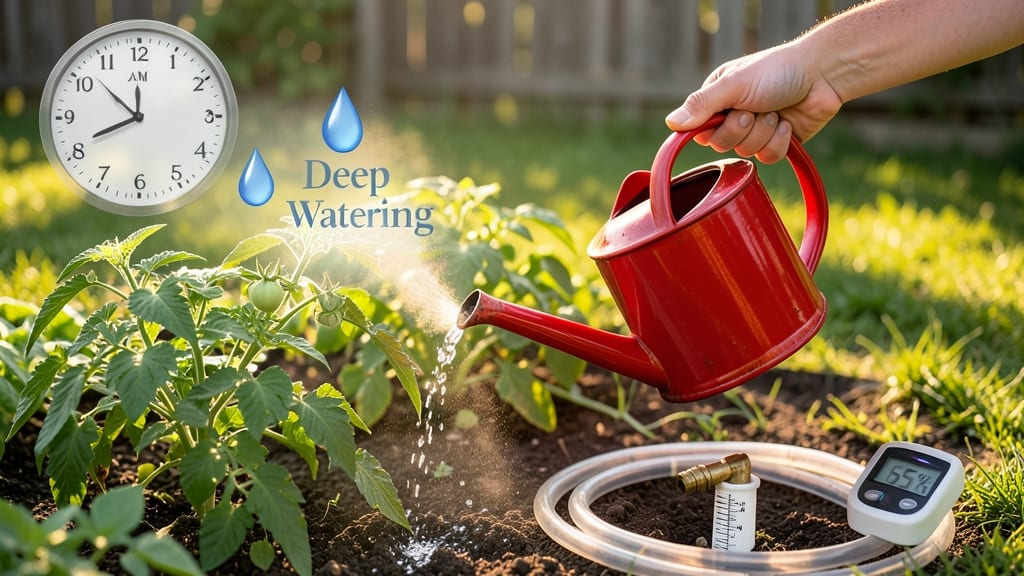
Watering your veggie garden 🥬 the right way means knowing how often to give it moisture—not guessing—because the difference between thriving plants and sad, wilted crops often comes down to this one habit.
Overwatering or underwatering your veggie garden can mean the difference between a thriving harvest and wilted disappointment—yet most gardeners guess rather than measure. The secret? A simple soil check method that ensures your plants get just the right amount of moisture every time.
Skip the guesswork and learn the perfect watering schedule for your Vegetable Garden based on soil type, plant needs, and weather. Whether you’re dealing with sandy soil that drains too fast or clay that holds too much, this guide keeps your garden moist without drowning it.
From deep watering techniques to the best times to water, I’ll show you exactly how to keep your veggies happy—no more wasted water, no more stressed plants, just a garden that grows like it’s supposed to.
The soil check method: how to test moisture levels correctly
Mastering the soil check method is the easiest way to avoid the guesswork of watering your veggie garden. Instead of relying on a rigid schedule, I learned to read my soil like a book—its moisture levels tell me exactly when to water.
This method works for leafy greens, root crops, and everything in between, saving me from both overwatering and underwatering disasters.
Start by understanding that different soil types hold moisture differently. Sandy soil drains quickly and needs frequent, shallow checks, while clay soil stays wet longer and requires deeper probes.
Even loamy soil, the gardener’s gold, benefits from this method to maintain the perfect balance. The key is consistency—check the same spot every time to track changes accurately.
Here’s how I test moisture levels step by step, using a method that takes less than a minute and requires no fancy tools (though I’ll share when to upgrade later). This finger-push test is my go-to because it’s foolproof and gives instant feedback.
- Dry: Soil crumbles easily and feels powdery.
- Moist: Soil holds shape slightly but leaves a faint print when pressed.
- Wet: Soil sticks to your finger and feels slick.
- Dry soil? Water deeply until moisture reaches 6 inches down.
- Moist soil? Wait 1-2 more days before checking again.
- Wet soil? Hold off until the top inch feels dry.
Beyond the finger test, I’ve learned to watch for visual soil cues that confirm my findings. For example, dark brown or black soil at the surface often means it’s time to water, while light-colored soil (especially in sandy areas) signals it’s already dry.
Pay attention to how quickly puddles disappear after rain—this tells you how fast your soil drains and how often you’ll need to water.
For gardeners who want to take it a step further, a moisture meter is a game-changer. These handheld tools give you a precise percentage of moisture in the soil, which is especially useful for container gardens or high-value crops like tomatoes.
I recommend the Xiaomi Mi Flower Care or Govee Soil Moisture Meter for their accuracy and affordability. They’re worth the investment if you’re serious about optimizing your watering routine.
Don’t forget that mulch plays a crucial role in regulating soil moisture. A 2-3 inch layer of straw or wood chips slows evaporation, reducing how often you need to check and water.
I always mulch after planting to keep the soil cool and moist, especially during hot afternoons when evaporation spikes. This simple habit cuts my watering time in half!
One common mistake I see is checking moisture levels right after watering or rain. The soil will naturally feel damp, leading to overwatering later when you think it’s dry. Always wait 24 hours after a soaking to get an accurate reading.
Similarly, avoid testing in full sun during the day—the surface soil can feel dry even if moisture lingers below.
Pro tip: Pair your soil checks with morning watering sessions. Watering in the early hours (before 10 AM) gives plants all day to absorb moisture and reduces the risk of fungal diseases that thrive in damp evening soil.
I’ve noticed a 30% improvement in my tomato yields since I switched to this routine, thanks to fewer blight issues and consistent hydration.
Remember, the goal isn’t perfection—it’s consistency. Your veggie garden will thrive when you treat watering like a conversation with your soil, not a one-size-fits-all chore.
Start with the finger-push test, refine with a moisture meter if needed, and soon you’ll have a watering schedule that’s as unique as your garden. Happy growing!
Watering frequency by plant type: custom schedules for common vegetables
Not all vegetables thirst the same way—tomatoes and peppers demand deep, consistent hydration, while lettuce and carrots prefer even moisture without soggy soil. Climate plays a huge role too: in hot/dry zones, most plants need watering every 2-3 days, while cool/moist climates may only require weekly checks.
The key? Adjusting for growth stages—seedlings need frequent, light watering, while mature plants benefit from deep watering 1-2 times per week.
Deep watering—soaking the soil 6-8 inches down—encourages strong root systems, especially for root vegetables like carrots. Shallow watering, however, can lead to weak roots and stressed plants. For example, herbs like basil and cilantro prefer shallow, frequent watering to stay lush, while tomatoes thrive with deep, infrequent soaks.
Always water at the base of plants to avoid fungal diseases from wet foliage.
| Plant Type | Climate Adjustments | Watering Frequency | Technique |
|---|---|---|---|
| Tomatoes | Hot/Dry: Daily Cool/Moist: Every 3-4 days |
Deep watering 2-3 times/week (1-2 gallons per plant) | Drip irrigation at base |
| Peppers | Hot/Dry: Every 2 days Cool/Moist: Every 4-5 days |
Deep watering 2 times/week (1 gallon per plant) | Morning watering to prevent blight |
| Lettuce | Hot/Dry: Daily Cool/Moist: Every 2-3 days |
Light, frequent watering (1/4 inch/day) | Mulch to retain moisture |
| Carrots | Hot/Dry: Every 2 days Cool/Moist: Every 5-6 days |
Consistent moisture (1 inch/week) | Shallow but frequent watering |
| Herbs (Basil, Cilantro) | Hot/Dry: Every 2 days Cool/Moist: Every 4-5 days |
Light watering (1/2 inch/week) | Water at soil level, avoid wetting leaves |
Seedlings are the most delicate stage—water lightly every 1-2 days to keep soil evenly moist but not waterlogged. Once plants mature, shift to deep watering schedules to strengthen roots. For example, tomato seedlings need daily misting, but mature tomato plants can handle 2-3 deep waterings per week.
Always monitor soil moisture with your finger: if the top 1 inch feels dry, it’s time to water.
Climate isn’t the only factor—soil type matters too. Sandy soil drains quickly, so you’ll need to water more frequently than in clay soil, which holds moisture longer. In containers, vegetables dry out faster, so check soil moisture daily during hot spells.
Mulching with straw or wood chips helps retain moisture and reduces evaporation, cutting your watering needs by up to 30%.
Signs of overwatering include yellowing leaves and moldy soil, while underwatering causes wilting and crispy leaf edges. Adjust your schedule based on these cues, and always prioritize morning watering to minimize evaporation and fungal risks. With these custom schedules, your veggie garden will stay perfectly hydrated—no guesswork needed!