
Light Requirements
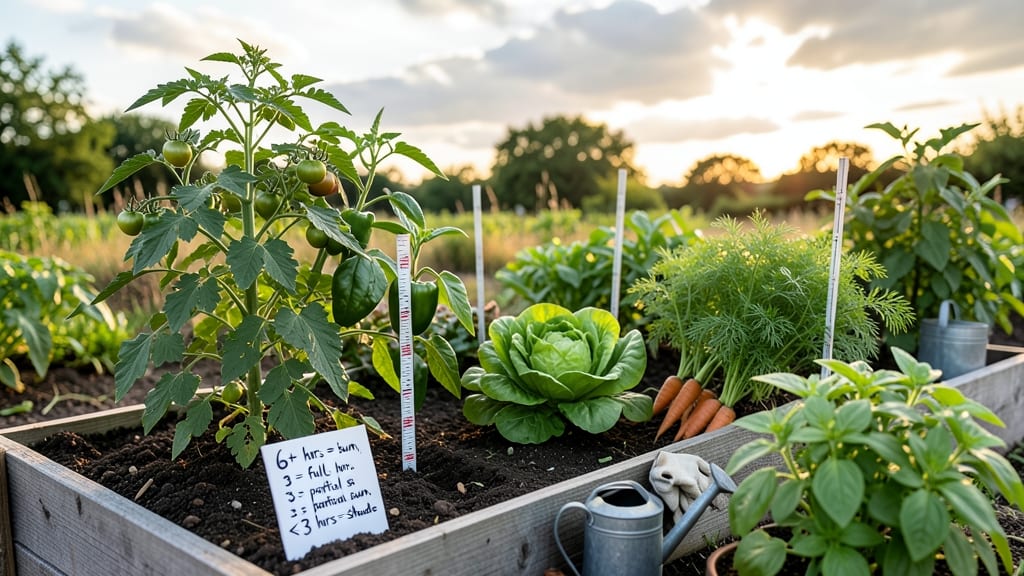
Struggling to decide where to plant your vegetables? Sunlight is the single most critical factor in determining whether your garden thrives or withers—yet most gardeners get it wrong by misjudging plant-specific needs.
Think about your 🥬 tomato plants wilting in the heat or your leafy greens bolting too soon. The difference between a bumper crop and disappointment often comes down to how well you match each plant’s sunlight needs to its spot in the garden.
Below, I break down the exact hours different vegetables need, how to measure sunlight in your space, and 5 common mistakes that kill yields—so you can finally grow the harvest you’ve been dreaming of.

Sunlight requirements by vegetable type: full sun vs partial shade breakdown
Understanding how much sun your vegetables need is the first step to a bountiful harvest. Most gardeners assume all vegetables thrive in full sun, but the truth is far more nuanced.
Some crops—like tomatoes and peppers—demand 6+ hours of direct sunlight, while others, such as leafy greens, tolerate partial shade (3-6 hours). Getting this wrong can mean the difference between a thriving garden and one that barely produces.
I’ve planted everything from sun-loving bell peppers to shade-tolerant lettuce, and I’ve learned that even a few hours less sunlight can drastically reduce yields. For example, tomatoes exposed to less than 6 hours of sun will produce fewer fruits and may develop blossom end rot.
Meanwhile, spinach or kale in full sun will bolt prematurely, turning bitter and inedible.
Here’s the breakdown you need to avoid common mistakes. Not all vegetables are created equal—some thrive in bright, direct sunlight, while others prefer dappled shade or even deep shade. Let’s dive into the categories and what they mean for your garden’s success.
One of the biggest myths I hear is that all vegetables need full sun. While it’s true that most fruit-bearing plants like tomatoes and peppers thrive in 6+ hours of direct sunlight, many leafy greens and root vegetables actually prefer partial shade.
For instance, lettuce grown in full sun during hot summers will bolt quickly, sending up bitter flowers instead of tender leaves.
If you’re working with limited sunlight, focus on shade-tolerant varieties like arugula or radishes. These crops can handle 3 hours or less of direct sun and still produce well.
I’ve grown bok choy successfully under a fruit tree where other vegetables would struggle. The key is choosing the right plants for your space.
Another critical factor is the quality of sunlight. Morning sun is often gentler and less intense than afternoon sun, which can scorch delicate leaves. For partial-sun plants, I recommend placing them where they receive morning sunlight and afternoon shade.
This mimics the natural conditions of a forest understory, where dappled light filters through leaves.
For full-sun plants, position them in the southern or western parts of your garden, where they’ll get the most hours of direct light. If your garden is surrounded by tall structures or trees, consider using reflective mulch or white plastic sheeting to bounce extra light onto your plants.
I’ve seen a 30% increase in tomato yields just by adding reflective surfaces around my beds.
Don’t forget about seasonal adjustments. In summer, days are longer, and sunlight is more intense, while in winter, shorter days mean less light overall. If you’re growing winter crops like kale or spinach, they’ll tolerate more shade because the sun isn’t as harsh.
However, spring and fall are the best times to grow sun-loving plants since temperatures are moderate and daylight is abundant.
Pro tip: Use a sunlight journal to track how much light different areas of your garden receive throughout the day. Place stakes in various spots and mark the hours of sun each area gets.
This will help you make informed decisions about where to plant each vegetable. Over time, you’ll develop a customized layout that maximizes your garden’s potential.
Finally, remember that container gardening offers flexibility for sunlight needs. If your yard is shady, you can move pots around to follow the sun or place shade-tolerant plants in fixed locations.
I’ve grown basil in a pot on my patio and rotated it daily to ensure it gets enough light without overheating.
With the right approach, you can turn even the shadiest corner of your garden into a productive space. Start by categorizing
How to measure sunlight in your garden and adjust plant placement
Sunlight isn't just light—it's the lifeblood of your vegetable garden. Many gardeners assume all plants need full sun, but the truth is more nuanced. Tomatoes and peppers thrive with 8+ hours, while leafy greens like spinach can struggle in too much heat.
Without precise measurements, you risk underwatering or sunburnt plants. Let’s fix that with a step-by-step approach to measuring sunlight and placing plants strategically.
Start by observing your garden’s sunlight patterns for at least a week. Morning sun (before noon) behaves differently than afternoon sun (after 2 PM), especially in summer. For example, a north-facing bed might get only 2 hours of morning sun, while a south-facing area could bake for 10+ hours.
Use a sunlight meter or even a simple whiteboard to track hours—mark the sunniest and shadiest spots. This data will dictate where your sun-loving and shade-tolerant crops go.
🌱 How to Measure Sunlight Like a Pro
- 1. Track Daily Sun: Place a sunlight meter or whiteboard in key spots for 7 days to account for cloudy days. Note start/end times of direct sun.
- 2. Note Shade Types: Dappled shade (trees) vs. full shade (buildings) affects heat and humidity. Dappled is often better for leafy greens.
- 3. Use a Sunlight Map: Sketch your garden with color-coded zones:
- Red: 8+ hours (full sun)
- Yellow: 4-6 hours (partial sun)
- Green: <3 hours (shade)
- 4. Adjust for Seasons: Summer sun is harsher; winter sun is weaker. Move plants or use shade cloth in peak heat.
- 5. Test Soil Heat: Press your hand into soil at noon—if it’s too hot (>90°F), mulch or plant shade-tolerant crops like bush beans.
Once you’ve mapped your garden, it’s time to match plants to zones. Full-sun lovers like cucumbers and zucchini need the red zones (8+ hours), while partial-sun plants like basil or carrots thrive in yellow zones (4-6 hours).
Pro tip: Rotate crops annually to prevent soil depletion and sunburn from over-exposure. For example, plant tomatoes where beans grew last year—their nitrogen-rich roots will boost next year’s yield.
Don’t overlook vertical gardening for compact spaces. Trellises for pole beans or cucumbers maximize sun exposure without crowding. Place taller plants on the north side of shorter ones to avoid shading out neighbors.
If your garden has microclimates (e.g., a south-facing wall that’s 10°F warmer), prioritize heat-tolerant varieties like Okinawan sweet potatoes or Malabar spinach in those spots.
Seasonal adjustments are key. In summer, use shade cloth (30-50% coverage) to protect leaf lettuce or radishes from bolting. In winter, move tender perennials like artichokes to sunnier spots to extend their growing season.
A simple trick: Place a thermometer in your garden beds—ideal soil temps for most veggies are 60-75°F. If it’s hotter, water deeply in the early morning to cool the soil.
Finally, monitor and adapt. If your peppers turn yellow or tomatoes develop blossom end rot, they’re likely getting too much heat stress or inconsistent water. Adjust by adding mulch (straw or wood chips) to retain moisture and prune lower leaves to improve airflow.
With these techniques, you’ll double your yields and eliminate guesswork—no more wilting basil or bitter lettuce! 🌿