
Picking
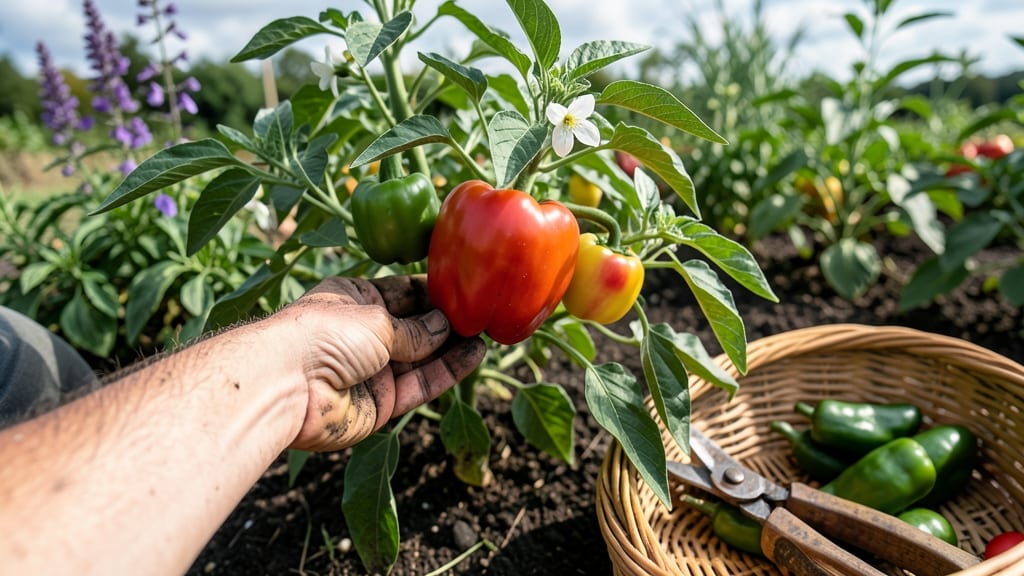
To pick bell peppers from your garden at their peak flavor, timing is everything—wait too long and they’ll turn mealy, harvest too early and you’ll miss out on sweetness.
I’ve spent years watching my 🌶️ bell peppers transform from glossy green to vibrant red, only to discover the perfect harvest window is narrower than I thought. One week too late, and the texture turns rubbery; one week too soon, and the flavor is underwhelming.
This guide breaks down the exact color cues, firmness tests, and environmental factors that determine when your peppers are ready—so you never miss the sweet spot again.
You’ll learn how to spot the ideal size, recognize the right shade of color (yes, it matters!), and adjust for your climate to maximize flavor and shelf life.
Bell pepper ripeness stages by color: the exact time to harvest for maximum flavor
Bell peppers transform dramatically as they ripen, shifting from green to yellow, orange, and finally red. Each color stage brings unique flavor profiles and nutritional benefits. Understanding these changes helps you harvest at peak sweetness and texture.
The sugar content increases with ripening, while vitamin C levels climb—red peppers contain nearly 3x more than their green counterparts!
Color isn’t the only clue—firmness, size, and even the stem’s snap play critical roles. For example, a green bell pepper picked too early tastes bitter, while a red pepper left too long on the vine can become rubbery.
The key is balancing ripeness cues with your intended use (e.g., fresh eating vs. cooking).
Here’s the science behind the colors: Chlorophyll (green) breaks down as carotenoids (yellow/orange) and lycopene (red) emerge. This shift isn’t just visual—it’s a flavor revolution. A red bell pepper boasts 20% more sugars than green, making it sweeter and richer.
But timing matters: harvest too late, and even red peppers lose their vibrancy.
| Color Stage | Days to Ripen | Flavor Profile | Vitamin C (per 100g) | Best For | Harvest Tip |
|---|---|---|---|---|---|
| 🟢 Green | 60–75 days | Mild, slightly bitter | 95.6 mg | Pickling, stir-fries | Firm, glossy skin; stem snaps cleanly |
| 🟡 Yellow | 75–85 days | Sweet, fruity | 120 mg | Salads, fresh snacks | Skin softens slightly; no green stem |
| 🟠 Orange | 80–90 days | Honey-like, rich | 110 mg | Roasting, grilling | Fully colored; slight give when pressed |
| 🔴 Red | 90–100 days | Deep sweet, smoky | 183 mg | Fresh eating, sauces | Fully ripe; stem detaches easily |
Green bell peppers are the fastest to harvest (typically 60–75 days after transplanting), but they’re often underripe if picked too soon. These peppers are crunchier and hold their shape better when cooked, making them ideal for pickling or stir-fries.
Their vitamin C content is high but pales compared to later stages. If you’re growing jalapeños or serrano peppers, harvest them green for maximum heat!
Yellow and orange peppers signal sweeter flavors and softer textures, ripening between 75–90 days. Yellow peppers are 20% sweeter than green and pair beautifully in salads or as fresh snacks.
Orange peppers, with their honey-like notes, excel when roasted or grilled. Both colors peak in vitamin A and antioxidants, but their sugar content is noticeably higher than green peppers.
Red bell peppers are the sweetest and most nutrient-dense, but they take the longest to ripen (90–100 days). Their lycopene content gives them that bold red hue and boosts heart health.
For maximum flavor, wait until the pepper is fully colored, with a slight give when pressed. If the stem snaps easily when bent, it’s ready. Red peppers shine in fresh salsas, sauces, or raw dishes.
Environmental factors like temperature and daylight affect ripening speed. Cooler climates may delay color changes, while hot summers can rush peppers to red faster. If your peppers aren’t changing colors, check for adequate sunlight (6+ hours daily) and consistent watering.
Some varieties, like ‘California Wonder’, ripen uniformly, while others (e.g., ‘Carmen’) may produce mixed colors on one plant.
Pro tip: Harvest in the morning when peppers are cool and crisp. Use a sharp knife or pruners to avoid damaging the plant. Leave 1–2 inches of stem
5 Key signs your bell peppers are ready to pick (beyond just color)
Color isn’t the only clue that your bell peppers are ready for harvest. Many gardeners miss the perfect harvest window by relying solely on visual cues. Instead, combine physical tests, size benchmarks, and environmental cues to ensure you pick peppers at their peak flavor and texture.
Let’s break down the 5 key signs that tell you it’s time to harvest, so you never waste another pepper!
First, check the stem separation—this is one of the most reliable indicators. When you gently twist a pepper at its stem, it should detach cleanly from the plant with minimal effort. If the stem resists or tears, the pepper likely needs more time on the vine.
This method works for all varieties, whether you’re growing sweet green bell peppers or vibrant red or yellow varieties. Pro tip: Use this test in the morning when peppers are firmest.
Don’t overlook the environmental cues that influence ripening. For example, temperature swings can slow down maturation—peppers need consistent warmth (70-85°F) to ripen evenly. If nights are cool (below 60°F), peppers may stay green longer.
Also, watch for pests or diseases like aphids or powdery mildew, which can stress plants and delay ripening. If you spot issues, prioritize harvesting ready peppers immediately to prevent spread.
One common mistake is picking peppers based on color alone. A green stem end means the pepper isn’t fully ripe, even if the rest is colored. Conversely, overripe peppers (soft, wrinkled, or leaking seeds) lose flavor and texture.
To salvage less-than-perfect harvests, use underripe peppers in cooked dishes where firmness matters less, or freeze them for later use. Overripe peppers can still be pickled or made into sauces if the flesh is firm enough.
Pro tip: Harvest regularly to encourage more production. Peppers that stay on the vine too long can become woody or bitter. Use clean pruners or scissors to avoid damaging the plant, and leave a small stem attached to prevent rot during storage.
With these signs in mind, you’ll never miss the perfect harvest window again!
🌶️