
Watering
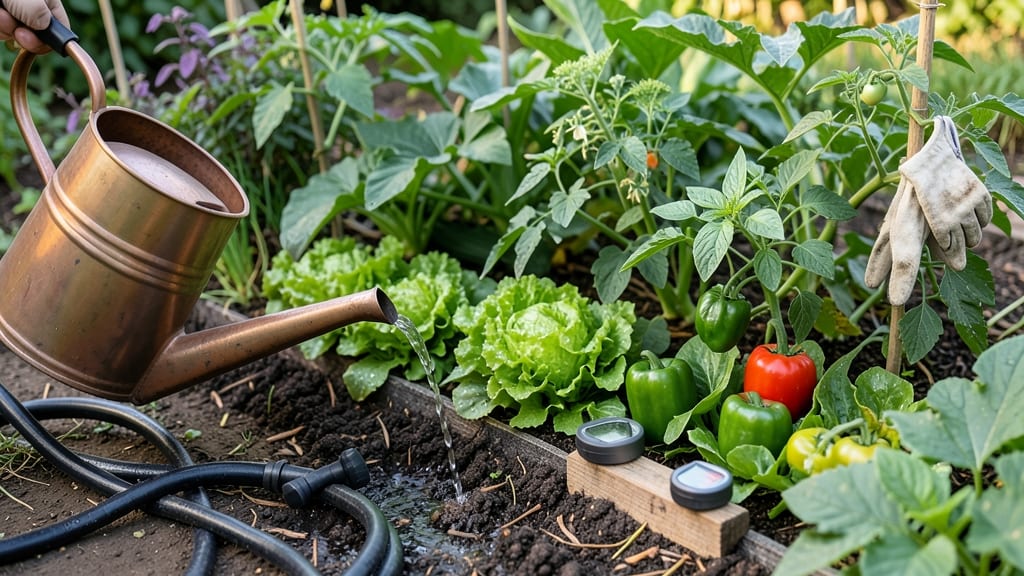
Watering your vegetable garden the right amount keeps those 🥬 thriving without wasting a drop—here’s how to get it perfect every time.
Overwatering or underwatering your vegetable garden can turn your hard work into wasted effort—and even kill your plants. The secret to thriving crops lies in understanding when to water, not just how much.
Most gardeners guess, but the truth is, soil type, plant type, and weather all change what your garden really needs. A sandy soil might dry out in hours, while clay holds moisture for days.
In this guide, I’ll show you the exact soil-moisture tests that tell you when to water, plus how much each crop actually needs—so you never over- or underwater again.
5 Soil-moisture tests to determine when vegetables need watering
Watering your vegetable garden is an art—not a guess. Too little water stresses plants, while too much drowns roots and invites diseases. The key to success? Knowing exactly when your soil needs hydration.
These five simple soil-moisture tests will help you water smarter, not harder, and keep your produce thriving all season long.
Every gardener has faced the dilemma: should I water today? The answer depends on your soil type, the stage of growth of your vegetables, and even the weather forecast. Clay soils hold moisture longer than sandy soils, while seedlings need more frequent watering than mature plants.
By mastering these tests, you’ll avoid both overwatering and underwatering, ensuring your garden stays healthy and productive.
Here’s how to test soil moisture accurately—no fancy tools required for most methods. Start with the simplest techniques and move to more precise options as you gain confidence. Each method offers unique insights, so combine them for the best results.
-
1
Finger Test (Best for beginners)
Stick your index finger 1–2 inches into the soil. If it feels dry, water deeply. For sandy soil, check deeper (3 inches). Ideal moisture feels like a slightly damp sponge. -
2
Trowel Check (For precise depth)
Use a hand trowel to dig a small hole (3–4 inches deep). Examine the soil—if it’s dry at this depth, your plants need water. Works best for root crops like carrots or potatoes. -
3
Moisture Meter (Tech-savvy gardeners)
Insert a digital moisture meter into the soil to get a percentage reading. Aim for 40–60% moisture for most vegetables. Meters are ideal for container gardens or large plots. -
4
Squeeze Test (For clay-heavy soil)
Grab a handful of soil and squeeze tightly. If it holds shape but crumbles when tapped, it’s moist enough. If it falls apart instantly, water immediately. Perfect for heavy clay soils that retain moisture. -
5
Visual Cue Check (For mature plants)
Observe your plants: wilting leaves or dry soil cracks signal thirst. For leafy greens, check the soil surface—if it’s dry, water lightly. For fruiting plants like tomatoes, dig deeper to avoid stressing roots.
Each test works best in different scenarios. For example, the finger test is perfect for daily checks, while the trowel check gives deeper insights into root-zone moisture. If you’re growing water-intensive crops like cucumbers or peppers, combine the moisture meter with the finger test for accuracy.
Remember, morning is the best time to test soil moisture. Early in the day, the soil hasn’t dried from evaporation, giving you a true reading. Avoid testing after rain or late in the afternoon, when moisture levels can be misleading.
Pro tip: Keep a garden journal to track when you water and how your plants respond.
For young seedlings, err on the side of caution—water lightly every 1–2 days until they establish roots. Once plants are 2–3 inches tall, deep watering (1–2 inches per week) becomes more critical.
Adjust your watering schedule based on the test results and your local climate. In hot, dry summers, you may need to water daily, while cool, rainy seasons might require minimal intervention.
Over time, you’ll develop an intuition for your garden’s needs. But until then, these tests will keep your vegetables hydrated and your harvests bountiful. Happy gardening!
🌱
How much water do different vegetables actually need?
Not all vegetables crave the same amount of water—some thrive with light, frequent sips, while others prefer deep, infrequent drinks. Leafy greens like lettuce and spinach need consistent moisture to stay crisp, while root vegetables like carrots and potatoes need even moisture to prevent cracking.
Understanding these needs saves time and keeps your garden lush.
Seasonal shifts change everything. During heatwaves, most vegetables need 20-30% more water to prevent wilting, while drought-tolerant crops like kale or Swiss chard can handle brief dry spells. Rainy periods? Cut back to avoid soggy soil and fungal diseases. Let’s break it down by plant type for foolproof watering.
| Plant Type | Water Needs | Seasonal Adjustments | Notes |
|---|---|---|---|
| Leafy Greens (lettuce, spinach, kale) | 1–1.5 inches/week | Increase to 2 inches in heat | Keep soil moist; mulch to retain water |
| Root Vegetables (carrots, beets, potatoes) | 1–1.5 inches/week | Reduce in rainy seasons | Consistent moisture prevents cracking |
| Fruiting Plants (tomatoes, peppers, cucumbers) | 1.5–2 inches/week | Double in drought; mulch heavily | Deep watering encourages strong roots |
| Drought-Tolerant (Swiss chard, radishes, green onions) | 0.75–1 inch/week | Cut back in rain; avoid soggy soil | Ideal for low-maintenance gardens |
For leafy greens, aim for 1–1.5 inches of water per week, delivered in morning sessions to prevent fungal diseases. These plants hate drying out but also despise waterlogged roots. A drip irrigation system keeps moisture even and reduces waste—perfect for busy gardeners.
Root vegetables like carrots and potatoes need steady moisture to grow straight and avoid deformities. Water deeply every 2–3 days during dry spells, but cut back if rain keeps soil soggy. Overwatering can cause rot, while inconsistent watering leads to forked or misshapen roots. Mulch with straw to lock in moisture.
Fruiting plants such as tomatoes and peppers are the thirstiest of the bunch. They demand 1.5–2 inches of water weekly, especially during flowering and fruiting stages. In heatwaves, increase to 2–3 inches and water at the base of plants to avoid leaf scorch.
A soaker hose delivers water directly to roots without wetting foliage.
Don’t forget about drought-tolerant crops like Swiss chard or radishes. These resilient plants thrive with 0.75–1 inch of water per week and can handle brief dry spells.
They’re ideal for low-water gardens or when you’re traveling. Always check soil moisture with your finger—if the top 1 inch feels dry, it’s time to water.
Adjust your watering routine based on weather and soil type. Sandy soil drains fast, so water more frequently but shallowly. Clay soil holds moisture longer, so deep watering every 3–4 days works best.
Always water in the early morning to minimize evaporation and fungal risks. With these guidelines, your vegetable garden will stay hydrated and productive all season long. 💧🌱