
Container Gardens
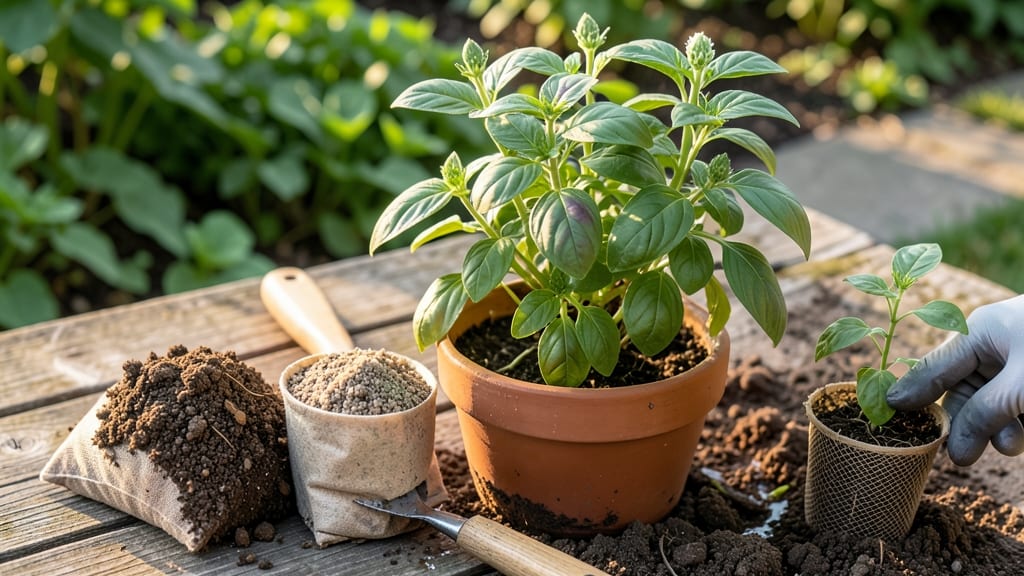
You shouldn't use garden soil in pots because it compacts easily, drains poorly, and may contain weeds or pests. Mix it with perlite, vermiculite, or coconut coir (1:1 ratio) to improve aeration and drainage for healthier container plants.
Garden soil is designed for in-ground planting where roots can spread freely, but pots create a confined space that causes soil to become dense and waterlogged. 🌱 The lack of proper drainage leads to root rot, while heavy clay particles suffocate delicate plant roots.
Even if you sterilize garden soil, it often lacks the light, airy structure that potting mixes provide. For best results, I recommend using a commercial potting mix or creating your own blend with compost, peat moss, and sand for optimal plant health.
What many gardeners don't realize is that even "good" garden soil can contain harmful pathogens or weed seeds that thrive in containers. The confined environment gives these unwanted elements more opportunity to spread.
That's why professional potting mixes are specially formulated to prevent compaction while providing essential nutrients in a balanced form.
💡 In This Article
- Why Garden Soil Fails in Potted Plants
- Best Potting Mix Recipes for Container Gardening
Why garden soil fails in potted plants
Garden soil is engineered for in-ground planting where roots can spread freely, but pots create a confined space that triggers three major problems: compaction, poor drainage, and nutrient imbalance.
The heavy clay and silt particles in garden soil pack tightly when watered, reducing pore space by 30-50%—roots suffocate from lack of oxygen. This is why plants in garden soil often show yellowing leaves or stunted growth within weeks, despite adequate watering. 🌱
The real culprit is soil structure. Garden soil's particles are 10-100 times heavier than the organic matter in potting mixes, creating a dense matrix that traps moisture. When you water potted plants, the confined space causes water to pool at the bottom, creating anaerobic conditions where roots can't breathe.
This is why even drought-tolerant plants like succulents struggle—root rot becomes inevitable within 2-4 weeks in pure garden soil.
Nutrient availability also shifts dramatically. Garden soil releases nutrients slowly over months, but potted plants need immediate access to balanced minerals. The confined root zone depletes nutrients faster, while excess salts from fertilizers build up without proper leaching.
This creates a vicious cycle where plants either starve or burn from salt toxicity. Professional potting mixes solve this by including slow-release fertilizers and organic matter that maintains pH balance.
Weed seeds and pathogens present another hidden danger. Garden soil often contains dormant weed seeds that germinate in containers, competing with your plants for nutrients. The confined space gives these invaders no escape, turning your pot into a weed factory.
Even sterilized garden soil can harbor microscopic fungi that thrive in the moist, warm conditions of pots. This is why commercial potting mixes are pasteurized to eliminate these threats.
Consider the texture difference: garden soil feels gritty and heavy when dry, while good potting mix crumbles easily between fingers. The ideal potting mix should have 40-60% air space—achieved through perlite, vermiculite, or coconut coir—to prevent compaction.
This porosity allows roots to expand while maintaining proper oxygen flow. Without these amendments, your plants are essentially growing in concrete. 💫
For example, tomatoes in garden soil develop blossom end rot within 3 weeks due to calcium leaching, while the same plants in proper potting mix thrive for months. The key difference is the soil's ability to maintain consistent moisture and nutrient levels—a challenge garden soil simply can't meet in containers.