
Plants
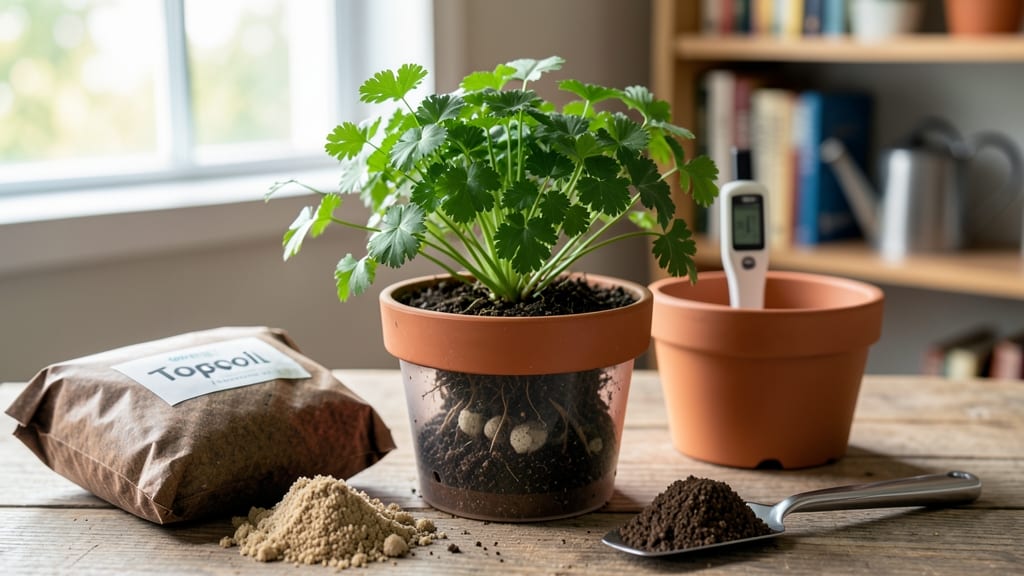
You shouldn't use garden soil for potted plants because it compacts easily, drains poorly, and may harbor pests or diseases. Instead, opt for lightweight potting mixes with perlite, peat moss, or coconut coir for better aeration and moisture control.
Garden soil is designed for in-ground planting where roots can spread freely, but potted plants need a different environment. 🌱 The dense structure of garden soil suffocates roots by restricting airflow and water drainage, while also weighing down containers.
Many commercial potting mixes incorporate organic materials like bark and compost to create a fluffier, more breathable medium that mimics natural forest floor conditions. For example, a mix with 50% peat moss, 30% perlite, and 20% compost gives roots the perfect balance of moisture retention and drainage.
Another key issue is pest transfer. Garden soil often contains weed seeds, larvae, and fungal spores that can thrive in containers where conditions are ideal for their growth. I've seen cases where seemingly healthy potted plants suddenly wilt because of hidden soil-borne pathogens introduced from garden soil.
The solution? Always use sterile potting mix specifically formulated for containers, and consider adding a thin layer of horticultural sand for extra drainage if your plants need it.
💡 In This Article
- Why Garden Soil Fails in Containers
- Best Potting Mix Alternatives for Healthy Container Plants
Why garden soil fails in containers
Garden soil is heavy and dense because it's packed with mineral particles that settle tightly together over time. When you use it in pots, these particles compress even further, reducing the air pockets roots need to breathe.
A typical garden soil has a porosity (air space) of around 25-30%, while ideal potting mixes achieve 50-70% porosity through added organic matter. This lack of aeration causes roots to suffocate, leading to stunted growth or root rot.
The drainage issue is equally critical. Garden soil holds water like a sponge, often retaining 40-50% moisture by weight, while potting mixes release excess water quickly. Without proper drainage, roots sit in soggy conditions, inviting fungal diseases like Phytophthora or Pythium.
I once saw a basil plant in garden soil turn yellow within a week because its roots couldn't access oxygen in the compacted medium.
Nutrient imbalances are another hidden problem. Garden soil contains uneven distributions of nutrients, often with too much phosphorus or potassium for young container plants. Potting mixes are formulated with balanced organic matter that releases nutrients gradually.
For example, coconut coir provides steady nitrogen while perlite prevents compaction—something garden soil simply can't replicate.
Pest transfer is the final nail in the coffin. Garden soil frequently contains dormant weed seeds, nematode eggs, and fungal spores that become active in containers. A single tablespoon of garden soil can introduce thousands of microscopic pests.
I've seen cases where garden soil brought in root-knot nematodes that devastated entire herb gardens within months.
Even the weight matters. A 10-gallon pot filled with garden soil can weigh 50-60 pounds, while the same pot with potting mix weighs 30-40 pounds.
This extra weight stresses plant roots and makes moving containers difficult. The science is clear: garden soil's physical properties make it fundamentally unsuitable for container gardening.