
Tools
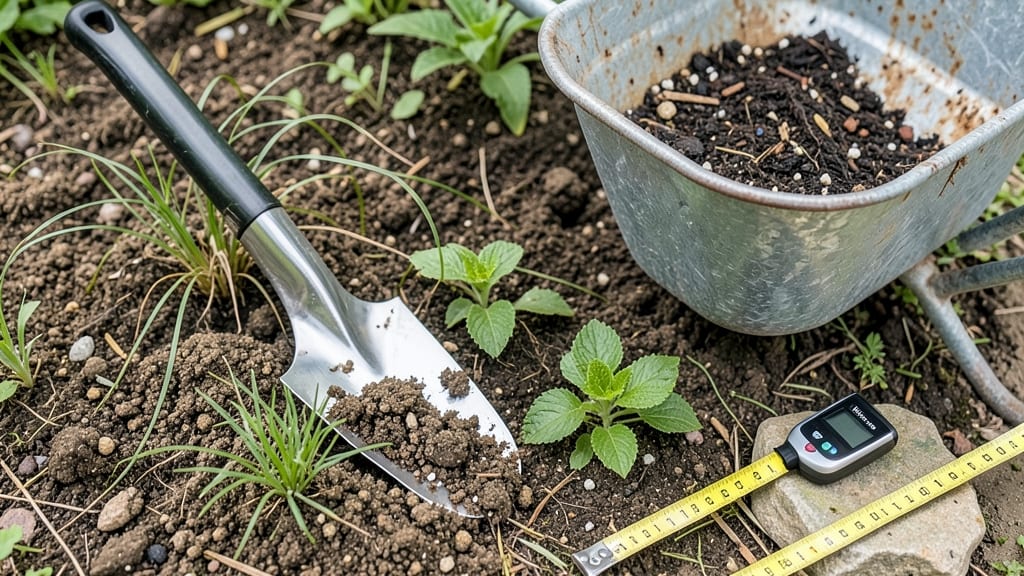
Creating a rain garden soil mix requires blending 60% native topsoil, 20% compost, and 20% coarse sand or perlite to balance drainage and moisture retention for healthy plant roots. Adjust proportions based on your local soil type.
This ratio works because native soil provides essential minerals, while compost adds organic matter that feeds microbes and improves structure.
The sand or perlite creates air pockets that prevent waterlogging—critical for rain gardens where excess moisture can suffocate roots. 🌱 For clay-heavy soils, I often increase the sand percentage to 30% to improve drainage, while sandy soils may need more compost (up to 30%) to boost water retention.
Always test your mix: press a handful—it should hold shape but crumble easily when squeezed.
Pro tip: Add a handful of biochar if your garden gets very wet, as it helps retain nutrients while improving aeration. Different plants need different textures—wetland species thrive in finer mixes, while prairie plants prefer coarser blends. Always match your soil to the plants you're installing!
💡 In This Article
- Why Soil Composition Matters in Rain Gardens
- Customizing Rain Garden Soil Mix for Local Conditions
Why soil composition matters in rain gardens
Rain gardens thrive on a delicate balance between water retention and drainage, where soil composition plays the starring role. The ideal mix creates a "sponge-like" structure that absorbs excess water during storms while releasing moisture gradually to roots.
Native topsoil provides essential minerals and microbial life, but its natural texture often needs adjustment—clay soils compact too tightly, while sandy soils drain too quickly. The 20% compost in our mix introduces humus, which improves water-holding capacity by up to 50% compared to mineral soil alone.
This organic matter also feeds beneficial microbes that break down toxins and release nutrients.
Sand or perlite acts as the secret weapon for aeration, creating microscopic air pockets that prevent root suffocation. When you press a handful of properly mixed rain garden soil, it should hold its shape briefly but crumble easily—this indicates 30-50% porosity, perfect for oxygen exchange.
Wetland plants like cardinal flower need finer textures with 10-20% more compost to retain moisture, while prairie species prefer coarser mixes with 30% sand to handle periodic dry spells. The texture difference feels like comparing wet sandcastle sand to dry beach sand—one holds water, the other drains instantly.
This composition works because it mimics natural wetland ecosystems where water tables fluctuate. The sand component prevents hydroponic conditions that would rot roots, while the compost provides slow-release nutrients that match plant growth cycles.
Without proper aeration, roots suffocate in 24-48 hours of waterlogging, but with this mix, they stay oxygenated even after heavy rains.
The science here is about creating an environment where water moves through the soil at 0.25-0.5 inches per hour—fast enough to drain storms but slow enough to feed plants.
Different plant types reveal how critical these ratios are. Moisture-loving plants like Joe Pye weed need the finer, compost-rich mix that holds water near the surface, while drought-tolerant coneflowers thrive in the coarser blend that lets water percolate deeper.
The visual difference in established gardens is striking—wetland areas appear lush and green, while prairie sections show sturdy stems with vibrant flowers. This compositional diversity prevents erosion while supporting biodiversity, making rain gardens both functional and beautiful.
What most gardeners overlook is how temperature affects soil performance. In winter, the compost layer insulates roots, preventing freeze-thaw damage that can compact clay soils. During summer, the sand component prevents heat buildup that would stress roots.
This thermal regulation creates a stable microclimate where plants can focus energy on growth rather than survival. The result is a garden that looks vibrant year-round, not just during peak seasons.
Consider this analogy: Your rain garden soil is like a well-designed sponge cake—light enough to absorb liquid but sturdy enough to hold its shape. The native soil is the flour providing structure, compost is the eggs adding richness, and sand/perlite are the whipped egg whites creating lift.
Without any one component, the whole system fails—too much clay becomes dense as concrete, while too much sand drains like a sieve. The magic happens in the balance, where each ingredient plays a specific role in the ecosystem.
For maximum effectiveness, test your native soil first. The "squeeze test" is simple: Take a moist handful and press it—if water beads on the surface, your soil drains too slowly and needs more sand. If it falls apart instantly, it drains too quickly and needs more compost.
This quick assessment saves time and money by preventing over-amendment. The goal is to create a living soil ecosystem where water, air, and nutrients work in harmony for your plants.