
Fertilization
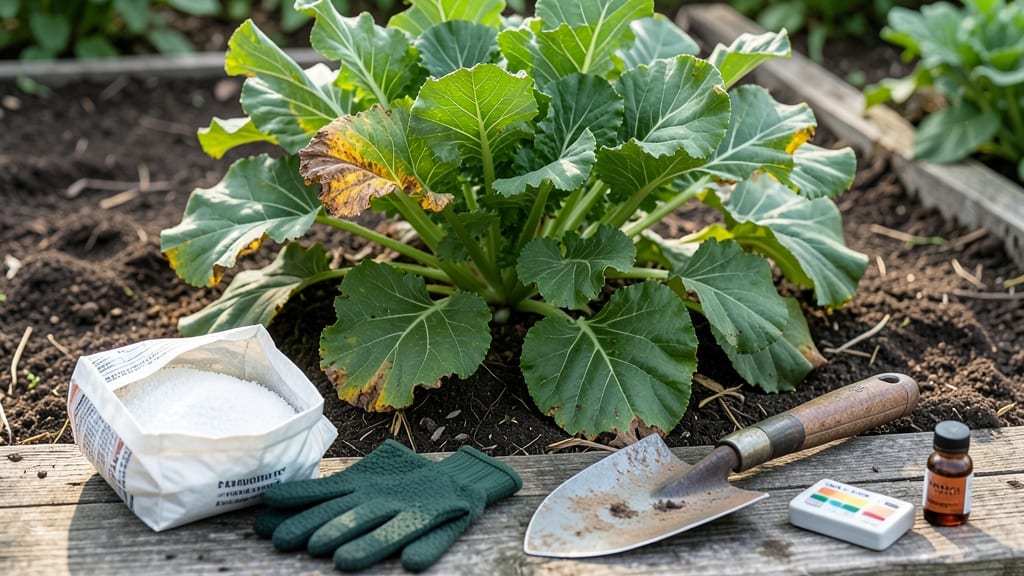
Calcium for garden prevents blossom end rot in tomatoes and revives stressed plants by strengthening cell walls and improving nutrient uptake, especially in acidic or sandy soils where deficiency is common.
Calcium acts like a plant's internal support system, helping cells maintain their structure while also regulating water flow and nutrient transport. 🌱 When your garden soil lacks enough calcium—common in sandy or acidic soils—plants struggle to absorb other essential nutrients, leading to problems like blossom end rot in tomatoes or weak stems.
I've seen firsthand how adding crushed eggshells or gypsum can turn around these issues within weeks, especially during the fruiting season when demand spikes.
What's surprising is how quickly plants respond when calcium levels are corrected. For example, tomato plants with blossom end rot often show new growth within days of treatment, proving how critical this mineral is for both prevention and recovery.
The key is applying calcium in forms plants can easily absorb, whether through organic amendments or targeted soil supplements.
💡 In This Article
- How Calcium Prevents Blossom End Rot in Tomatoes
- Best Calcium Sources and Application Methods for Gardens
How calcium prevents blossom end rot in tomatoes
Calcium plays a structural role in plant cell walls by binding with pectin—a gel-like substance that acts as the "glue" holding cells together. When calcium levels drop, particularly in acidic or sandy soils, the pectin breaks down prematurely, causing cells to collapse.
In tomatoes, this manifests as blossom end rot, where the fruit's bottom side turns brown and mushy because the cells there can't maintain their integrity. 🌱 The deficiency often starts during flowering and fruiting when calcium demand spikes, yet the plant's roots struggle to absorb enough from imbalanced soils.
Soil pH dramatically affects calcium availability. In acidic soils (pH below 6.0), calcium becomes less soluble and harder for roots to uptake, even if it's present. Sandy soils drain too quickly, washing away calcium before plants can absorb it.
This is why you'll see blossom end rot more often in container gardens or raised beds with fast-draining mixes. The solution isn't just adding calcium—it's ensuring the soil environment allows roots to access it efficiently, which often means pairing calcium supplements with organic matter to improve moisture retention.
What makes calcium uniquely critical during fruiting is its role in regulating cell membrane permeability. Without sufficient calcium, cells become leaky, losing water and nutrients that should be directed toward fruit development. This creates a vicious cycle: the plant diverts energy to repair damaged cells instead of growing new fruit.
I've noticed that even a slight calcium deficiency can reduce tomato yields by up to 30% while increasing susceptibility to diseases that exploit weakened cell walls.
Timing matters just as much as quantity. Calcium must be available precisely when the plant needs it most—typically during the 2-4 week period after flowering begins. This is when the fruit's cells are rapidly dividing and require calcium to form strong middle lamellae (the glue between cells).
A common mistake is applying calcium too late in the season, after the damage has already occurred. The good news? Plants can often recover within days of proper calcium treatment, provided the roots can access it quickly through foliar sprays or soluble soil amendments.
Consider this comparison: A tomato plant with adequate calcium will have firm, glossy fruit with minimal blemishes, while a deficient plant's fruit may appear dull and develop rot within hours of picking. The visual difference is striking—it's like comparing a well-built bridge to one with crumbling foundations.
The same principle applies to stems and leaves: calcium-deficient plants often show cupping or curling at leaf edges, another sign of structural weakness.
For gardeners dealing with blossom end rot, the fix often involves both immediate and long-term strategies. A quick foliar spray of calcium nitrate (mixed at 1 tablespoon per gallon of water) can provide fast relief, while amending the soil with gypsum (calcium sulfate) offers sustained benefits.
The key is consistency—calcium isn't a one-time solution but an ongoing part of soil management, especially in high-yielding crops like tomatoes where demand never really lets up.