
Tools
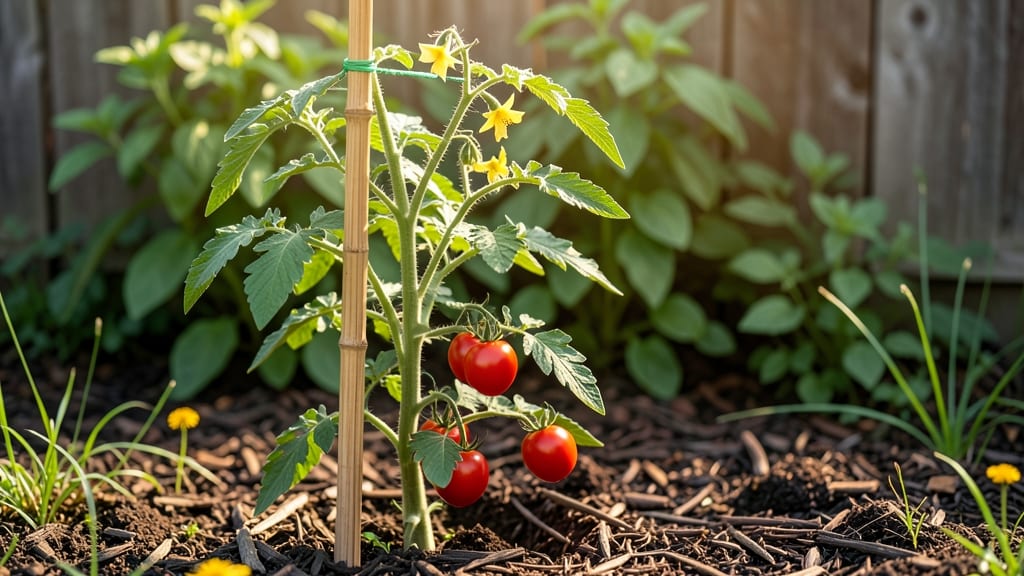
Place tomatoes in garden areas receiving full sun exposure (6-8 hours daily), with well-draining soil and proper spacing (18-24 inches apart for indeterminate varieties, 24-36 inches for determinate). Use trellises or cages for support and position away from strong winds to enhance growth.
Tomatoes are sun-worshippers, and their placement in your garden directly impacts fruit production. 🌞 The 6-8 hours of direct sunlight requirement isn't just a guideline—it's essential for photosynthesis, which fuels those juicy vines. I've seen firsthand how even partial shade can lead to leggy plants and fewer tomatoes.
Well-draining soil prevents root rot, while proper spacing reduces competition for nutrients and airflow, cutting down on disease risks. For extra productivity, pair them with basil or marigolds—they naturally repel pests and improve flavor.
Don't overlook wind exposure either. Strong breezes can snap tender stems, especially during storms. A sturdy trellis or cage not only supports the plant but also keeps fruits off damp soil, reducing rot chances.
I always place my tomato plants near the garden's edge where they get morning sun and afternoon shade in hot climates—this balance prevents sunburn while maintaining energy production.
💡 In This Article
- Optimal Sunlight and Soil Conditions for Tomato Growth
- Companion Planting Strategies to Boost Tomato Yields
Optimal sunlight and soil conditions for tomato growth
Tomatoes are phototropic plants, meaning they grow toward light sources to maximize photosynthesis. The 6-8 hours of direct sunlight requirement isn't just about energy production—it's about triggering the plant's hormonal responses that promote flowering and fruiting. Without sufficient light, plants stretch (etiolate) and produce fewer tomatoes.
I've noticed that even 5 hours of sun can reduce yields by up to 30%, while 8+ hours maximizes sugar development in the fruit, making them sweeter.
The soil's pH level (ideally 6.0-6.8) directly affects nutrient availability. Tomatoes need accessible nitrogen, phosphorus, and potassium, but at pH 5.0 or below, essential nutrients like phosphorus become locked away. Well-draining soil is equally critical—roots need oxygen, and waterlogged conditions lead to root rot within 48-72 hours.
Adding 2-3 inches of compost improves soil structure and microbial activity, which helps break down organic matter into plant-available nutrients. I always test my soil before planting to ensure it meets these standards.
Morning sun (6 AM-12 PM) is ideal because it provides gentle warmth that helps prevent fungal diseases like early blight. Afternoon sun (12 PM-6 PM) can be intense, especially in hot climates, where it may cause sunscald on fruits.
In Zone 9 or higher, I use shade cloth (30-50% coverage) during peak afternoon hours to protect plants while still allowing 6+ hours of full sun. This balance prevents stress while maintaining energy production for fruit development.
Seasonal adjustments are key—spring and fall offer milder temperatures, while summer heat requires extra care. In early spring, young plants need protection from late frosts (28°F can kill seedlings), so I use row covers until soil temperatures reach 55°F.
In summer, mulching with straw helps retain moisture and keeps roots cool. The right soil temperature (70-85°F) also encourages faster germination and growth—too cold (50°F) slows everything down.
Don't forget about microclimates. A south-facing wall or fence can extend the growing season by 2-3 weeks in cooler regions, while a north-facing area might need extra sun protection.
I once grew tomatoes against a brick wall in Zone 6, and they produced fruit 10 days earlier than plants in open ground. Pay attention to these details—they make a huge difference in your harvest!
For container growers, choose pots at least 18 inches deep with drainage holes to mimic well-draining soil. The root system needs room to expand, and containers dry out faster, so watering becomes even more critical.
I've seen potted tomatoes thrive with 1-2 gallons of water per week during hot weather, compared to 1-1.5 inches per week for in-ground plants.