
Tools
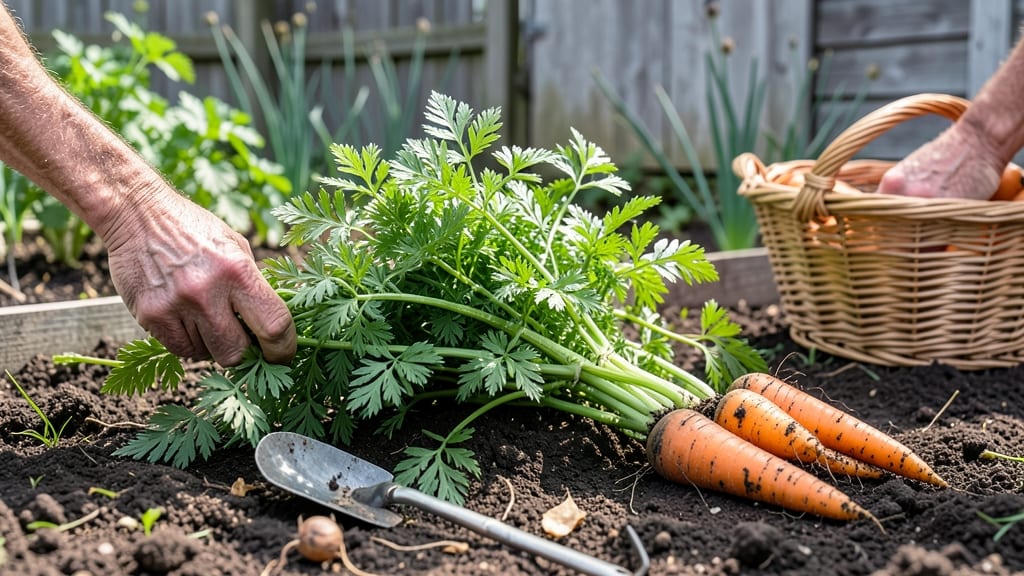
Know when to pull carrots from the garden by checking for roots that are 1 to 1.5 inches in diameter, which typically occurs 60 to 80 days after planting or when the tops reach 3 to 4 inches tall. Always assess soil resistance for firmness to avoid harvesting overgrown or woody roots.
Timing your carrot harvest right ensures sweet, tender roots packed with flavor. 🥕 The 60-80 day window aligns with ideal soil temperatures (55-85°F) that encourage steady growth without bitterness.
I've found that pulling when tops hit 3-4 inches often signals perfect root development—just dig gently to check for smooth, firm shoulders. Overripe carrots develop tough, fibrous textures, while pulling too early yields pencil-thin roots that lack sweetness.
Pro tip: Use a fork to loosen soil around roots before pulling to prevent damage. The key is balance—harvest when roots are plump but before they start splitting or turning woody. This method guarantees you'll enjoy carrots at their peak freshness and flavor.
💡 In This Article
- Carrot Maturity Stages: Size, Days, and Soil Resistance
- Signs of Overripe Carrots and Harvesting Mistakes
Carrot maturity stages: size, days, and soil resistance
Carrot roots develop through three distinct stages: germination, rapid growth, and maturation. The 60-80 day window for harvest aligns with their maturation phase when roots reach 1-1.5 inches in diameter. During this time, the plant converts sunlight into sugars through photosynthesis, which accumulates in the root.
The tops (leaves) act as solar panels, and when they reach 3-4 inches tall, they've typically gathered enough energy to signal maturity. 🌱
Soil temperature plays a critical role in this process. Ideal growth occurs between 55-85°F, where enzymes in the root break down starches into sugars, enhancing sweetness. Cooler soils (50°F) slow growth, while hotter soils (> 90°F) can cause roots to split or develop a woody texture.
Moisture levels also matter—consistent dampness (not soggy) keeps roots tender, while drought stress triggers bitterness. The soil's resistance when you gently tug a carrot is your best indicator: firm soil means the root has reached optimal density.
Here's what's happening biologically: As the root expands, it pushes against soil particles, creating a natural resistance that prevents overgrowth. This resistance is your cue to harvest before the root starts developing a thick, fibrous core.
Think of it like a balloon inflating—when it meets resistance, that's the perfect moment to stop. The 1-1.5 inch diameter is where most varieties (like 'Danvers' or 'Nantes') hit this sweet spot, though heirloom types may vary slightly. 🥕
Environmental factors like daylight hours also influence timing. Longer summer days accelerate growth, while shorter autumn days slow it down. That's why early spring or late summer plantings often yield slightly smaller but sweeter carrots.
The tops' size is a secondary indicator because some varieties (like 'Paris Market') grow faster but stay compact. Always prioritize the root's diameter over the foliage's height—it's the root that matters for flavor and texture.
For a practical test, dig up one carrot when the tops hit 3 inches and check its size. If it's 1 inch thick, wait a few more days. If it's already 1.5 inches, it's harvest time.
This hands-on check beats guessing by days alone, especially in variable climates. The goal is to pull carrots when they're at their peak sweetness, which happens just before they start converting sugars into structural fibers for overgrowth.
One common mistake is relying solely on days after planting. A cool spring might delay maturity by 10-14 days, while a hot summer could speed it up. That's why checking both size and soil resistance gives you the most accurate harvest signal.
The resistance test works because mature roots have developed enough cell structure to push against the soil without breaking—this firmness is your guarantee of a tender, flavorful carrot. 💪
Pro tip: Harvest in the morning when soil is cooler and moisture levels are higher. This reduces stress on the plant and makes pulling easier. The cooler temps also preserve the carrot's natural sugars, keeping them sweeter longer.
Store harvested carrots in a 32-40°F environment with high humidity (like a root cellar) to maintain their crisp texture and vibrant color for weeks.