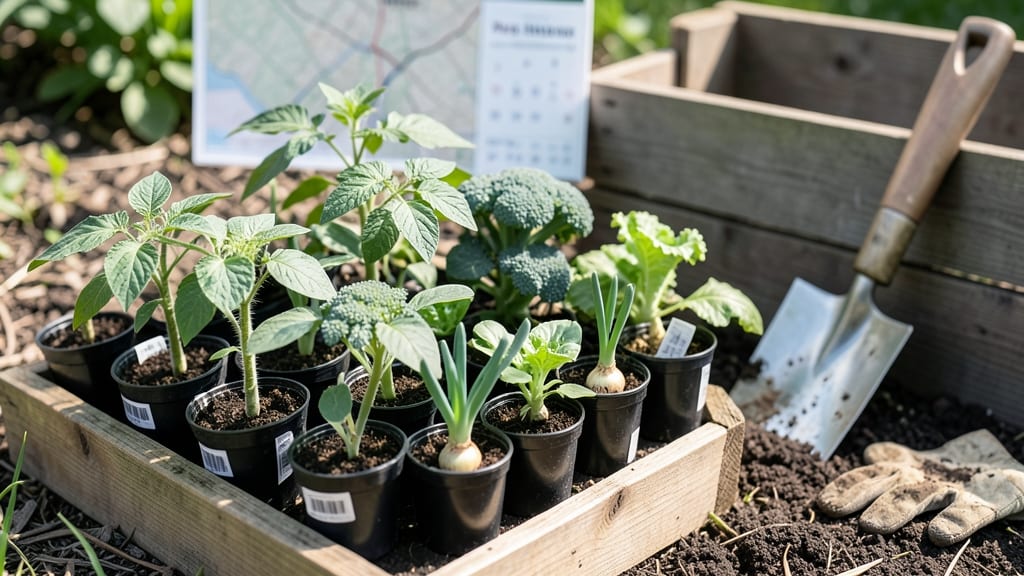
Planting a vegetable garden in New York at the right time ensures your 🥬 thrives—miss the window, and you risk stunted growth or lost crops entirely.
Timing is everything, especially with New York’s unpredictable frost dates and diverse growing zones. One week too early, and a late frost wipes out your seedlings. Too late, and summer heat arrives before your tomatoes or peppers even set fruit.
This guide breaks down the exact planting windows for your zone, whether you’re in Upstate’s cooler 5b or NYC’s milder 7b. We’ll cover when to start cool-season crops like spinach and when to rush warm-season favorites like peppers into the ground.
By the end, you’ll know the critical frost dates for your area, the best months for each crop, and how to adjust for microclimates—so you can finally grow that bumper crop you’ve been dreaming of.
Jan
❄️
Feb
❄️
Mar
🌱
Apr
🌱
May
🌸
Jun
☀️
Jul
☀️
Aug
🌱
Sep
🥬
Oct
🥬
Nov
🥬
Dec
🌱
New York’s frost dates by Zone: critical planting windows for vegetables
New York’s diverse climate—spanning from the Adirondacks to Long Island—creates wildly different frost dates across its 7 USDA zones (1a-7b). Knowing your last spring frost and first fall frost is the key to avoiding frozen seedlings or bolted greens.
For example, Zone 5b (Upstate) might see its last frost on May 15, while Zone 7b (Long Island) could be frost-free by April 15. These differences mean your tomato plants in Buffalo won’t thrive if planted the same time as those in Albany.
To find your exact frost dates, check the USDA Plant Hardiness Zone Map and cross-reference with local weather data from the National Weather Service. Many garden centers also provide free frost calendars tailored to your county.
For instance, New York City (Zone 7b) has a 200-day growing season, while Syracuse (Zone 5b) only gets about 120 frost-free days. This means NYC gardeners can squeeze in two full harvests (spring and fall), while Upstate gardeners focus on one extended season.
Here’s how frost dates translate to your planting schedule: Cool-season crops like spinach and peas can handle light frosts, so they go in 4-6 weeks before your last frost.
Warm-season crops like peppers and eggplants, however, need soil temperatures above 60°F and should wait until 2 weeks after your last frost. Fall crops like kale and carrots thrive when planted 6-8 weeks before your first frost to mature before winter sets in.
🌱
| Zone |
Last Spring Frost |
First Fall Frost |
Frost-Free Days |
Cool-Season Planting |
Warm-Season Planting |
| 1a-3b (Northern NY) |
May 20–June 5 |
Sept 15–Oct 1 |
90–120 |
April–May 15 |
June 15–July 1 |
| 4a-5a (Upstate) |
May 5–May 15 |
Oct 1–Oct 15 |
120–150 |
March 20–April 30 |
May 15–June 10 |
| 5b-6a (Central NY) |
April 25–May 5 |
Oct 10–Oct 25 |
150–180 |
March 1–April 15 |
May 1–May 20 |
| 6b-7a (Western NY) |
April 15–April 25 |
Oct 20–Nov 1 |
180–200 |
February 20–March 30 |
April 15–May 1 |
7
Best vegetables to plant in New York by season: month-by-month guide
New York’s diverse climate zones and variable frost dates make timing everything when planting vegetables. Whether you’re a city gardener with container limitations or a rural grower with ample space, knowing the best months for each crop ensures a successful harvest.
Below, I’ve broken down the ideal planting schedule for 12+ popular vegetables, including notes on succession planting and urban adjustments.
For cool-season crops like lettuce and spinach, you’ll want to start early—even before the last frost—while warm-season crops like tomatoes and peppers need to wait until the soil warms.
In urban areas, containers can extend your growing season, but you’ll need to monitor soil temperature closely. Let’s dive into the month-by-month breakdown to maximize your garden’s potential.
- 🌱 March: Start cool-season crops indoors (lettuce, spinach, kale) or under row covers if soil is workable. Plant onion sets and peas directly outdoors.
- 🌿 April: After the last frost date (typically mid-April), sow carrots, radishes, and beets. Transplant broccoli and cabbage seedlings.
- ☀️ May: Plant warm-season crops like tomatoes, peppers, and cucumbers once soil reaches 60°F+. Begin succession planting of lettuce and beans.
- 🌻 June: Sow summer squash, corn, and okra. Continue succession planting of bush beans and zucchini every 2 weeks.
- 🌾 July: Start fall crops like kale, spinach, and turnips for late-season harvests. Transplant broccoli and Brussels sprouts for fall growth.
- 🍅 August: Plant cool-season crops again for a fall harvest. Sow radishes, arugula, and lettuce in containers or garden beds.
- 🌼 September-October: Extend the season with row covers for spinach, carrots, and garlic. Harvest late tomatoes and peppers before frost.
For container gardening in NYC or other urban areas, prioritize compact varieties like bush beans, cherry tomatoes, and dwarf peppers. These thrive in 5-gallon pots and can be planted as early as May or as late as July for fall harvests.
Always ensure containers have drainage holes and use lightweight potting mix to prevent root rot.
One of my biggest tips is to use succession planting for crops like lettuce, beans, and radishes. This means sowing new seeds every 2-3 weeks to ensure a continuous harvest instead of one big yield.
For example, if you plant lettuce every 14 days from May through July, you’ll have fresh greens all summer long.
Don’t forget to adjust for microclimates. Urban areas like Brooklyn can be 5-10°F warmer than rural Upstate New York, so warm-season crops may thrive earlier in cities. Use a soil thermometer to check temperatures before planting heat-loving veggies like eggplants or okra.
By following this month-by-month guide, you’ll avoid the common mistakes of planting too early or too late, ensuring your New York vegetable garden thrives year after year. Happy planting! 🌱
★★★★★5.0(13 reviews)
|