
Companion Plants
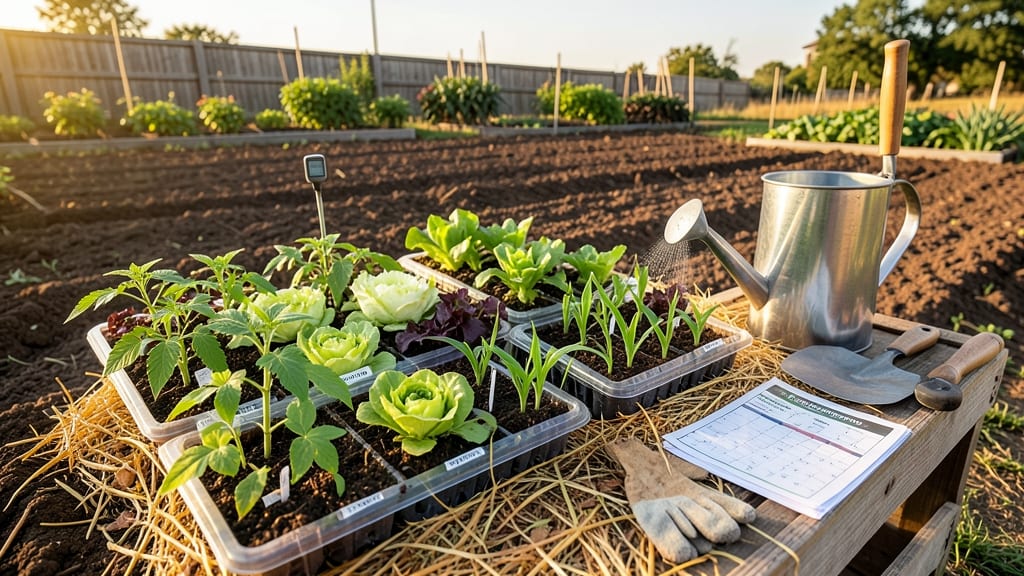
To plant a vegetable garden in Kansas, time your cool-season crops—like peas and spinach—4-6 weeks before the last spring frost (mid-March in Zone 6, late March in Zone 7), and warm-season crops—such as tomatoes and peppers—after the last frost (mid-April in Zone 6, late April in Zone 7). Always verify local frost dates yearly for accuracy.
Kansas' growing seasons vary dramatically between its two main hardiness zones, so knowing your exact zone is critical. 🌱 For instance, Zone 6's cooler temperatures allow for earlier cool-season planting, while Zone 7's slightly warmer climate extends the window for warm-season crops.
I've found that using a soil thermometer helps confirm when the ground is ready—aim for 45°F for cool-season starts and wait until nighttime temperatures stay above 50°F for warm-season plants.
Many local extension offices provide updated frost date forecasts, which can shift by a week or more depending on weather patterns.
Beyond zones, Kansas' flat terrain creates microclimates where urban areas can be 5-10°F warmer than rural spots just miles away. This means gardeners in Wichita might plant peppers a week earlier than those in Topeka.
For extra protection, I recommend keeping row covers handy—they can push back frost dates by 2-4 weeks for heat-sensitive crops. Always keep a journal of your planting dates; over time, you'll notice patterns that help you fine-tune your schedule each year.
💡 In This Article
- Kansas Frost Dates by Hardiness Zone and Plant Type
- Adjusting Planting Timing for Kansas Microclimates
Kansas frost dates by hardiness Zone and plant type
Kansas spans USDA hardiness zones 6a and 7a, where average last spring frost dates shift by about 7-10 days between zones. Zone 6 typically sees its final frost around April 15-20, while Zone 7 holds off until April 25-30.
These dates aren't set in stone—2023 saw Topeka's last frost delayed until May 5 due to unseasonable warmth. The key is tracking 32°F nighttime lows, as even brief dips can damage tender seedlings.
Cool-season vegetables like spinach and peas thrive when planted 4-6 weeks before the last frost, giving them time to establish roots before summer heat arrives. In Zone 6, this means starting seeds indoors by late February for outdoor transplanting by mid-March.
Warm-season crops like tomatoes and peppers, however, need soil temperatures above 55°F—typically 2-3 weeks after the last frost date. I've found that using a soil thermometer prevents premature planting; cool soil can stunt growth even if air temperatures are mild.
The cold-hardiness thresholds vary dramatically between crops. Kale and broccoli can handle 20-25°F temperatures, while lettuce bolts at 35°F. For warm-season plants, nighttime temperatures below 50°F can cause blossom-end rot in tomatoes or stunted growth in peppers.
This is why staggered planting—sowing in batches every 10-14 days—ensures a continuous harvest rather than one massive yield followed by failure.
Fall planting follows a similar pattern but in reverse. Zone 6 gardeners can extend the season until October 15-20 for cool-season crops, while Zone 7 might push until November 1. The first fall frost typically arrives around October 10-15 in Zone 6 and October 20-25 in Zone 7.
For heat-sensitive crops like beans, I recommend harvesting before 50°F nighttime temperatures set in—this prevents the plant from shutting down photosynthesis.
Local extension offices provide refined frost date forecasts, but even these can be off by 1-2 weeks. For example, in 2022, Manhattan saw its first fall frost 14 days early due to a sudden cold snap.
To mitigate risks, I use floating row covers to protect seedlings from unexpected chills, which can extend the growing window by 3-4 weeks in both spring and fall.
Consider these zone-specific planting windows as guidelines, not rules. The Kansas State University Extension maintains a frost date calculator that factors in elevation and local weather patterns—worth bookmarking for real-time adjustments.
For instance, elevated areas like the Flint Hills can experience 5°F cooler temperatures than valley regions, requiring earlier planting for cool-season crops.