
Picking
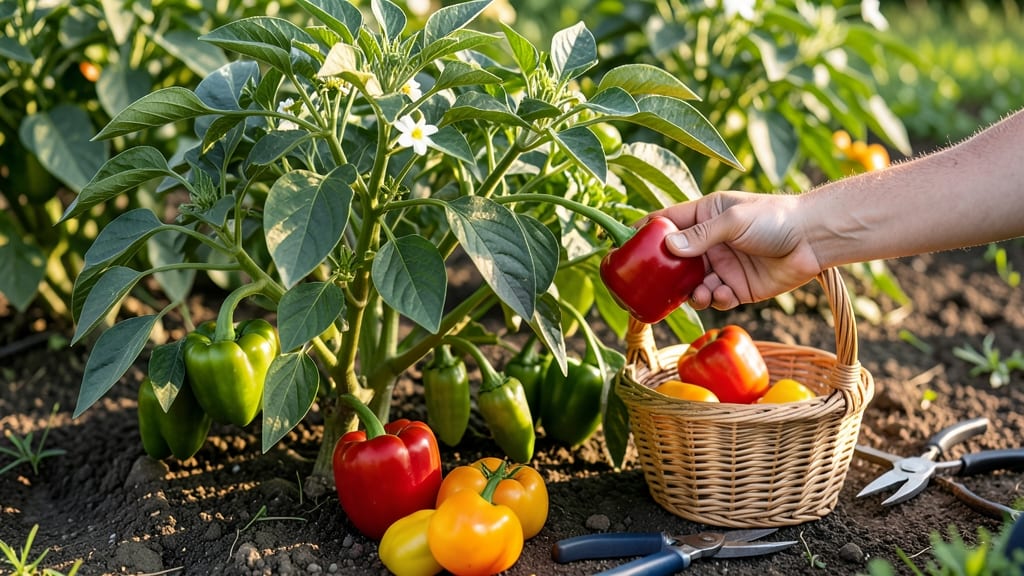
Picking peppers from your garden at the right time ensures you get the sweetest, most flavorful harvests 🌶️ — and missing that window can turn your hard work into bitter, mealy pods.
Knowing exactly when to harvest peppers from your garden can mean the difference between sweet, flavorful pods and bitter, overripe disappointments.
Most gardeners wait too long, letting peppers overripen on the vine. But timing isn't just about color—size, firmness, and even the stem's readiness play a role. I'll show you how to spot the perfect moment, whether you're growing bell peppers, jalapeños, or something spicier.
You'll also learn how to handle your harvest to keep peppers fresh longer, plus the common mistakes that ruin even the best-intentioned pepper crops. Let's get started!
How to tell when peppers are ready by color and size
Harvesting peppers at the right moment transforms your garden bounty from good to exceptional. The key lies in watching for three universal cues: color transformation, size consistency, and skin texture.
Each variety follows its own timeline, but understanding these visual signals ensures you never miss peak flavor or let peppers overripen on the vine.
Most gardeners focus solely on color, but size and firmness are equally critical indicators. A pepper might look vibrant but still be underripe if it hasn't reached its variety's mature dimensions.
For example, jalapeños should be at least 3-4 inches long before harvesting, while bell peppers need to reach 3-4 inches in diameter. Ignoring these benchmarks can result in peppers that are too mild or overly spicy.
Color shifts are the most obvious sign of ripeness, but they vary dramatically by variety. Green peppers like bell varieties stay green until fully mature, while red, yellow, and orange peppers undergo dramatic color changes as they ripen.
Even within color categories, shades differ—deep red indicates full maturity in many varieties, while light yellow might signal readiness for banana peppers. Always check your seed packet for specific color cues.
Here’s a quick reference to help you identify when your peppers are ready to harvest based on their variety and visual characteristics:
| Variety | Mature Size | Color Indicators | Texture Cues | Harvest Time |
|---|---|---|---|---|
| Bell Pepper | 3-4" diameter | Deep green, red, yellow, or purple | Firm, glossy skin | 75-90 days |
| Jalapeño | 3-4" long | Green to red | Smooth, slightly waxy | 60-75 days |
| Banana Pepper | 3-5" long | Yellow to orange | Thick, firm walls | 70-80 days |
| Habanero | 2-3" diameter | Orange to red | Wrinkled when fully ripe | 90-120 days |
| Poblano | 4-6" long | Dark green to red | Leathery texture | 75-85 days |
Don’t rely solely on color—gentle pressure tests are your best friend. Press a pepper lightly with your thumb; if it feels firm and springs back, it’s ready. If it leaves a dent or feels mushy, it’s overripe.
This simple trick works for all pepper varieties and helps you avoid the disappointment of harvesting too early or too late. For green pepper varieties, the stem should turn brown or yellow at the base, signaling full maturity.
Timing your harvest correctly also depends on your climate. In hotter regions, peppers may ripen faster, while cooler climates can slow the process. If your peppers aren’t changing color by late summer, consider harvesting green and ripening indoors.
Place them in a paper bag with a banana or apple to speed up the ripening process using natural ethylene gas. This works especially well for bell peppers and jalapeños that need extra time to mature.
One common mistake is waiting for peppers to turn fully red when you actually want them green. Some varieties, like jalapeños, taste best when harvested green for a milder flavor. Always check your seed packet or plant tags for specific harvest recommendations.
For example, green bell peppers are often picked before they fully ripen to ensure crispness, while red bell peppers develop sweeter flavors as they ripen.
Pro tip: Harvest peppers in the morning when temperatures are coolest. This preserves their crispness and flavor longer. Use a sharp pair of pruning shears or scissors to avoid damaging the plant, and always cut just above a leaf node.
This encourages your pepper plant to produce more fruit throughout the season. If you’re unsure whether a pepper is ready, err on the side of harvesting earlier—peppers won’t ripen further once picked, but they’ll continue to lose quality if left too long on the plant.
Pay attention to the
Peak flavor vs. storage potential: when to pick for fresh use vs. long-term storage
Timing your pepper harvest is all about balancing flavor intensity with storage longevity. For fresh eating, you’ll want peppers at their sweetest and most vibrant, while long-term storage often requires harvesting slightly earlier. The key is understanding how ripeness affects both taste and preservation.
Most gardeners assume fully ripe peppers are always best, but that’s not true for storage. Green peppers or partially ripe varieties often store better than fully mature ones.
For example, a bell pepper picked when still firm and green will last weeks in the fridge, while a deep red one may only last days. The trade-off? That green bell lacks the sweetness of its fully ripe counterpart.
Peak Flavor vs. Storage Potential
- Sweetest taste (fully ripe)
- Vibrant color (deep red, yellow, orange)
- Best for fresh use (sautéing, roasting, eating raw)
- Shorter shelf life (3-7 days)
- Longer shelf life (weeks in fridge, months frozen)
- Firmer texture (less prone to spoilage)
- Milder flavor (harvest slightly early)
- Better for cooking (soups, stews, canning)
Harvest when color is deep and skin is glossy. For example, jalapeños should be fully colored (green to red) and firm to the touch.
Pick when 75% ripe (e.g., bell peppers still slightly green). This balances flavor and longevity for freezing or canning.
For fresh use, aim to harvest peppers when they’ve reached their peak color and maximum size for their variety. A red bell pepper, for instance, should be fully red and firm—this is when it’s sweetest.
But if you’re planning to freeze or can your harvest, pick them slightly earlier when they’re still firm and vibrant. This reduces spoilage and extends their usable life.
Preservation methods also play a role. Freezing works best with peppers that are firm but not fully ripe, while drying requires peppers to be at least 70% ripe for optimal flavor.
Always wash and dry peppers thoroughly before storing to prevent mold. For long-term storage, consider vacuum-sealing or canning—both methods preserve texture and flavor better than simple fridge storage.
One common mistake is waiting too long for peppers to ripen fully, especially in cooler climates. If frost threatens, harvest peppers even if underripe—they’ll still be usable for cooking.
For hot peppers like habaneros, pick them when they’re firm and fully colored to maximize heat and flavor, but avoid letting them overripe, which can make them bitter.
Pro tip: Keep a harvest journal to track when your peppers reach peak flavor and how long they last in storage. Over time, you’ll learn the perfect balance for your climate and pepper varieties.
The goal is to enjoy the best of both worlds—bold flavors and long-lasting peppers—without compromise.