
Picking
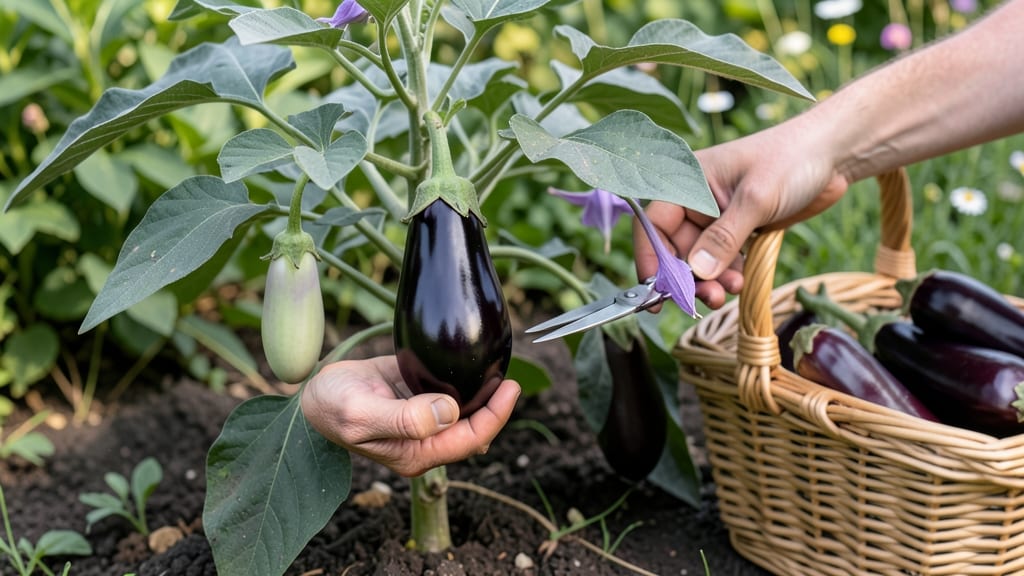
To pick eggplant in your garden at the perfect moment means harvesting glossy, tender fruit with the best flavor—before it turns bitter or mealy.
Picture this: you’ve nurtured your 🍆 plants all season, and now the moment of truth arrives. One wrong move, and you’re left with tough skin or underripe fruit. But there’s a better way—simple touch-and-sight tests that take the guesswork out of harvesting.
Eggplant ripeness isn’t just about size or color; it’s about texture, stem separation, and even the weight in your hand. These five foolproof checks will help you spot the ideal time to harvest, ensuring your garden’s bounty stays fresh and delicious.
From firmness to color shifts and seed cues, I’ll walk you through each step so you can confidently pick your eggplant at peak ripeness—no more wasted effort or bitter surprises.
5 Touch-and-sight tests to determine eggplant ripeness
Harvesting eggplant at the perfect moment transforms your garden bounty into tender, flavorful fruit—while waiting too long means tough skins and bitter flesh. As someone who’s learned the hard way from overripe eggplants turning woody, I’ve perfected these 5 foolproof touch-and-sight tests to guarantee ripeness every time.
These methods work for purple, white, and striped varieties, and they’ll save you from guessing whether your eggplant is ready.
Eggplants ripen unevenly, so checking multiple cues ensures you don’t miss the window. The key is balancing visual maturity (color, size) with physical readiness (firmness, stem separation). Even experienced gardeners sometimes overlook subtle signs, like the stem end turning brown or the skin yielding just slightly under pressure.
Let’s break down each test with clear visual guides so you’ll never second-guess your harvest again.
🌱 5 Signs Your Eggplant Is Perfectly Ripe
- 🍆 1. Skin Firmness Test: Press gently with your thumbnail—ripe skin yields slightly but doesn’t dent. Overripe fruit feels mushy.
- 🎨 2. Color Consistency: Look for deep, even color (purple, black, or white) with no green patches. Varieties like 'Black Beauty' should be glossy.
- 🌿 3. Stem Separation: Gently twist the fruit at the stem—it should snaps cleanly without tearing. A green stem end means it’s not ready.
- ⚖️ 4. Weight Check: Hold the eggplant—ripe ones feel heavy for their size, indicating juicy flesh. Lightweight fruit is underripe.
- 🌱 5. Seed Development: Cut open a test fruit—seeds should be small and soft, not hard or brown. Large seeds mean it’s past its prime.
💡 Pro Tip: Test 2-3 fruits per plant—some ripen faster than others!
Let’s start with the skin firmness test, my go-to method because it’s instant feedback. When I press an eggplant with my thumbnail, I look for just enough give—like pressing a ripe avocado. If it springs back immediately, it’s underripe; if it leaves a dent, it’s overripe.
This test works best in the morning after watering, when skins are firmest. For varieties like 'Ichiban', which are smaller and sweeter, the skin should feel velvety smooth without any roughness.
The color consistency test is where many gardeners trip up, especially with heirloom varieties. A fully ripe 'Rosa Bianca' eggplant should be pure white, not tinged with green or yellow. For purple or black varieties, the color should be deep and uniform—no pale spots.
I’ve seen gardeners overlook subtle green shoulders, which mean the fruit needs more time. Pro tip: Use a white background to spot inconsistencies more easily.
Next, the stem separation test is a game-changer for avoiding bruised fruit. When the stem snaps cleanly at the base, it’s a sign the fruit is ready to harvest. If you have to tug or the stem tears, wait another 2-3 days.
This test is especially critical for container-grown eggplants, which can ripen faster due to heat stress. I always test 2-3 stems per plant to account for uneven ripening.
Don’t underestimate the weight check, which reveals the juiciness inside. A ripe eggplant should feel surprisingly heavy for its size—think of it like comparing a watermelon to a cantaloupe.
Lightweight fruit often has hollow centers or underdeveloped flesh. This test is particularly useful for long, slender varieties like 'Italian Eggplant', which can fool you with their size alone.
Finally, the seed development test is the ultimate ripeness indicator. Cut open a test fruit and check the seeds: they should be tiny and soft, not brown or shriveled. Large seeds mean the eggplant has passed its peak flavor window.
I’ve found that hybrid varieties often ripen more uniformly, making this test easier to rely on. For heirlooms, I recommend testing every 3-4 days once the fruit reaches 50% of its expected size.
Combining these tests ensures you harvest eggplant at its peak flavor and texture. For example, I once picked a 'Black Beauty' based solely on color—only to find it was still firm and bland.
After adding the stem separation and seed tests, my harvests improved dramatically. Remember, eggplants continue to ripen off the vine, so don’t wait until they’re overripe to test them.
🌱 Whether you’re growing in raised beds, containers, or your backyard, these tests apply universally. The key is consistency—check your eggplants every 2-3 days once they reach half their mature size.
With practice, you’ll develop an instinct for ripeness, and your kitchen will thank you for the tender, flavorful eggplants you bring inside.
Eggplant variety matters: ripening times by type
Not all eggplants ripen on the same schedule—purple heirlooms, white hybrids, and striped varieties each have unique timelines that affect when you should pick them. Understanding these differences helps you avoid bitter fruit and maximize your harvest.
For example, Black Beauty, a classic purple heirloom, typically matures in 75-90 days, while Casaba, a creamy white hybrid, often ripens 10-15 days earlier. These variations matter most in cooler climates (Zones 4-6), where shorter growing seasons demand earlier picking.
Heirloom varieties like Rosa Bianca (striped) or Ichiban (long, slender) often take longer to ripen—sometimes up to 90-100 days—because they focus on flavor depth over speed. Meanwhile, hybrids like Ichiban or Fairy Tale prioritize faster maturation (60-75 days), making them ideal for containers or short-season gardens. Climate also plays a role: In Zones 7-10, where frost is rare, you can afford to wait for full ripening, but in Zones 3-5, early harvesting is key to avoid frost damage.
Here’s how to adjust your picking strategy based on variety and zone:
| Variety Type | Days to Maturity | Best Climate Zones | Picking Window | Key Ripening Cue |
|---|---|---|---|---|
| Purple Heirlooms (e.g., Black Beauty) | 75-90 days | Zones 6-10 | Late July-Sept | Deep purple, glossy skin |
| White Hybrids (e.g., Casaba, Rosa Bianca) | 60-75 days | Zones 4-9 | June-August | Creamy hue, slight softness |
| Striped Varieties (e.g., Rosa Bianca) | 80-100 days | Zones 5-10 | Late July-October | Striped pattern fully visible |
| Long/Slender (e.g., Ichiban) | 65-80 days | Zones 7-10 | July-Sept | 8+ inches long, glossy |
For heirloom varieties, patience pays off—wait until the skin is fully colored and the stem end turns brown, even if it takes longer.
In Zones 3-5, start checking for ripeness by mid-July and harvest by early September to beat frost. Hybrids, however, reward quicker action: Pick Casaba eggplants when they’re 6-8 inches long, even if the skin isn’t fully white, to avoid bitterness.
In containers, where roots compete for space, striped varieties like Rosa Bianca may ripen 1-2 weeks earlier than their in-ground counterparts.
Pro tip: If you’re in a hot climate (Zones 9-10), eggplants can overripe quickly—monitor daily for soft spots or cracked skin, which signal it’s time to harvest. In cooler zones, extend the season by using row covers or greenhouses to protect plants until early October. Always prioritize firmness over size: A slightly smaller eggplant with glossy skin is better than an overgrown, seedy one.
Remember, variety selection matters just as much as timing. If you’re new to growing eggplants, start with hybrids like Fairy Tale—they’re forgiving and adapt well to containers or short seasons.
For bold flavors, save heirlooms for longer growing seasons. And no matter the type, always harvest in the morning when the skin is coolest for the best texture.