
Picking
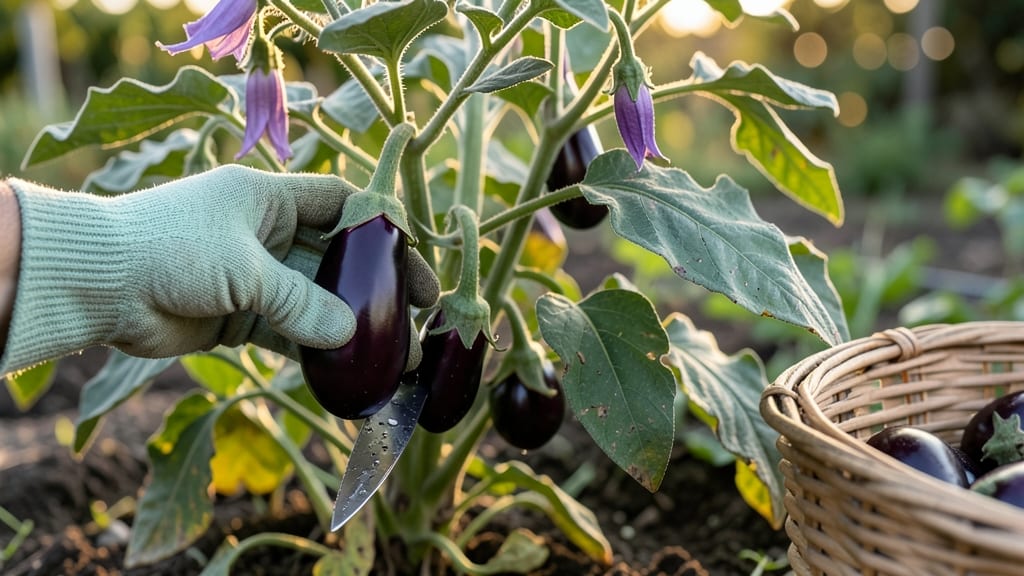
To pick eggplant from your garden at the perfect moment means harvesting tender, flavorful fruit—before it turns seedy or bitter.
You might think all you need to do is wait for the eggplant 🍆 to turn purple, but timing is everything. A day too early and the skin is tough; too late and the seeds harden, ruining the texture.
The key lies in a mix of visual cues and environmental factors that most gardeners miss.
From checking the stem color to watching for glossy skin, I’ll walk you through the five foolproof signs your eggplant is ready to harvest—plus how to adjust for your climate zone.
By the end, you’ll know exactly when to reach for those pruners, whether you’re in Zone 6a or further south, and how to store your harvest for maximum freshness.
5 Visual cues to determine when eggplant is ready for harvest
Harvesting eggplant at the perfect moment transforms your garden bounty into a flavorful, tender vegetable. Unlike some fruits, eggplant doesn’t ripen further after picking, so timing is everything. Miss the window, and you’ll end up with seedy, bitter fruit that’s past its prime.
The key lies in these 5 visual cues that signal peak ripeness—each one a clear invitation to harvest.
First, let’s address the biggest mistake I see in gardens: waiting too long for eggplant to reach its maximum size. While larger eggplants might look impressive, they often develop bitter flavors and tough skins.
The secret is harvesting when the plant signals readiness through color, size, and texture—not just when it’s biggest. These cues work for purple, white, and striped varieties alike.
Here’s what to watch for in your garden:
- 1 Color Consistency: Look for a deep, uniform hue—no green or pale patches. Purple varieties should be vibrant purple-black, while white types turn creamy white. Striped varieties should show bold, even stripes with no fading.
- 2 Size Matters: Aim for 6-8 inches long (about the size of a baseball or softball). Smaller than 5 inches? Not ready. Larger than 9 inches? Likely overripe. Varieties like ‘Black Beauty’ often peak at 7-8 inches.
- 3 Stem Color Change: The stem end should turn yellow or golden (not green). This signals the eggplant has stopped growing. If it’s still green, wait 3-5 more days—but don’t delay beyond that.
- 4 Firmness Test: Gently press the skin with your thumbnail. It should yield slightly (like a ripe avocado) but not dent deeply. If it feels rock-hard, it’s underripe. If it’s mushy or dented, it’s overripe.
- 5 Glossy Skin: A slightly shiny, waxy surface indicates peak ripeness. Dull or dry skin means the eggplant needs more time on the vine. Pro tip: Morning harvests are best—eggplant skin is naturally glossier after a night’s dew.
Let’s talk about texture, because this is where many gardeners go wrong. A ripe eggplant should feel firm but slightly yielding—like pressing your finger into a ripe peach.
If you press too hard and leave a dent, the fruit is past its prime. Overripe eggplants develop soft spots, and their seeds become noticeable, which can make them bitter and seedy when cooked.
Don’t overlook the stem test, either. Gently twist the eggplant at its stem—it should snap cleanly (not tear). If the stem resists, the eggplant isn’t ready. This test works best in the morning when the plant is hydrated.
I’ve found that ‘Ichiban’ eggplants, which are smaller and sweeter, often pass this test earlier than larger varieties like ‘Rosa Bianca.’
One common mistake I see is harvesting eggplant based solely on size. While larger eggplants might look more impressive, they often develop tough skins and bitter flavors.
For example, a ‘Black Beauty’ eggplant that grows to 10 inches will likely be less flavorful than one harvested at 8 inches. Smaller varieties, like ‘Fairy Tale’, are best picked at 4-5 inches—they’re sweeter and more tender at this size.
Regional climates can also affect ripening. In hotter zones (8-10), eggplants may ripen faster due to intense sunlight and heat.
I’ve noticed that in Zone 9, my eggplants often reach harvest readiness in 60-70 days, while in cooler Zone 6**, they take closer to 80-90 days. Always adjust your expectations based on your local growing conditions.
Finally, harvest timing matters for storage. Eggplants picked at peak ripeness store best at room temperature for 3-5 days. If you need to store them longer, place them in the refrigerator (but not too cold—below 50°F causes pitting).
For immediate use, grill or roast them within 24 hours—they’re at their peak flavor and tenderness.
How to avoid common harvest mistakes that ruin eggplant flavor
Harvesting eggplant too early or too late can turn your homegrown bounty into a bitter, seedy mess. The key to perfect flavor lies in timing—especially since different varieties (purple, white, or striped) ripen at slightly different rates.
I’ve learned the hard way that ignoring these cues leads to wasted effort and disappointing meals.
One of the biggest mistakes I see in gardens is picking eggplant too small. While it might seem logical to harvest early for convenience, undersized fruit often lacks the mild, tender texture you crave.
Conversely, waiting too long risks overripe eggplants with tough skin, large seeds, and a bitter aftertaste. Let’s fix that together.
🚨 WARNING:
✅ Do: Pick when 6-8 inches long, skin resists gentle pressure, and color is deep and uniform. ❌ Don’t: Wait until fruit feels soft or develops large seeds—this signals overripeness and bitterness.
Varietal note: White eggplants (like ‘Casper’) may ripen 10-14 days earlier than purple varieties. Striped types (e.g., ‘Italian Long’) often need extra time to reach full flavor.
For purple eggplants, aim for a deep, glossy hue—not just any shade of purple. A ripe eggplant should feel firm yet slightly yielding when pressed gently. If the skin gives too easily, it’s overripe.
Meanwhile, white varieties like ‘Casper’ should turn a creamy white with a slight sheen, while striped types develop bold, even stripes.
Another critical mistake is ignoring the stem. A ripe eggplant’s stem should snap cleanly when bent, not tear. If the stem end remains green, the fruit isn’t ready.
Once it turns yellowish or brown, it’s past its prime. Pro tip: Harvest in the morning when temperatures are cooler—this preserves flavor and texture.
Don’t forget about seed development. If you cut into an eggplant and see large, mature seeds, it’s too late. These seeds contribute a bitter, almost peppery taste that ruins dishes. For the best results, harvest before seeds harden—they should still be soft and pale.
This is especially true for long, slender varieties, which can become fibrous if left too long on the plant.
Finally, regional climate matters. In hotter zones (8-10), eggplants may ripen faster due to accelerated growth. Conversely, in cooler climates (5-7), they might take longer. Adjust your harvest schedule by 1-2 weeks based on your local growing season. And always harvest regularly—picking encourages more fruit production!
With these tips, you’ll avoid the common pitfalls that turn eggplant into a gardening regret. Next time, your harvest will be perfectly ripe, flavorful, and ready for the kitchen—without a hint of bitterness. Happy harvesting! 🌱