
Picking
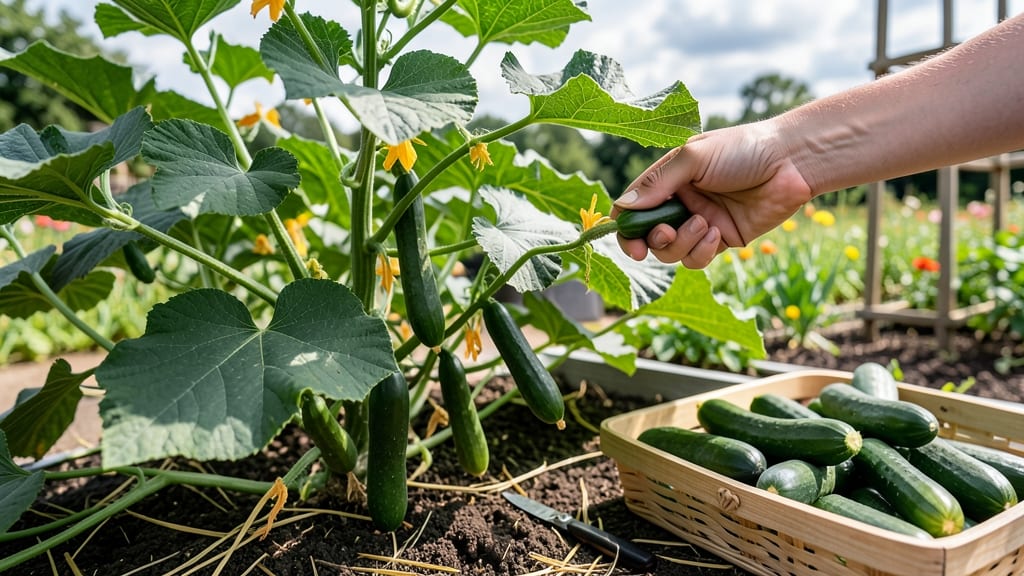
To pick cucumbers from your garden at the perfect moment means harvesting them when they're crisp, flavorful, and just the right size—not too soon, not too late.
Ever bitten into a cucumber that tasted bland or turned rubbery before you could use it? That’s a sure sign you missed the window. The good news? With a few simple checks—size, color, and texture—you can guarantee every harvest is garden-fresh perfection.
Cucumbers in Zone 6a hit peak ripeness between June and September, but timing varies by variety. Slicing types are ready at 6–8 inches with firm skin, while pickling cucumbers should be smaller and snappy. Overlook these cues, and you risk losing flavor or even the plant’s productivity.
Below, I’ll walk you through the exact visual and tactile clues to harvest cucumbers at their best, plus how heat and humidity can shift your ideal picking schedule. No more wasted produce—just crisp, delicious results every time.
5 Visual and tactile signs cucumbers are ready for harvest
Nothing beats the satisfaction of biting into a homegrown cucumber that's crisp, sweet, and perfectly ripe. But timing your harvest is an art—pick too early, and you'll sacrifice flavor; wait too long, and they turn bitter or rubbery.
The key lies in observing five clear visual and tactile signs that tell you when your cucumbers are at their peak. These cues help you avoid the most common mistakes and ensure every harvest delivers that garden-fresh taste.
First, let's address the most critical mistake: assuming all cucumbers ripen the same way. Different varieties—like slicing types (e.g., 'Straight Eight') or pickling types (e.g., 'Boston Pickling')—have unique ripening signals. Ignoring these differences can lead to disappointment.
For example, pickling cucumbers should be harvested small (1-3 inches), while slicing cucumbers shine at 6-8 inches. Understanding these distinctions is your first step to perfect timing.
-
1. Stem Color Change
Look for a yellowing stem end (slicing types) or white blossom end (pickling types). This signals the cucumber is ready to be picked for peak flavor. -
2. Deep, Even Green Color
A uniform dark green hue with no yellowing or pale patches means the cucumber has reached its ideal ripeness. Avoid cucumbers with uneven coloring—they’re often overripe or stressed. -
3. Firm Yet Slightly Yielding Texture
Press gently—ripe cucumbers should feel firm but slightly soft when pressed with your thumb. If they’re rock-hard, they’re underripe; if they dent easily, they’re overripe. -
4. Size Matters (Variety-Specific!)
Slicing cucumbers should be 6-8 inches long, while pickling cucumbers are best at 1-3 inches. Harvesting at the right size prevents bitterness and ensures the best texture. -
5. Easy Stem Snap Test
Gently twist the cucumber at its stem—it should snap cleanly without resistance. If the stem resists, the cucumber isn’t ready yet. This test works best in the morning when cucumbers are hydrated.
Environmental factors can also trick you into picking cucumbers too early or too late. For instance, hot, dry weather accelerates ripening, while cool, cloudy days slow it down. If you notice cucumbers ripening faster than usual, check them more frequently—especially if you’re growing heat-tolerant varieties like 'Straight Eight' or 'Marketmore'.
Conversely, if your garden is cooler, give them extra time to reach full size before harvesting.
Another pro tip: harvest consistently to encourage your cucumber plants to produce more fruit. When you pick ripe cucumbers regularly, the plant redirects its energy to grow new ones instead of letting them overripe on the vine.
This simple habit can double your yield and keep your harvests coming all season long. Plus, it reduces the risk of pests like cucumber beetles, which are drawn to overripe or rotting cucumbers.
Don’t overlook the seed development as a secondary cue. While not always visible from the outside, slightly developed seeds (but not fully blackened) indicate a cucumber is at its sweetest. Overripe cucumbers often have fully black seeds and a hollow center—signs you’ve waited too long.
If you’re unsure, cut one open: if the seeds are tiny and pale, it’s underripe; if they’re dark and shriveled, it’s past its prime.
For container gardeners, timing can be even trickier because space is limited. In pots, cucumbers ripen faster due to reduced root space and higher heat exposure. Check them every 2-3 days and harvest as soon as they meet the size and color criteria.
Overcrowded containers also stress plants, leading to uneven ripening—so prune vines to improve air circulation and even out growth.
Finally, remember that morning is the best time to harvest. Cucumbers are crispest and coolest after a night’s rest, making them easier to evaluate for ripeness. Avoid picking in the heat of the day, as the skin can feel softer due to dehydration, leading you to harvest underripe cucumbers.
A quick morning routine—water, inspect, and pick—sets you up for success all season.
By mastering these five visual and tactile signs, you’ll never again wonder whether a cucumber is ready to pick. Your garden will thank you with a bountiful, flavorful harvest that rivals anything you’ve bought at the store. Happy harvesting! 🥒
How to check cucumber ripeness without guessing: a step-by-step guide
Picking cucumbers at the perfect moment ensures maximum flavor and texture, but many gardeners struggle to tell when they're truly ready. The key lies in combining visual cues with simple tactile tests.
Unlike other veggies, cucumbers continue ripening after harvest, so timing matters more than you might think. Let me show you how to avoid those rubbery, seedy disappointments in your garden harvest.
First, understand that different cucumber varieties have distinct ripening signals. Slicing cucumbers like 'Straight Eight' or 'Marketmore' reach peak ripeness when their stems turn yellowish-brown, while pickling cucumbers like 'Boston Pickling' are best harvested when small and firm, often before the stem changes color.
Always check your variety's specific guidelines, as these differences can drastically alter your harvest timing.
When to Pick Cucumbers From Garden: Step-by-Step
- 1 Inspect the Stem End: Look for a color change from green to yellow (slicing) or white (pickling). This indicates the cucumber is ready to harvest.
- 2 Perform the Thump Test: Gently tap the cucumber with your knuckle. A ripe cucumber should give a hollow sound and feel firm but slightly yielding when pressed.
- 3 Check Seed Development: Cut open a test cucumber. For slicing types, seeds should be small and soft. For pickling, harvest before seeds enlarge to avoid bitterness.
- 4 Assess Size and Shape: Most slicing cucumbers are ready at 6-8 inches. Pickling types should be harvested at 2-3 inches for optimal crunch.
- 5 Harvest Frequency: Pick every 2-3 days for slicing types and every 4-5 days for pickling to encourage continuous production.
Environmental factors also play a crucial role in ripening. In hot, dry climates, cucumbers may ripen faster, so check them more frequently. Conversely, in cooler or humid conditions, they'll take longer to reach peak ripeness.
Always harvest in the morning when temperatures are cooler and cucumbers are at their crispest. Use a sharp pair of pruning shears or a knife to avoid damaging the vine.
For bush varieties, you'll find cucumbers clustered near the base of the plant, while vining types produce fruit along the length of the stem. Trailing vines can make harvesting tricky, so consider using a cucumber trellis to keep plants off the ground and make cucumbers easier to spot.
This also improves air circulation, reducing the risk of disease.
One common mistake is waiting too long for cucumbers to reach their maximum size. While larger cucumbers might look impressive, they often sacrifice flavor and texture. Overripe cucumbers develop a thick, tough skin and bitter seeds, making them less enjoyable.
By following these simple steps, you'll consistently harvest cucumbers at their sweetest and crispiest stage, ensuring a bountiful and delicious garden harvest all season long.