
Picking
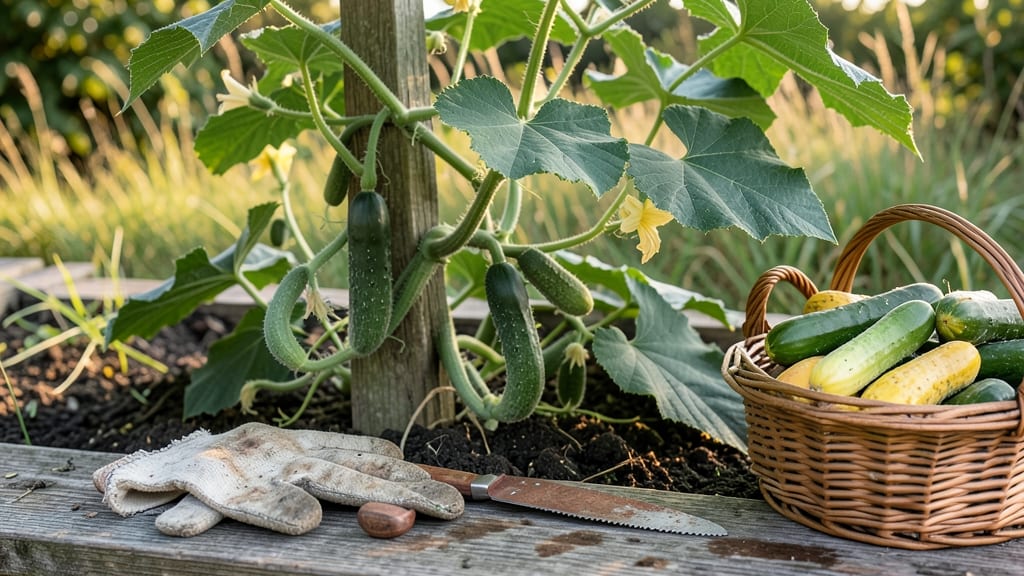
Harvesting cucumbers from your garden at the right time ensures crisp, flavorful produce 🥒 — and missing that window means bitter, seedy disappointment.
Picture this: you’ve been waiting weeks for those vines to swell, only to pick a cucumber that’s tough as a board or bursts with seeds. The difference between a perfect harvest and a sad one comes down to size, color, and texture — and knowing when to act.
Most gardeners wait too long, but cucumbers ripen fast. A 3–8 inch length, deep green skin, and a slight give when pressed are your cues. Morning harvests keep them fresh, and picking often encourages more production.
In this guide, I’ll walk you through the exact signs to watch for, how climate affects timing, and pro tips to keep your cucumbers coming all summer long.
How to determine cucumber harvest time by size, color, and texture
Knowing exactly when to harvest cucumbers transforms your garden from a hit-or-miss operation to a flavor-packed success. The key lies in three simple but critical factors: size, color, and texture.
Each plays a role in determining whether your cucumbers will be crisp, sweet, and perfect for slicing—or bitter, seedy, and overripe. Let’s break down these visual cues so you can pick at peak perfection every time.
Most gardeners focus on cucumber length as their primary indicator, but the truth is more nuanced. For example, slicing varieties like 'Straight Eight' shine at 6–8 inches, while pickling types such as 'Boston Pickling' are best harvested at 3–4 inches.
Even within these ranges, subtle differences in skin color and firmness can mean the difference between a stellar harvest and a disappointing one.
Color is your second clue, and it’s often overlooked. A deep, glossy green signals maturity for most varieties, but some—like Persian cucumbers—should be harvested when they’re light green with yellowing ends.
Always check the variety’s description, as color cues can vary wildly. For instance, 'English cucumbers' stay pale green longer, while 'Lemon cucumbers' develop a yellow hue when ready.
Texture is where many gardeners make their biggest mistake. A ripe cucumber should yield slightly to gentle thumb pressure—think of it like pressing a ripe avocado. If it feels rock-hard, it’s not ready; if it’s mushy or dented, it’s past its prime.
This firmness test is especially critical for thin-skinned varieties, which can turn watery if left too long on the vine.
| Variety Type | Ideal Size | Color Cue | Texture Test | Best For |
|---|---|---|---|---|
| Slicing (e.g., Straight Eight) | 6–8 inches | Deep green | Firm but yields slightly | Salads, sandwiches |
| Pickling (e.g., Boston Pickling) | 3–4 inches | Light green | Very firm | Fermenting, pickles |
| Persian (e.g., Persian Magnum) | 4–6 inches | Light green with yellowing end | Firm with slight give | Snacking, salads |
| English (e.g., Marketer) | 8–12 inches | Pale green | Thick, firm skin | Gourmet dishes |
| Lemon (e.g., Lemon Cucumber) | 3–5 inches | Yellow-green | Soft, slightly waxy | Fresh eating |
Timing your harvest isn’t just about individual cucumbers—it’s also about encouraging continuous production. If you wait too long, your plant will focus energy on seed development, leaving fewer cucumbers for your table.
For bush varieties, harvest every 2–3 days to keep production steady, while vining types may need daily checks during peak season. Pro tip: Harvest in the morning when cucumbers are coolest and crispest.
One of the biggest mistakes I see is ignoring the stem color at the base of the cucumber. A yellowing stem end is a universal sign of ripeness across most varieties. If the stem remains green, the cucumber isn’t ready—even if it’s reached the ideal size.
This cue is especially reliable for heat-loving varieties, which can ripen faster in hot climates. Always twist gently to detach cucumbers; avoid cutting the stem, as this can invite disease.
Climate plays a surprising role in harvest timing. In hot, dry regions, cucumbers may ripen faster and require more frequent harvesting. Conversely, in cooler or cloudy climates, they’ll take longer to reach peak ripeness.
Pay attention to your local growing conditions: if your cucumbers are maturing faster than expected, check them daily to avoid overripening. Conversely, if they’re lagging, give them a few extra days before harvesting.
Don’t overlook the seed development stage as a final check
Common mistakes that ruin cucumber flavor (and how to avoid them)
Even the most patient gardeners can end up with bitter, seedy cucumbers if they harvest at the wrong time. The key is catching them at peak ripeness—when they're firm, flavorful, and ready for your table.
Overripe cucumbers develop excessive seeds and a woody texture, while underripe ones stay bland and tough.
Leaving cucumbers on the vine too long doesn’t just ruin flavor—it also reduces plant productivity. Your cucumber plants will focus energy on overmature fruit instead of producing new blooms. This means fewer cucumbers overall, even if the ones you do get are giant and unusable.
Here’s the biggest mistake I see: harvesting inconsistently. Some gardeners wait until cucumbers are huge, while others pick them too early. The sweet spot? Checking your plants every 1-2 days during peak season to catch them at the perfect moment.
⚠️ Warning: Overripe Cucumbers Are a Flavor Crime
Yellowing stem ends and soft spots mean your cucumbers are past their prime. Once the skin turns yellow or orange, the flesh becomes spongy and bitter. Even worse, the seeds swell into a hard, inedible mass. Harvest before this happens—ideally when cucumbers are still deep green and 6-8 inches long.
Another red flag is overharvesting, which stresses your plants. If you pick too many cucumbers at once, your vines may slow down production or even wilt.
Always leave a few cucumbers on the plant to encourage continuous flowering. A good rule: never remove more than 1/3 of the fruit in a single harvest session.
Pay attention to the stem color too. A green stem end means the cucumber is still maturing, while a yellowing or brown stem signals it’s ready to pick. If the stem snaps easily when bent, that’s another sign of peak ripeness.
Ignore these cues, and you’ll end up with mealy, flavorless cucumbers that taste like disappointment.
For maximum yield and flavor, harvest in the morning when cucumbers are cool and crisp. Use clean pruners or sharp scissors to avoid damaging the vine, and always cut 1/4 inch above the fruit to prevent disease.
With these tips, you’ll go from bitter failures to crisp, sweet victories every time.