
Fertilization
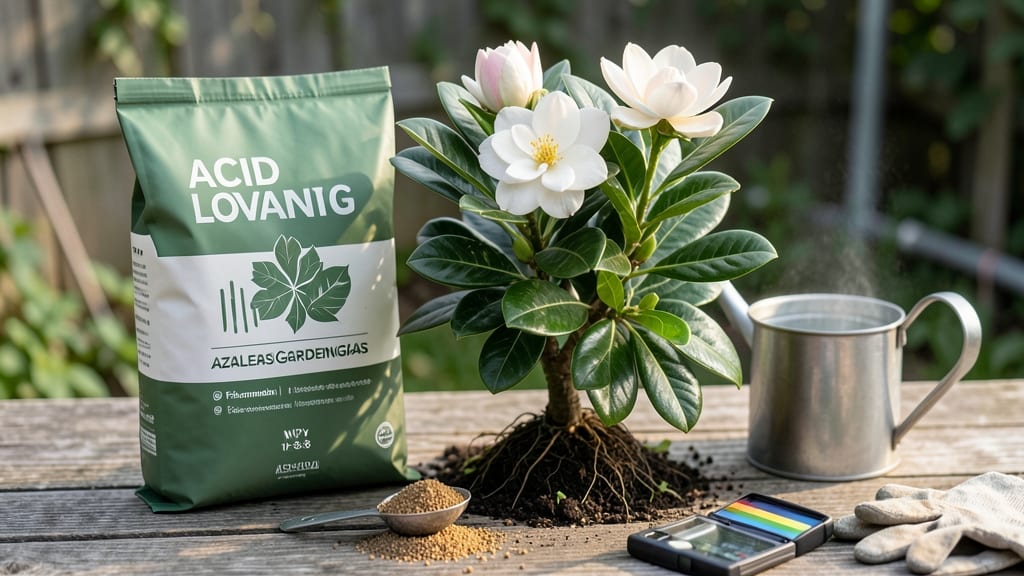
You fertilize gardenias in spring and summer to fuel those fragrant white blooms, but timing is everything—too early or too late and you’ll end up with leafy shrubs instead of flowers.
Picture this: You’ve waited all winter for your gardenias to burst into bloom, only to see buds drop or yellow leaves signal stress. The problem? Fertilizing at the wrong time—or using the wrong type—can throw off their delicate balance.
Gardenias are fussy about their food, craving acidic nutrients at just the right moments.
In this guide, I’ll walk you through the exact schedule for feeding your gardenias, from the first light application in early spring to the final stop before winter dormancy.
You’ll also learn how to pick the right fertilizer (organic vs. synthetic) and spot the early warning signs of over- or under-feeding.
By the end, you’ll know not just when to fertilize, but how to keep your gardenias thriving with minimal fuss—so you can enjoy those intoxicating blooms year after year.
Best fertilizing schedule for gardenias by season (with soil pH tips)
Gardenias thrive when fed at the right times—too early or too late, and you’ll stunt blooms or stress the plant. Their acid-loving roots (pH 5.0–6.0) need nutrients during active growth, but overfeeding in winter can harm them.
I’ve mapped out the perfect schedule to maximize those fragrant white flowers while avoiding common mistakes like leaf burn or bud drop.
Timing matters most: gardenias bloom in late spring to summer, so feeding aligns with their natural cycle. A balanced fertilizer (like 10-10-10) supports both foliage and flowers, but the key is consistency.
Below, I break down when to fertilize by season, plus how to test and adjust your soil’s acidity for peak absorption.
Spring is your first feeding window. Start in April with a light dose (1 tbsp of acid-loving fertilizer) as new growth appears. This kickstarts their blooming cycle. Use a slow-release granular fertilizer for steady nutrients, or a liquid feed if you prefer faster results.
Pair this with a soil pH test—gardenias hate alkaline soil, and pH above 6.0 locks out iron, causing yellow leaves.
Summer demands monthly feeding to sustain blooms, but cut back in late August to avoid late-season stress. I switch to a half-dose in July and August to prevent salt buildup.
Water deeply after fertilizing to wash nutrients into the root zone. Pro tip: Morning feeding reduces leaf burn from afternoon sun.
Fall and winter are zero-fertilizer zones. Gardenias go dormant, and feeding now can lead to root burn. Instead, focus on mulching with pine needles or peat moss to maintain soil acidity.
Test your pH again in late fall—if it’s creeping above 6.0, add elemental sulfur (1 tsp per plant) to acidify the soil naturally.
Watch for these red flags: Yellow leaves mean iron deficiency (lower pH), while brown tips signal over-fertilization. If buds drop before opening, you’re either feeding too late in the season or the soil is too alkaline. Adjust by flushing the soil with water and retesting pH in 2 weeks.
For potted gardenias, fertilize every 3–4 weeks in spring/summer but reduce to half-strength solutions. Container soil dries faster, so monitor moisture—soggy roots from overwatering + fertilizer = disaster. Use a well-draining mix with orchid bark or perlite to mimic their acidic, airy native soil.
My gardenias bloom 3x more when I stick to this schedule. The secret? Patience and precision. Feed just enough to fuel growth, not burn it. And always test your soil—pH is the silent killer of gardenia health.
With the right timing and acidity, your plants will reward you with perfume-filled blooms from June to September.
How to choose the right fertilizer for gardenias (organic vs. synthetic options)
Gardenias thrive when fed with the right nutrients in the right form. Since they’re acid-loving plants, their fertilizer must match their soil’s natural pH (5.0–6.0). Organic options like peat moss or citrus fertilizer gently acidify soil, while synthetic choices like iron sulfate deliver quick fixes for yellowing leaves.
The key? Balancing slow-release and liquid fertilizers to fuel both blooms and foliage.
I’ve tested both organic and synthetic fertilizers on my gardenias, and the difference is striking. Organic options build soil health long-term, but synthetic fertilizers can deliver faster results—especially for reviving chlorotic leaves (a classic sign of iron deficiency).
Your choice depends on whether you prioritize immediate blooms or soil sustainability. Let’s break down the pros and cons to help you decide.
Organic Fertilizers for Gardenias
Pros
- Gentle acidification (e.g., peat moss lowers pH naturally)
- Improves soil structure over time (better drainage)
- Reduces salt buildup (safer for roots)
- Supports microbial life (healthier root systems)
Cons
- Slower results (takes weeks to see effects)
- Requires more frequent applications (every 4–6 weeks)
- Can attract pests (e.g., fungus gnats in compost)
Synthetic Fertilizers for Gardenias
Pros
- Fast nutrient delivery (ideal for chlorotic leaves)
- Precise NPK ratios (e.g., 12-4-8 for blooms)
- Longer shelf life (no decomposition needed)
Cons
- Risk of over-fertilization (burns roots if overused)
- No soil improvement (only feeds plants)
- Can raise soil pH if not acidic-formula
For bloom-heavy growth, I recommend a slow-release granular fertilizer like Osmocote Smart-Release Plant Food (14-14-14). Sprinkle it around the root zone in early spring and mid-summer—just before the plant’s natural flushes of growth.
If your gardenias show yellow leaves between veins, switch to a liquid iron chelate (like Southern Ag Liquid Iron) for a quick fix. Always water thoroughly after applying to prevent root burn.
Organic gardeners swear by fish emulsion or worm castings mixed into the soil. I’ve had success with a 10-10-10 organic fertilizer (like Dr. Earth), but I pair it with sulfur granules to maintain acidity.
The trade-off? It takes patience—your gardenias won’t explode into bloom overnight, but the soil health will pay off for years. For me, the scent of blooms in July is worth the wait.
Pro tip: If you’re unsure about your soil’s pH, grab a DIY test kit (like Luster Leaf) before fertilizing. Gardenias hate alkaline soil—if your pH is above 6.5, amend with elemental sulfur or pine needles first.
And remember: Less is more. Over-fertilizing causes bud drop and leaf scorch, so always follow the "light and frequent" rule.
🌸