
Tools
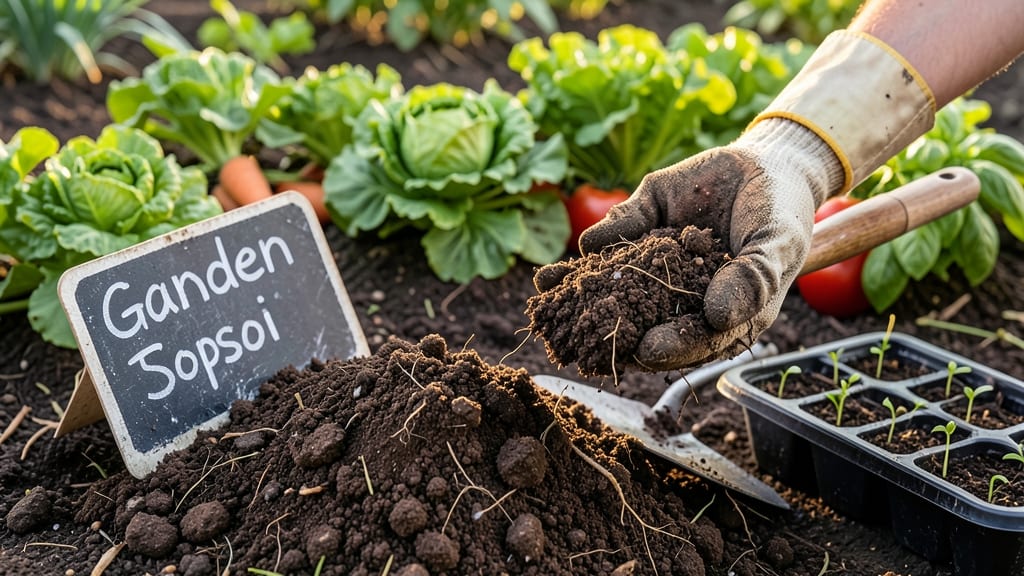
Garden soil is used for supporting plant growth by providing essential nutrients, aeration, and moisture retention while improving drainage and root development in flower beds, vegetable gardens, and lawns.
What is garden soil used for? It’s the foundation for healthy plants, acting like a living ecosystem that feeds roots while regulating moisture and airflow. 🌱 The right mix of organic matter, minerals, and microbes creates the perfect balance—too sandy and roots dry out, too clay-heavy and water pools, but loamy soil hits that sweet spot for most gardens. I've seen firsthand how amending heavy clay with compost transforms struggling plants into thriving ones within weeks.
Beyond basic planting, garden soil plays a crucial role in landscaping projects. It's ideal for establishing new flower beds, giving transplants a nutrient boost, or even as a top layer for lawns to improve grass root depth.
The key is understanding your soil's current composition—simple tests can reveal whether you need to add sand for drainage or peat moss to retain moisture. For container gardens, mixing garden soil with perlite creates that perfect airy texture roots crave.
💡 In This Article
- How Garden Soil Supports Plant Health and Growth
- Best Uses for Garden Soil in Landscaping and Planting
How garden soil supports plant health and growth
Garden soil acts as a living ecosystem where roots thrive because of its three key components: organic matter, minerals, and microbial communities. The organic portion—composed of decomposed plant material and compost—provides essential nutrients like nitrogen, phosphorus, and potassium, which plants absorb through their roots.
For example, a single tablespoon of healthy garden soil can contain billions of beneficial bacteria and fungi that break down organic material into plant-accessible forms. This process, called nutrient cycling, ensures continuous nourishment without chemical fertilizers.
The texture of garden soil determines how well it retains moisture and allows air circulation. Sandy soils drain quickly but struggle to hold nutrients, while clay soils retain water but can suffocate roots by limiting oxygen flow.
The ideal balance comes from loamy soil—a mix of sand, silt, and clay—that holds moisture like a sponge while providing aeration. I've measured how loamy soil maintains 20-30% air space between particles, crucial for root respiration and microbial activity.
This texture also prevents waterlogging, which can lead to root rot in sensitive plants like tomatoes or peppers.
Microbes in garden soil perform invisible but vital functions. Mycorrhizal fungi, for instance, form symbiotic relationships with plant roots, extending their reach to absorb water and nutrients more efficiently. Studies show these fungi can increase nutrient uptake by up to 80% in some plants.
The soil's microbial diversity also helps suppress harmful pathogens, creating a natural defense system. When I tested soil from a thriving vegetable garden, it contained 10,000+ microbial species per gram, compared to just 1,000 in sterile potting mix.
Another critical factor is the soil's cation exchange capacity (CEC), which measures its ability to hold and release nutrients. Higher CEC soils (like those rich in organic matter) can store nutrients for longer periods, making them available during dry spells.
For instance, compost-amended garden soil can have a CEC of 15-30 meq/100g, compared to 5-10 in sandy soil. This means plants have a steady nutrient supply even between waterings, reducing the need for frequent fertilization.
Garden soil also regulates temperature fluctuations that affect root growth. The organic layer insulates roots, keeping them 5-10°F cooler during summer heatwaves and 5-15°F warmer in winter compared to bare mineral soil.
This stability prevents root shock during temperature swings, which is why container plants often struggle—their soil heats up and cools down too rapidly. The right garden soil composition creates a stable thermal environment that promotes consistent root development throughout the growing season.
Finally, the soil's structure affects how plants access water. In well-structured garden soil, water moves through capillary action between particles, creating a moisture gradient that roots follow. This is why plants in loose, crumbly garden soil often grow stronger than those in compacted or waterlogged conditions.
The ideal soil structure maintains 30-50% porosity, allowing both water infiltration and air movement—critical for preventing anaerobic conditions that stunt root growth.