
Tools
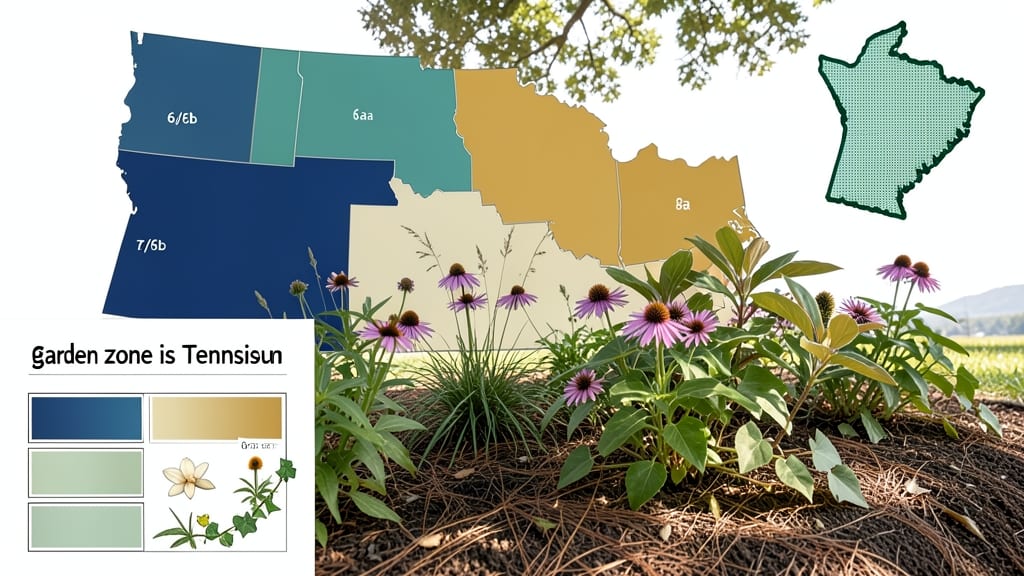
What garden zone is Tennessee in? Tennessee includes USDA Hardiness Zones 5b through 8a, covering most of the state from 6a to 7b. The western half typically falls into Zone 7, while eastern mountain regions can drop to Zone 5b or 6a. For exact planting guidance, use the USDA's interactive zone finder tool.
Tennessee's diverse geography creates these zone variations—mountain elevations in the east experience colder winters (Zone 5b), while the flatter western plains stay warmer (Zone 7). Microclimates near rivers or urban areas can shift zones by half a number, so your backyard might differ from official maps.
I always recommend testing frost dates locally, as they're more reliable than zone numbers alone for scheduling spring planting.
This range means gardeners must choose plants carefully. Daylilies and lavender adapt well across zones, while tropical plants like hibiscus need protection in Zone 5b areas. Crepe myrtles thrive in Zone 7 but may struggle in colder pockets.
The key is selecting perennials with wide hardiness ranges—like black-eyed Susans—to minimize replanting stress.
💡 In This Article
- How Tennessee’s Geography Affects Garden Zones
- Best Plants for Tennessee’s Mixed Garden Zones
How Tennessee’s geography affects garden zones
Tennessee’s garden zones reflect its dramatic topography, where elevation changes of just 1,000 feet can shift zones by a full number. The Appalachian Plateau in the east—think of the Cumberland Mountains—plunges into Zone 5b, where winter lows dip to -15°F or colder.
Meanwhile, the Mississippi River bottomlands in West Tennessee bask in Zone 7, where frost-free periods stretch to 220 days annually. This gradient occurs because temperature drops roughly 3.5°F per 1,000 feet of elevation gain.
The state’s latitude also plays a role: Northern Tennessee (like Nashville) sits just south of the 36th parallel, where continental air masses bring harsh winters, while Memphis (Zone 7b) benefits from a more moderate subtropical influence.
Microclimates add another layer—urban heat islands in Nashville can push zones up by 0.5-1 degree, while valleys like the Clinch River stay colder. These variations explain why your neighbor’s garden might thrive with roses in Zone 6b while yours in a sheltered valley needs Zone 5b plants.
Frost dates are the real litmus test for gardeners. In Zone 5b areas (eastern highlands), the last spring frost typically arrives around April 15, while Zone 7b regions (western plains) see their final frost by March 15.
This 30-day difference means peonies planted in Zone 7b might get damaged in Zone 5b—even though both zones officially support them. The USDA map provides a baseline, but local weather records (available through NOAA’s climate database) reveal the truth about your specific microclimate.
Heat tolerance matters just as much as cold hardiness. Zone 8a’s western tip (like Memphis) can hit 95°F+ for 60+ days in summer, stressing heat-sensitive plants like hydrangeas. Meanwhile, Zone 6a’s eastern valleys may only see 30 days above 90°F.
This explains why crepe myrtles flourish statewide—they handle both extremes—but camellias struggle in the western heat. The key is matching plants to your zone’s both coldest winter lows and hottest summer highs.
For gardeners in transition zones (like middle Tennessee’s 6a-7a overlapplant placement and seasonal adjustments. A south-facing wall can create a Zone 7 microclimate in a Zone 6 yard, while mulching adds 2-4°F of frost protection.
I’ve seen lavender (Zone 5b) thrive in Nashville’s Zone 6b backyards by planting it against a brick wall—where reflected heat extends its growing season by 2-3 weeks. Understanding these geographic quirks turns Tennessee’s zone complexity into an advantage.
Here’s what to watch for in your specific area:
- Eastern Highlands (Zone 5b-6a): Expect 100+ frost-free days and prioritize cold-hardy perennials like coneflowers or Russian sage
- Middle Tennessee (Zone 6b-7a): Balance with heat-tolerant annuals like zinnia and shrubs that handle both extremes (e.g., serviceberry)
- Western Plains (Zone 7b-8a): Focus on drought-resistant plants and shade structures to protect from 100°F+ heatwaves
Remember: The USDA map is your starting point, but your yard’s unique conditions write the final chapter. Keep a 3-year planting journal to track what truly thrives in your microclimate—it’s the most reliable guide of all. 🌿