
Planting
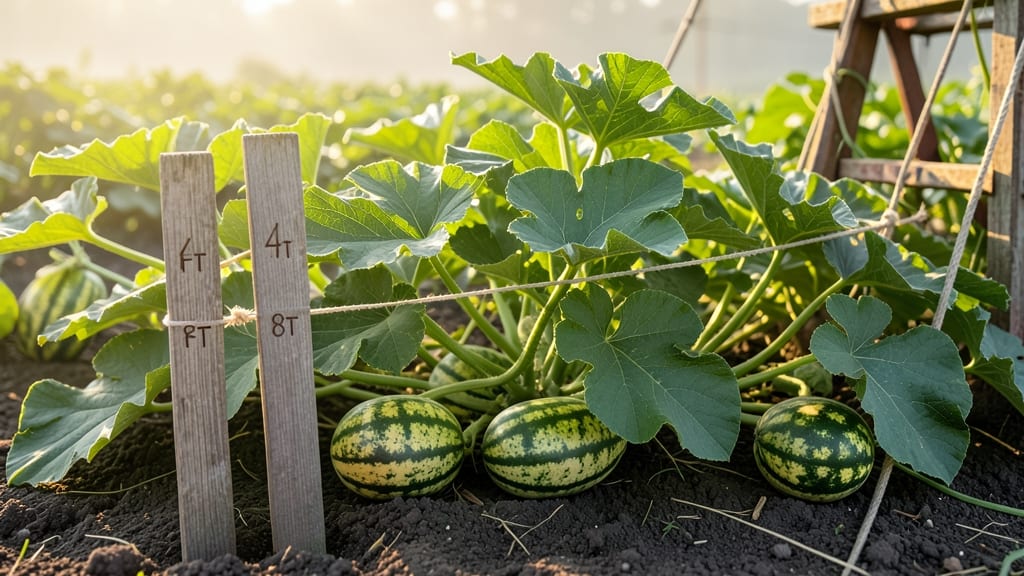
Spacing your watermelon garden correctly is the key to juicier, larger fruits and fewer pests—don’t let crowded vines steal your harvest.
Picture this: you’ve planted your 🍉 seeds with high hopes, only to watch your melons stay small, bitter, and prone to rot. That’s the cost of guessing spacing.
The right distance between vines ensures strong airflow, sunlight penetration, and room for those vines to sprawl—all of which directly impact flavor, size, and yield.
In this guide, I’ll break down the exact spacing you need for slicing, seedless, and mini varieties, whether you’re planting in rows, hills, or containers.
You’ll also learn how to adjust spacing for trellised watermelons (yes, they can grow vertically!) and avoid the most common mistakes that lead to wasted plants.
By the end, you’ll know exactly how far apart to space your watermelons for a bountiful, low-stress harvest—no more overcrowded chaos, just sweet, ripe fruit ready to pick.
Optimal watermelon garden spacing by variety and planting method
Watermelons need careful spacing to thrive, but the right distances depend on your variety and planting method. Whether you're growing slicing giants or mini seedless types, proper spacing ensures better airflow, larger fruits, and fewer diseases.
I’ve grown everything from sprawling Sugar Baby to compact Black Diamond varieties, and spacing makes all the difference.
In-ground gardens offer the most flexibility, but raised beds and containers require adjustments. For example, a 5-gallon container might work for a mini watermelon, but a standard slicing type needs at least 3x3 feet of space.
Let’s break down the best spacing for each scenario so you can plan your high-yield watermelon patch like a pro.
For in-ground planting, stick to the row spacing guidelines above, but leave extra room if your garden gets heavy rainfall. Watermelons hate soggy roots, so raised beds (with 12-18 inches deep) are ideal for heavy-soil climates.
I once grew Crimson Sweet in a 4x8-foot raised bed with 4-foot row spacing, and the yield was just as good as in-ground—plus, no weeds!
If you’re container growing, choose mini or seedless varieties and use 5-gallon buckets or larger. A single vine per container works best, but avoid overcrowding—even mini melons need 2-3 feet of space to sprawl.
Trellising mini varieties can save space, but ensure the fruit weight doesn’t snap the trellis. I’ve had success with plastic-coated wire trellises for Orange Slicer melons.
One common mistake is assuming trellising works for all watermelons. Slicing types often drop fruits when trellised because their heavy rinds strain the vines. Save trellising for mini or seedless varieties, or use a soft trellis with wide mesh to support the fruit gently.
For large varieties, let them sprawl naturally—it’s the only way to get those 20-pound monsters!
Pro tip: If you’re short on space, try hill planting. Mound soil into 1-foot-high hills and plant 2-3 seeds per hill, spacing hills 4-5 feet apart. This improves drainage, reduces soil-borne diseases, and makes harvesting easier.
I’ve used this method in small urban gardens with great success—just be ready to water deeply since hills dry out faster.
Finally, don’t forget companion planting to maximize space. Grow bush beans or radishes between watermelon rows—they fix nitrogen and repel pests like cucumber beetles. Avoid planting near
How spacing affects watermelon growth: common mistakes and fixes
Watermelon vines may look harmless as seedlings, but their sprawling nature makes proper spacing the difference between a bountiful harvest and a disappointing yield. I’ve seen gardens where vines touch at planting, only to watch melons stay small and plants battle for nutrients.
The right spacing isn’t just about fitting more plants—it’s about giving each vine room to thrive.
Overcrowding triggers a chain reaction: reduced sunlight weakens vines, poor air circulation invites fungal diseases like powdery mildew, and nutrient competition stunts fruit development. Even the hardiest varieties like Sugar Baby or Crimson Sweet will underperform if crammed together. Let’s fix this before your next planting season.
⚠️ Overcrowding Disaster: The Hidden Costs
Smaller melons: Vines fight for resources, diverting energy from fruit growth. Expect 30-50% smaller melons in crowded beds.
Disease outbreaks: Stagnant air traps moisture, perfect for powdery mildew and downy mildew. I’ve lost entire patches due to this.
Weed competition: Crowded vines can’t shade soil effectively, letting weeds steal water and nutrients.
Watermelon spacing needs change as plants grow. At the seedling stage, you might start with 12-inch spacing, but by flowering time, that should expand to 3-6 feet between vines depending on variety.
The key is adjusting as vines spread—think of it like giving your melons a personal space bubble they desperately need.
For bush varieties like Sugar Baby, maintain 3 feet between plants and 5 feet between rows. Standard vining types (like Charleston Gray) need 6 feet between vines and 8-10 feet between rows to avoid shade competition.
If you’re trellising, you can reduce vine spacing to 2-3 feet, but still leave 5 feet between rows for access.
One of my biggest mistakes? Ignoring soil fertility when adjusting spacing. Poor soil means plants compete harder for nutrients, making spacing issues worse. Always test your soil first and amend with compost or aged manure before planting. A healthy root system can handle closer spacing better than starved vines.
Pro tip: Use hill planting in poor soils or small spaces. Mound soil into 12-inch-high hills, plant 2-3 seeds per hill, and space hills 4-5 feet apart. This improves drainage, reduces disease, and gives vines better access to nutrients deeper in the soil.
Remember, spacing isn’t static. Thin seedlings to your target spacing when they’re 4-6 inches tall, and prune excess vines if they start crowding. Your watermelons will thank you with sweeter, larger fruit and fewer pests to battle. Happy growing!