
Tools
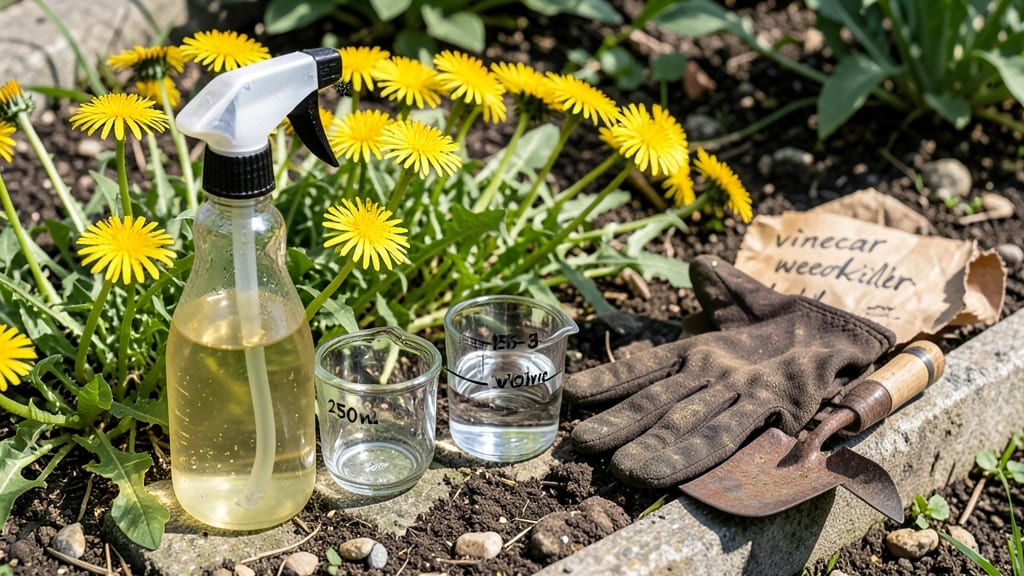
Using vinegar in the garden is a powerful way to control weeds, deter pests, and adjust soil pH naturally, but you must dilute it properly and apply it precisely to protect plants and soil microbes.
Vinegar's acetic acid disrupts pests by dehydrating their cells, making it especially effective against weeds and soft-bodied insects like aphids. 🔥 The key is dilution—undiluted vinegar can scorch plants, while a 1:1 ratio with water often works for most garden applications.
I've found that spraying vinegar on weeds during their early growth phase prevents them from establishing deep roots, saving time on manual removal later.
For soil pH adjustment, vinegar lowers alkalinity, which benefits acid-loving plants like blueberries and azaleas. However, overuse can harm beneficial microbes, so test your soil first and apply vinegar sparingly—think of it as a fine-tuning tool rather than a quick fix.
A simple pH test kit helps track progress, ensuring you don't overshoot the ideal range for your garden.
💡 In This Article
- How Vinegar Works as a Natural Garden Pest Killer
- Safe Vinegar Soil pH Adjustment for Acid-Loving Plants
How vinegar works as a natural garden pest killer
Vinegar's power as a garden pest control comes from its high acetic acid content, typically 4-8% in household versions.
When sprayed on weeds or soft-bodied insects like aphids, the acid disrupts their cell membranes, causing rapid dehydration. 🔥 This process is called desiccation, where the vinegar essentially "dries out" the pests by breaking down their protective outer layers.
For example, spraying a 1:1 vinegar-water mix on dandelion leaves will cause them to wilt within hours, preventing photosynthesis and killing the plant.
The effectiveness depends on proper dilution and timing. Undiluted vinegar can scorch plant leaves, while a 1:3 vinegar-to-water ratio works well for most garden pests. The acetic acid also creates an inhospitable environment for fungal spores, making it useful against powdery mildew when applied as a preventative spray.
However, vinegar won't penetrate deep into soil to kill underground weed roots, so repeated surface applications are needed for best results.
One key mechanism is vinegar's low pH (2-3), which is far more acidic than most plant tissues (typically 5.5-6.5). This pH shock damages the cell walls of unwanted plants while leaving hardier garden plants relatively unharmed—though sensitive varieties like tomatoes may show minor leaf burn.
The best time to apply vinegar is on a sunny, dry day, as the sun enhances evaporation and concentrates the acetic acid's effect.
For targeted applications, use a spray bottle with a fine mist nozzle to avoid overspray on desired plants. A 1% vinegar solution (1 part vinegar to 9 parts water) works well for general weed control, while a 2-3% solution is better for tougher weeds like creeping Charlie.
Always test a small area first, as some plants have varying tolerances to acetic acid.
What makes vinegar particularly appealing is its dual action: it kills pests while also suppressing future growth. The residual acetic acid lingers on surfaces, discouraging new weed seeds from germinating. This is why gardeners often see reduced weed pressure in treated areas for 2-4 weeks after application.
However, vinegar won't prevent weeds from returning entirely—it's most effective as part of an integrated approach that includes mulching and regular monitoring.
One common mistake is assuming all vinegar is equally effective. White vinegar (typically 5% acidity) works well, but apple cider vinegar (often 4-6% acidity) contains trace nutrients that may benefit soil microbes in small doses.
For maximum potency, use household white vinegar with at least 5% acetic acid, as labeled on the bottle.