
Watering
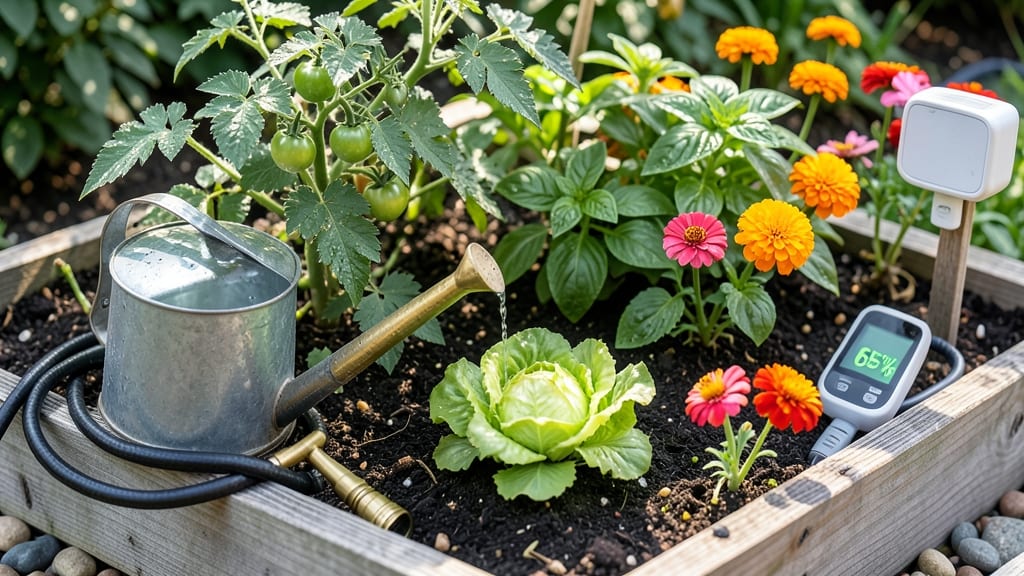
To water your garden properly, you need to know how often—because guessing leads to either soggy roots or thirsty plants that never thrive.
Struggling to keep your garden lush without drowning plants or letting them wilt? The answer lies in understanding your soil type and climate—not just guessing with a watering can.
Clay holds moisture for days, while sandy soil drains in hours. A spring morning in Zone 6a demands different care than a summer heatwave. Below, I break down the science behind watering schedules, plus how to read your plants’ signals before they scream for help.
You’ll learn the exact intervals for your soil, how to adjust for weather, and the 3 signs you’re over- or under-watering—so your garden stays healthy without wasting a drop.
Soil-specific watering frequency: clay vs. sandy vs. loamy gardens
Your garden's soil type is the secret weapon for perfect watering—because clay, sand, and loam behave like completely different planets. Clay soil clings to water like a sponge, while sandy soil drains faster than a sieve.
Even loamy soil (the gardener's gold) needs precision to avoid over- or under-watering. Let's decode the science so you water exactly when needed, not by guesswork.
Understanding your soil's water retention capacity saves time, money, and stressed plants. Clay holds moisture 3x longer than sand, meaning your tomatoes might drown in one watering while your succulents in sandy soil need daily sips.
The key? Check soil moisture 2 inches deep—that’s where roots thrive. Skip the surface test; it’s a common mistake that leads to root rot or wilting.
| Soil Type | Water Retention | Ideal Watering Frequency | Drought-Tolerant Plants | Signs of Overwatering |
|---|---|---|---|---|
| Clay | Holds water 3x longer | Every 7-10 days (deep soak) | Lavender, Russian Sage | Yellowing leaves, mold |
| Sandy | Drains in 1-2 hours | Every 2-3 days (light daily) | Cacti, Yucca, Sedum | Crispy edges, dry soil |
| Loamy | Balanced retention | Every 5-7 days (1-2 inches) | Roses, Tomatoes, Peppers | Wilting, root rot |
If your garden has clay soil, you’re lucky—it’s like a natural water battery. Water deeply every 7-10 days and let the soil absorb moisture. Drought-tolerant plants like lavender thrive here because they handle the slow-release hydration.
For sandy soil, think of it as a desert oasis: water lightly every 2-3 days or your succulents will beg for a drink. Loamy soil? The perfect middle ground—water 1-2 inches weekly and watch your tomatoes and peppers flourish.
For clay-heavy gardens, improve drainage with organic matter like compost or gypsum.
Sandy soil? Mulch heavily to slow evaporation and retain moisture. Loamy soil is forgiving but still benefits from mulching to keep roots cool and hydrated. Test your soil with a simple moisture meter or stick your finger 2 inches deep—if it’s dry, water; if it’s damp, wait.
Adjust your watering for seasonal shifts.
In summer heat, clay soil may need watering every 5-7 days instead of 10, while sandy soil might require daily light watering. Winter slows everything down: reduce frequency by 50% and focus on deep soaks to prevent root suffocation in clay.
Watch for plant signals: wilting leaves mean underwatering, while yellowing or moldy soil screams overwatering. Adjust on the fly—if your roses droop by noon, they need more water; if the soil smells like rotten eggs, cut back. Drought-tolerant plants like lavender or sedum are your best friends in extreme soils—they thrive where others fail.
Pro tip: Water in the morning to reduce evaporation and fungal risks. Avoid evening watering—wet foliage overnight invites pests and disease.
Use a soaker hose or drip irrigation to deliver water directly to roots, cutting waste by up to 30%. Group plants by soil needs: succulents with other drought lovers, tomatoes with loam-friendly veggies.
Don’t forget: amend your soil over time. Add compost to clay to improve drainage, or peat moss to sand to boost water retention. Healthy soil = happy plants = less watering stress.
Start with a simple soil test (kits cost $20 and save you hundreds in wasted water). Once you master your soil’s quirks,
Climate-based watering adjustments: heat, rainfall, and humidity rules
Your garden's watering needs aren't one-size-fits-all—they're dictated by your local climate conditions. While I might water my tomatoes every 2 days in 90°F heat, your roses in humid Florida may only need weekly watering.
The key is understanding how temperature, humidity, and rainfall interact with your plants' evapotranspiration rates.
Evapotranspiration (ET) measures how much water plants lose through evaporation and transpiration. In arid climates, ET can be 3x higher than in coastal regions.
For example, my zucchini plants in Zone 7a need deep watering every 2 days in summer, but my neighbor's lavender in Zone 9b thrives on bi-weekly watering thanks to natural rainfall patterns.
- 1 Check your region's ET rate: Use the ET calculator from your local agricultural extension (e.g., USDA ET maps) to find your local ET value. For example, Phoenix averages 0.35 inches/day in summer.
- 2 Adjust for humidity: In humid climates (e.g., Southeast USA), reduce watering by 20-30% because high humidity slows evaporation. My impatiens in 80% humidity only need watering when the top inch of soil feels dry.
- 3 Skip watering after rain: If your area gets 1 inch of rain, pause watering for 3-5 days to let soil absorb moisture. I use a rain gauge to track weekly rainfall and adjust my drip irrigation schedule accordingly.
- 4 Morning watering wins: Water between 6-10 AM to reduce evaporation loss. My peppers stay healthier when watered in the morning because foliar diseases thrive in evening moisture.
- 5 Mulch to retain moisture: Apply 2-3 inches of mulch to reduce water loss by 30-50%. My straw mulch keeps soil cooler and moist longer, cutting my watering needs in half during heatwaves.
Seasonal shifts demand flexible watering. During spring, I water my herbs every 3-4 days as temperatures rise, but switch to bi-weekly watering in fall when cooler temps slow growth. Pay attention to leaf color—wilting signals underwatering, while yellowing leaves often mean overwatering.
Pro tip: Use a soil moisture sensor to track root-zone moisture. I buried one in my vegetable garden and adjusted my schedule when readings dipped below 40%. This eliminated guesswork and saved 30% on water last summer.
Remember, drought-tolerant plants like lavender or succulents need far less water than thirsty crops like cucumbers or lettuce. Tailor your approach to your plant types and local climate for a thriving garden with minimal waste. 💧☀️