
Tools
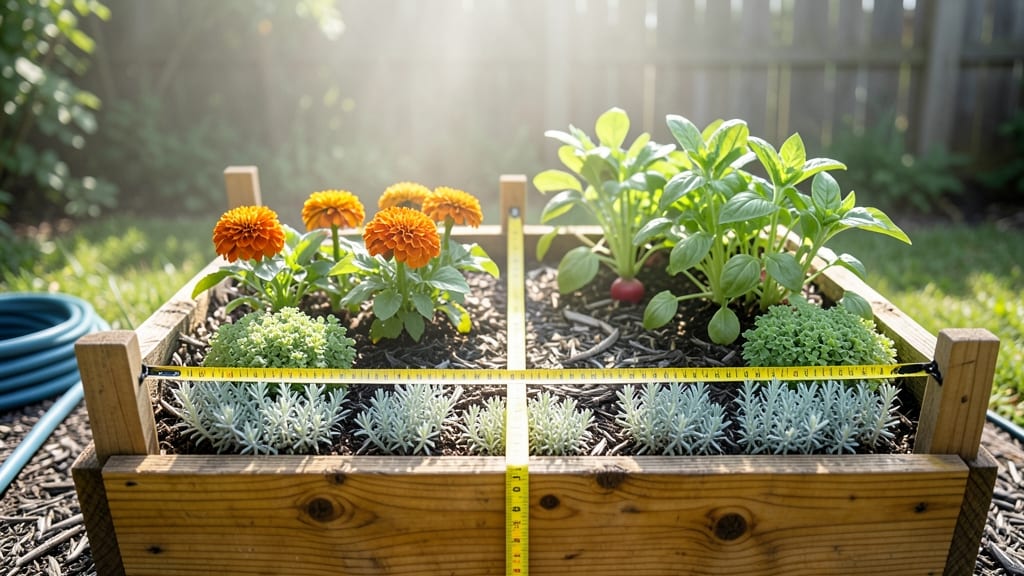
The standard garden bed size is 4 feet wide by 8 feet long, designed to balance accessibility with space efficiency while promoting healthier soil and better plant yields.
A 4x8-foot garden bed strikes the perfect balance between reach and space utilization. This size lets you stand comfortably in the middle without stepping on soil, which helps prevent compaction—a common issue that restricts root growth.
The dimensions also align with standard lumber lengths for raised beds, making construction straightforward and cost-effective. Plus, this layout maximizes your growing area while keeping maintenance manageable, whether you're weeding, watering, or harvesting. 🌱
For raised beds, these dimensions work especially well because they improve drainage and soil quality by allowing deeper root systems. In-ground beds benefit too, as the width prevents soil from becoming too compacted when you walk along the edges.
Many gardeners also find this size ideal for companion planting, where different crops support each other's growth patterns.
💡 In This Article
- Why Standard Garden Bed Dimensions Improve Plant Growth
- Customizing Garden Bed Sizes for Different Plant Types
Why standard garden bed dimensions improve plant growth
The 4-foot width of a standard garden bed is no accident—it's based on ergonomics and soil science. When you stand in the center, your arms can comfortably reach 2 feet in any direction without stepping on the soil.
This prevents soil compaction, which occurs when foot traffic crushes soil particles together, reducing pore space for air and water. Compacted soil can restrict root growth by up to 30%, limiting nutrient uptake and stunting plant development.
From a mechanical standpoint, soil compaction happens because each step exerts 200-400 pounds of pressure per square inch. A 4-foot width ensures you never walk closer than 2 feet from the bed's edge, keeping the soil's natural structure intact.
The 8-foot length further optimizes space by allowing you to stand in the middle while accessing the entire bed without stepping on it.
This design also creates a 1:2 width-to-length ratio, which is ideal for heat distribution—longer beds retain moisture better and reduce temperature fluctuations between the center and edges.
Water retention improves significantly in these dimensions too. The 4-foot width creates a larger surface area relative to the bed's perimeter, reducing water loss through evaporation. Studies show that garden beds lose 15-20% less water when they're wider than 3 feet, thanks to reduced edge exposure.
The 8-foot length also allows for better root spread—many vegetables, like tomatoes or zucchini, can develop roots up to 3 feet long, which fits perfectly within this layout without overcrowding.
For raised beds, these dimensions work even better because they eliminate the need to step on soil entirely. The 4-foot width aligns with standard lumber lengths (8-foot boards cut into 4-foot sections for sides), making construction cost-effective while maintaining structural integrity.
The height—typically 6-12 inches—also improves drainage by preventing waterlogging, which is critical for root health. In-ground beds benefit similarly, as the width prevents soil from becoming too compacted when you walk along the edges for maintenance.
Another key advantage is soil temperature regulation. The 4x8-foot layout creates a microclimate where soil warms up more evenly in spring and stays cooler in summer. This consistency is vital for seed germination and root growth—most vegetables thrive in soil temperatures between 60-75°F.
The dimensions also make it easier to rotate crops annually, a practice that prevents soil depletion and reduces pest cycles. 🌱
Consider this comparison: a 3-foot-wide bed forces you to step on the soil to reach the center, compacting it and reducing yields. Meanwhile, a 5-foot-wide bed makes reaching the center difficult, leading to uneven maintenance.
The 4-foot standard strikes the perfect balance, ensuring your plants get the care they need without compromising soil health.