
Tools
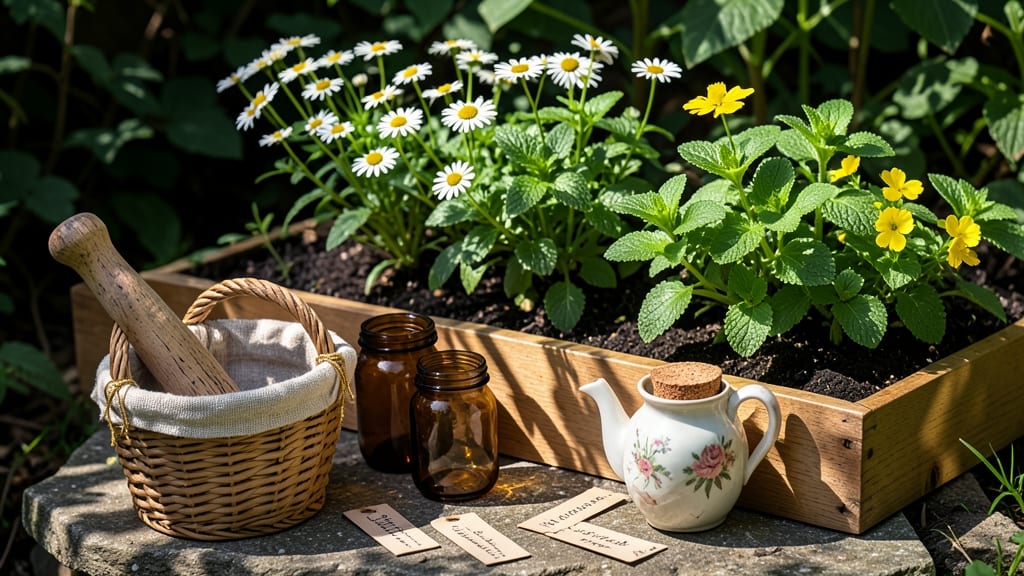
To start a medicinal tea garden, choose resilient herbs like peppermint, chamomile, and lemon balm that thrive in well-draining soil with 6-8 hours of sunlight daily. Arrange plants by their water preferences and companion benefits to maximize growth and ease of harvesting.
Creating a medicinal tea garden is all about balancing herb resilience with harvest efficiency.
Many of these plants, like lavender and rosemary, prefer dry conditions and full sun, while others such as peppermint need consistent moisture. 🌿 The key is grouping them by needs—place thirsty plants like nettle near water sources and drought-tolerant varieties in sunnier spots.
I’ve found that adding a few companion plants, like basil with thyme, can naturally deter pests while boosting flavor profiles.
Don’t overlook soil quality—most medicinal herbs thrive in loamy, slightly acidic soil with good drainage. A 6-8 hour sunlight window is non-negotiable for most, though a few shade-tolerant options like stevia can work in partial light.
Start small with perennials (like chamomile) for year-round harvests, and add annuals (such as hibiscus) for seasonal variety and pest control.
💡 In This Article
- Best Medicinal Herbs for Tea and Their Growing Conditions
- Designing a Functional Medicinal Tea Garden Layout
Best medicinal herbs for tea and their growing conditions
Medicinal herbs thrive when matched to their native growing conditions—lavender, for instance, loves dry, well-draining soil and full sun (6-8 hours daily) because it evolved in Mediterranean climates where summers are hot and dry.
Its calming properties come from linalool and linalyl acetate compounds, which concentrate most in the flower buds when grown in USDA zones 5-9.
Chamomile, on the other hand, prefers moist, slightly acidic soil (pH 6.0-7.0) and tolerates partial shade, making it ideal for zones 3-10—its anti-inflammatory benefits stem from apigenin, which thrives in cooler, damper conditions. 🌿
Herbs like peppermint and lemon balm require consistent moisture and partial shade (4-6 hours of sun) to prevent bolting, which is why they flourish in zones 4-11 alongside water sources. Their volatile oils (menthol in peppermint, citral in lemon balm) develop best when roots stay cool and hydrated.
Nettle, another powerhouse for teas, loves rich, nitrogen-filled soil and full sun to partial shade—it’s packed with iron and vitamin C but can become invasive if not contained in zones 3-9.
Hibiscus, often overlooked, thrives in warm, humid zones (7-11) with 6+ hours of sun and acidic soil (pH 5.5-6.5), where its anthocyanins give it antioxidant-rich red hues.
The science behind these preferences lies in their natural defenses.
Drought-tolerant herbs like rosemary and thyme have evolved thick, waxy leaves to retain moisture, while moisture-loving plants like mint develop aggressive root systems to compete for water. 🌱 Understanding these traits helps you replicate their native environments—lavender in rocky, sunny spots mimics its Mediterranean roots, while peppermint in a shaded corner mirrors its damp, woodland origins.
This precision ensures higher medicinal potency in your harvests.
Soil pH plays a hidden but critical role: chamomile and stevia prefer slightly acidic conditions (pH 5.5-6.5), while lavender and rosemary thrive in neutral to alkaline soil (pH 6.0-8.0).
A simple soil test kit ($10-$15) can reveal your garden’s baseline pH, allowing you to amend with sulfur (to lower pH) or lime (to raise it). For example, adding composted pine needles can naturally acidify soil for chamomile, while crushed eggshells raise pH for lavender.
These adjustments directly impact the herbs’ ability to absorb nutrients—and thus their medicinal efficacy.
Light exposure isn’t just about hours—it’s about intensity. Herbs like hibiscus need direct sunlight (6+ hours) to produce vibrant flowers rich in antioxidants, while delicate leaves of lemon balm can scorch under midday sun in hot climates (zones 8-11).
A simple trick: use drip irrigation to keep soil moist during peak sun hours, which prevents stress and bolting. This is especially critical in zones 9-11, where afternoon heat can overwhelm even hardy herbs like rosemary if not managed properly.
Consider these top 5 medicinal tea herbs and their ideal conditions:
- Lavender: Full sun, dry soil, zones 5-9 – Calming, anti-anxiety
- Chamomile: Partial shade, moist soil, zones 3-10 – Anti-inflammatory, sleep aid
- Peppermint: Partial shade, moist soil, zones 4-11 – Digestive aid, pain relief
- Nettle: Full sun to partial shade, rich soil, zones 3-9 – Iron-rich, immune booster
- Hibiscus: Full sun, acidic soil, zones 7-11 – Vitamin C, blood pressure regulator
Each of these herbs offers unique benefits, but their potency hinges on replicating their native growing conditions as closely as possible. 🌿