
Propagation
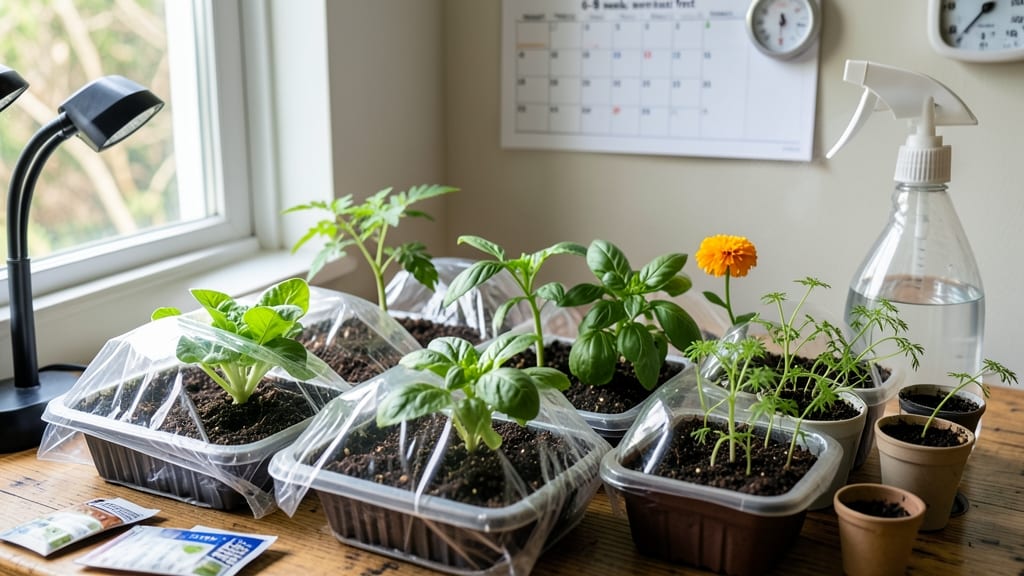
To start seeds for a spring garden, begin 6-8 weeks before your last frost date for cool-season crops like peas and spinach, while warm-season plants such as tomatoes and peppers require 8-12 weeks of indoor growing. Timing your sowing aligns with transplanting after frost risk passes.
Timing your seed starting ensures healthy seedlings ready for spring's ideal conditions. 🌱 Cool-season crops thrive with early starts, while warm-season plants need more time to harden off before outdoor temperatures rise. I always calculate my last frost date first—this sets the foundation for all my planting schedules.
For example, broccoli needs 10-12 weeks indoors, while basil can wait until just 4-6 weeks before transplanting.
Pro tip: Use a seedling heat mat for slower starters like peppers, which need consistent warmth to germinate. This small investment can mean the difference between thriving plants and leggy failures.
Always keep your growing space well-lit—most seedlings need 14-16 hours of light daily to prevent stretching toward weak light sources.
💡 In This Article
- How Seed Germination Rates Affect Spring Planting Timing
- Plant-Specific Seed Starting Calendar for Spring Gardens
How seed germination rates affect spring planting timing
Seed germination rates vary dramatically between plant species due to their natural life cycles and environmental adaptations. For instance, cold-hardy vegetables like spinach and lettuce can germinate at soil temperatures as low as 40°F, making them ideal for early indoor starts.
In contrast, warm-season crops like tomatoes and peppers require soil temperatures above 70°F to germinate properly, which is why they need an extended indoor growing period of 8-12 weeks before transplanting.
The science behind germination timing lies in enzyme activity within the seed. When moisture and warmth activate these enzymes, they break down stored nutrients to fuel the seedling's growth. For example, pepper seeds contain higher levels of germination inhibitors that need consistent warmth (80-85°F) to overcome.
This is why pepper seeds often take 10-14 days to sprout compared to fast-germinating radishes (3-5 days). Proper seed depth also matters—planting seeds too deep can starve seedlings of oxygen, while shallow planting risks drying out the seed.
Understanding days-to-maturity calculations is crucial for accurate scheduling. This number represents how long it takes from seed to harvest, but you must subtract the weeks needed for outdoor growth.
For instance, if your last frost date is April 15th and you have 90 days to maturity for broccoli, you'd start seeds 60-70 days before frost (about February 15th) to allow 30 days for outdoor growth.
This method ensures your seedlings are ready when soil temperatures reach optimal levels for transplanting.
Light conditions play an equally important role in germination success. Most seeds need darkness to germinate, but once seedlings emerge, they require 14-16 hours of light daily to prevent etiolation (stretching). Without proper light, seedlings develop weak stems and yellow leaves, making them vulnerable to disease.
I've found that using a combination of natural light and grow lights with a 6400K color temperature produces the best results for early spring starts.
Environmental factors like humidity also influence germination rates. Seeds need consistent moisture to activate enzymes, but excess water can cause rot. Using a humidity dome or misting system maintains 70-80% humidity during germination while preventing waterlogged soil.
For example, tomato seeds benefit from this setup, as they often struggle with inconsistent moisture in standard seed-starting mixes.
Consider these key factors when planning your seed-starting schedule:
- Germination temperature: Match seed requirements (e.g., 70°F for tomatoes vs. 40°F for spinach)
- Days to maturity: Calculate backward from your last frost date
- Light requirements: Provide 14-16 hours of light after germination
- Moisture balance: Maintain consistent humidity without overwatering
What most gardeners don't realize is that seed packets often list days-to-maturity under ideal conditions. In reality, cooler indoor temperatures or lower light levels can extend this timeline by 10-20%.
Always err on the side of starting seeds slightly earlier rather than later, as you can always move seedlings outdoors later if needed. 🌱