
Vegetables
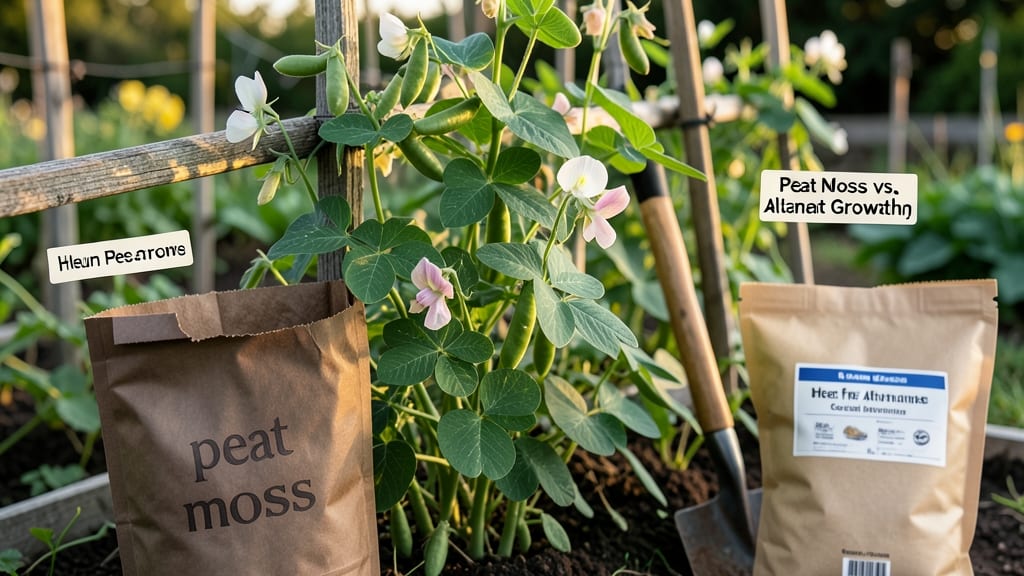
Peat moss is bad for vegetable gardens because it’s unsustainable—harvesting destroys fragile peatlands, releasing stored carbon and harming ecosystems. For plant health, opt for compost, coconut coir, or leaf mold instead.
Peat moss may seem like a gardener's secret weapon, but its environmental cost is steep. 🌍 Harvesting peatlands releases massive amounts of stored carbon, accelerating climate change, while also destroying habitats for rare species.
Unlike compost or coconut coir—which break down naturally and improve soil fertility—peat moss depletes over time without replenishing nutrients. Many gardeners now avoid it entirely, switching to sustainable options that work just as well for moisture retention and root health.
For vegetable gardens, the shift away from peat moss isn't just about ethics—it's about long-term soil quality. Alternatives like compost or worm castings add organic matter that supports microbial life, while coconut coir mimics peat's moisture-holding properties without the ecological harm.
I've seen firsthand how these swaps lead to healthier plants with fewer pests and better yields.
💡 In This Article
- Why Peat Moss Harms Ecosystems and Climate
- Best Peat-Free Soil Amendments for Vegetable Gardens
Why peat moss harms ecosystems and climate
Peat moss comes from peatlands, which are ancient wetlands storing twice as much carbon as all the world's forests combined. When these ecosystems are drained and harvested for gardening, they release this stored carbon as CO₂—equivalent to 4% of global emissions annually.
The process also eliminates habitats for rare species like the bog asphodel and northern peatland bog moss, which can take centuries to recover. Unlike compost or coconut coir, peat moss doesn't replenish nutrients over time—it simply depletes, leaving soil less fertile long-term.
The damage goes beyond carbon. Peatlands act as natural water filters, but harvesting disrupts this function, leading to increased runoff and pollution in nearby waterways.
What's more, the acidity of peat moss (pH 3.5-4.5) can harm beneficial soil microbes and earthworms, which are crucial for breaking down organic matter. In contrast, compost has a neutral pH 6.0-7.5 and actively feeds soil life, creating a self-sustaining cycle. 🌱
Climate scientists warn that peatland destruction accelerates global warming at a rate comparable to deforestation. A single cubic meter of peat releases about 500 kg of CO₂ when extracted—a staggering figure when scaled to global demand. Gardeners unknowingly contribute to this cycle by using peat moss, even in small amounts.
The good news? Alternatives like coconut coir or leaf mold replicate peat's moisture-retention benefits without the ecological cost, making the switch both ethical and effective.
Consider this: A typical 10-gallon bag of peat moss represents about 0.03 acres of destroyed peatland. Multiply that by millions of gardeners worldwide, and the scale of the problem becomes clear. Even well-intentioned gardeners can reduce their footprint by choosing amendments that regenerate rather than deplete.
For example, compost improves soil structure over time, while coconut coir breaks down into humus, enriching the earth instead of stripping it.
What most people don't realize is that peat moss's benefits—like moisture retention—can be matched or exceeded by sustainable alternatives. Coconut coir, for instance, holds up to 10 times its weight in water, just like peat, but comes from agricultural waste.
The texture is slightly coarser, but with the right mix of compost, it creates an ideal growing medium for vegetables. This swap isn't just about avoiding harm—it's about actively improving soil health for future generations.
The irony? Peat moss's popularity stems from its ability to mimic ideal growing conditions, but the very process of creating those conditions destroys the ecosystems that originally sustained them. By choosing compost or coir, gardeners can enjoy the same benefits while supporting a cycle of renewal.
It's a small change with a big impact—both for the planet and the plants we grow. 🌍