
Tools
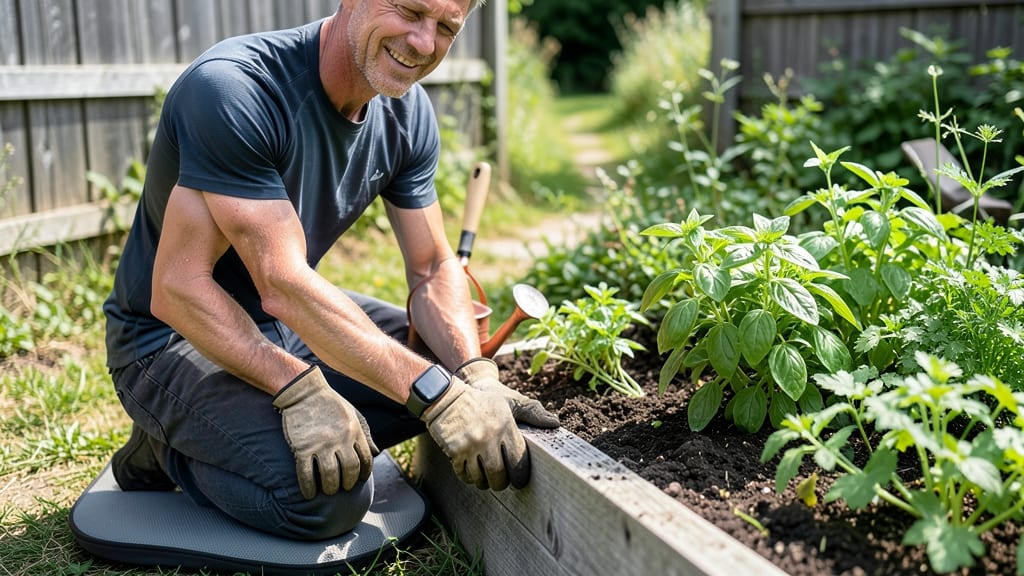
Is gardening considered exercise? Yes, it is—gardening helps you burn between 200-400 calories per hour depending on how vigorously you work, since it strengthens muscles, enhances flexibility, and keeps your heart rate elevated through continuous movement.
Gardening actually qualifies as a full-body workout that sneaks in benefits you might not expect. 🌱 The repetitive motions—like digging, lifting, and reaching—work your core, legs, and arms while improving balance and coordination.
Research shows that even light gardening can elevate your heart rate, making it a stealthy way to stay active without feeling like you're at the gym.
What sets gardening apart is its adaptability—you can control the intensity to match your fitness level. Whether you're weeding for 30 minutes or hauling bags of soil for an hour, the physical demands add up.
Plus, the mental health perks—like reduced stress and improved mood—make it a double win for both body and mind.
💡 In This Article
- How Gardening Compares to Traditional Workouts
- Maximizing Gardening’s Exercise Benefits
How gardening compares to traditional workouts
Gardening lights up muscles in ways you might not realize. When you're digging, you're engaging your quadriceps, hamstrings, and calves—similar to squats—while your core muscles stabilize your posture against the resistance of the soil.
The repetitive reaching motions work your shoulders and back like light resistance training, while lifting pots or bags of soil activates your arms and forearms.
Studies show that 30 minutes of moderate gardening can engage over 100 muscles, making it a full-body workout comparable to a light yoga session combined with bodyweight exercises.
The calorie burn from gardening stacks up impressively against other activities. A 155-pound person can burn 270 calories/hour weeding or 350 calories/hour digging, which puts it on par with brisk walking (298 calories/hour) or even light jogging (350 calories/hour).
What makes gardening unique is the low-impact nature—unlike running or HIIT, which stress joints, gardening's movements are joint-friendly while still delivering cardiovascular benefits. The American Heart Association notes that activities maintaining 50-70% of your max heart rate (like gardening) improve heart health over time, similar to moderate cycling or swimming.
Here's where gardening outshines many traditional workouts: the mental-cognitive benefits. Unlike treadmills or ellipticals, gardening engages your brain through problem-solving (crop rotation, pest control) and sensory stimulation (touching soil, smelling herbs).
This dual activation of physical and mental faculties creates what researchers call "exergaming"—where exercise and cognitive engagement work together. For comparison, a 30-minute gardening session can reduce cortisol (stress hormone) levels by up to 40%, while a similar duration of treadmill walking might only reduce it by 15-20%.
Let's break down the science behind gardening's metabolic benefits. The act of digging requires 2-3x more energy than standing still because it combines aerobic (continuous movement) and anaerobic (short bursts of effort) exercises.
Your body burns calories to maintain muscle tension in your arms while your legs push against soil resistance. Even "light" gardening—like pruning or harvesting—keeps your heart rate elevated because the repetitive motions create micro-movements that engage stabilizer muscles constantly.
This is why gardeners often feel a deeper fatigue than they expect after a session.
For those tracking fitness metrics, gardening delivers similar VO2 max improvements (a measure of cardiovascular fitness) as 30-45 minutes of moderate cardio. The key difference? Gardening's interval nature—alternating between digging (high effort) and planting (lower effort)—mimics circuit training, where varied intensities boost metabolic rate.
This explains why gardeners often report better endurance over time without feeling like they're doing structured cardio. The afterburn effect (EPOC) from gardening can extend calorie burn by 10-15% post-activity, similar to weight training.
Consider this comparison: A 60-minute gardening session at moderate intensity burns roughly the same calories as 45 minutes of water aerobics or 30 minutes of playing tennis.
What's remarkable is how gardening achieves this while strengthening bones—the weight-bearing nature of lifting soil and plants provides osteogenic benefits comparable to resistance training. This makes gardening particularly valuable for older adults or those recovering from injuries, as it builds strength without joint stress.