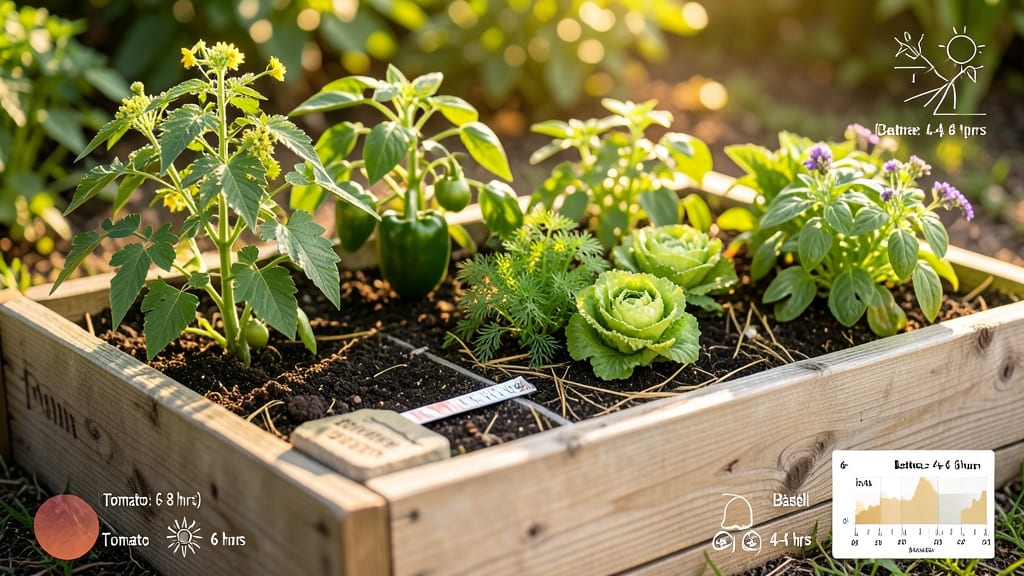
A veggie garden needs how much sun does a veggie garden need—typically 6 to 8 hours of sunlight daily—to thrive, but many gardeners either overestimate or underestimate their plants' needs, leading to poor yields or wasted effort.
If you've ever planted tomatoes that ripen into bland, tasteless fruits or lettuce that bolts before you can harvest it, you know how much sunlight matters.
The difference between a bountiful harvest and a struggling patch often comes down to how much light your veggies get—and how you adjust their placement.
Not all vegetables are created equal, though. While sun-loving crops like peppers and cucumbers demand full sun, leafy greens and root vegetables can handle partial shade. Understanding these differences is the key to optimizing your garden's layout and maximizing your harvest.
In this guide, I’ll break down the exact sunlight requirements for your most important crops, show you how to measure sunlight in your garden, and share practical tips for adjusting plant placement to get the best results.
Light Requirement
Full Sun
6-8 hours of direct sunlight daily (most vegetables thrive in Full Sun)
🔆
LowMediumBrightDirect
🪟Near a South-Facing Window or in a sunlit area
Sunlight requirements by vegetable type: full sun vs. partial shade explained
Understanding your vegetable garden's sunlight needs is like learning a secret language—each plant has its own requirements, and getting it wrong can mean the difference between a bumper crop and a sad, wilted disappointment. Full sun typically means 6-8 hours of direct sunlight daily, while partial shade ranges from 3-6 hours.
But here's the catch: some plants thrive in full sun, while others bolt or struggle in too much heat.
For example, tomatoes and peppers are sun-hungry divas—they demand 6-8 hours of sunlight to produce sweet, flavorful fruits. Skimp on the sun, and you’ll end up with small, tasteless tomatoes that taste more like water balloons than the juicy gems you crave.
On the flip side, leafy greens like spinach and lettuce prefer 3-5 hours of sunlight and can actually bolt (go to seed prematurely) if they get too much heat.
Let’s break down the sunlight spectrum for 15+ common vegetables so you can place your plants like a pro.
This summary table will give you a quick reference, but I’ll also dive deeper into why these ranges matter and how to adjust if your garden doesn’t get the perfect amount of sun.
Vegetable
Sunlight Needs
Ideal Hours/Day
Growth Impact
Notes
Tomatoes
Full Sun
6-8
Poor fruit set, small yields
Needs afternoon shade in hot climates
Peppers
Full Sun
6-8
Fruits turn bitter, slow growth
Blackened fruit in extreme heat
Cucumbers
Full Sun
6-8
Poor pollination, bitter taste
Provide trellis for support
Lettuce
Partial Shade
3-5
Bolting, bitter leaves
Use shade cloth in summer
Spinach
Partial Shade
3-4
Bolting, poor growth
Plant in spring/fall
Carrots
Full Sun to Partial Shade
4-6
Deformed roots, slow growth
Loose, well-drained soil
Beets
Full Sun to Partial Shade
4-6
Woody stems, small roots
Harvest young for tenderness
Basil
Full Sun
6-8
How to measure sunlight in your garden and adjust plant placement
Accurately measuring sunlight in your garden is the first step to creating a thriving vegetable patch. Most vegetables need 6-8 hours of direct sunlight daily, but some tolerate less. Without precise measurements, you risk underplanting sun-lovers like tomatoes or overcrowding shade-tolerant lettuce.
I’ve found that even a 2-hour difference in sun exposure can drastically affect yields—especially for fruiting crops.
Start by observing your garden’s sunlight patterns over a full week. Mornings and evenings often provide cooler, gentler light, while midday sun is the most intense. Use a simple shadow mapping technique: place a stake in your garden at midday and mark its shadow every hour.
This visual guide will reveal which areas receive full sun, partial shade, or deep shade throughout the day.
Full Sun (6+ hours): Tomatoes, peppers, cucumbers, eggplants, and corn thrive here. Place these in the sunniest spots for maximum fruit production.
Partial Sun (3-6 hours): Leafy greens like spinach, kale, and Swiss chard, plus herbs like basil and parsley, grow well in these areas. They’ll bolt or become bitter with too much sun.
Partial Shade (3-6 hours filtered light): Root crops like carrots, beets, and radishes prefer this. They’ll grow leggy or split if exposed to intense midday rays.
Deep Shade (less than 3 hours): Reserve for shade-loving plants like arugula or bok choy. These spots are ideal for container gardening or extending the season with cold-hardy crops.
Morning Sun vs. Afternoon Sun: Plants like peppers prefer morning sun to avoid afternoon heat stress, while lettuce benefits from afternoon shade in hot climates.
After mapping your garden, adjust plant placement to match their sunlight needs. For example, place tomato plants in the sunniest area and bush beans slightly farther back where they’ll get 5-6 hours of light.
Use reflective mulches, like white gravel or aluminum foil, to redirect light to shadier corners. I’ve seen this trick increase sun exposure by up to 30% in compact gardens.
Don’t forget to account for seasonal changes. A spot that gets full sun in summer may only receive partial shade in winter. Adjust your layout accordingly—perhaps moving winter greens to sunnier spots as summer crops finish. This flexibility ensures your garden remains productive year-round.
For container gardens, rotate pots every few weeks to ensure even sunlight exposure. This is especially critical for herbs like dill or cilantro, which can become leggy if they lean toward the light. A simple 180-degree rotation every 7 days keeps them balanced and healthy.
Finally, monitor your plants’ responses. Yellowing leaves or stunted growth often signal incorrect sunlight exposure. Adjust as needed—your garden’s layout should evolve with your plants’ needs. With these techniques, you’ll maximize every inch of space and harvest more abundantly than ever before. 🌱