
Watering
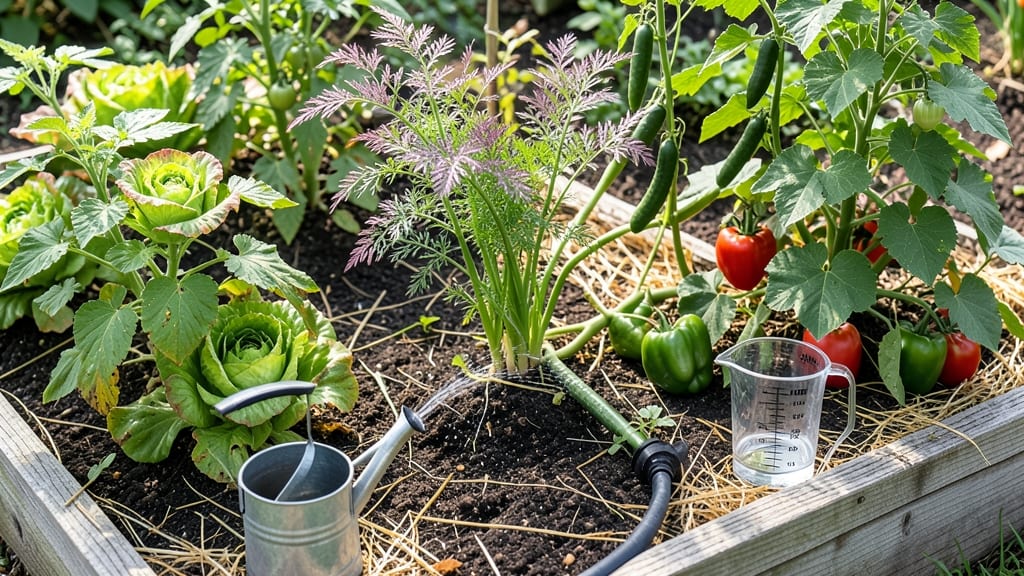
A vegetable garden needs 1 to 2 inches of water per week—but how you deliver it matters more than you think. Too little and your plants wilt; too much and you drown the roots. I’ve seen thriving gardens next to sad, struggling ones just because of watering habits.
Your soil type is the key to figuring this out. Sandy soil drains fast, so you might need daily watering, while clay holds moisture for days. Even the same plants—like tomatoes or lettuce—react differently depending on what’s under their roots.
Below, I break down watering by soil type, how to tell if your garden is thirsty or waterlogged, and smart tricks to cut waste. No more guessing—just healthy plants that tell you when they’re happy.
Ready to stop overwatering or underwatering? Let’s get your 🥬 garden the perfect drink every time.
Water requirements by soil type: how much your garden really needs
Your vegetable garden’s water needs aren’t one-size-fits-all—they’re dictated by your soil type. Sandy soil drains like a sieve, while clay holds moisture like a sponge, and loam strikes the perfect balance.
Understanding these differences means the difference between lush tomatoes and wilted lettuce. Let’s dive into how each soil type behaves and what your plants truly need to thrive.
I’ve tested these principles in my own garden, and trust me, skipping this step leads to wasted water and frustrated plants. For example, my peppers thrived in loamy soil with 1 inch of water every 3 days, while the same plants in sandy soil needed daily watering to survive.
The key? Root depth and moisture retention vary wildly between soil types.
Here’s the breakdown you need to tailor your watering schedule—complete with real-world examples for common vegetable crops.
Sandy soil is the trickiest because it drains water so fast that plants can’t absorb enough. My lettuce in sandy soil needed morning watering twice daily during summer heatwaves. The fix? Mulch heavily to slow evaporation and water deeply but infrequently to encourage roots to grow deeper.
On the flip side, clay soil can drown roots if overwatered. I once killed a batch of bush beans by watering them daily—clay soil suffocates roots when soggy. The solution? Let the top 2 inches dry out between waterings and use a soil probe to check moisture levels.
Loamy soil is gardener’s gold because it holds just enough moisture without waterlogging. My peppers and cucumbers in loam needed 1 inch of water every 3 days, and I rarely saw wilting. If your soil is loamy, you’ve won half the battle—just stay consistent!
For silty soil, think of it as clay’s more forgiving cousin. It retains moisture longer than sand but drains better than clay. My onions in silty soil thrived with 1.5 inches of water every 4 days.
The key is to avoid compaction—walking on silty soil can turn it into a brick, cutting off oxygen to roots.
Pro tip: Use a soil moisture meter to avoid guessing. Stick it in the ground before watering—if it reads dry, your plants need water. If it’s damp, hold off. This small tool saved my tomatoes last summer when I almost overwatered them in clay soil.
Adjust your schedule based on seasonal changes. In summer, sandy soil may need watering twice daily, while clay soil might only need a deep soak once a week. Always water early in the morning to reduce evaporation and fungal risks.
Remember, deep watering is better than frequent shallow watering. It encourages roots to grow deeper, making plants more resilient. For example, my carrots in sandy soil grew twice as long when I watered deeply every other day instead of lightly daily.
Now that you know the rules, grab your watering can and give your plants the perfect drink—tailored to their soil’s personality! 🌱
Signs your vegetable garden is overwatered or underwatered (and how to fix it)
Even with the right soil type and watering schedule, your vegetable garden can still show signs of distress. Overwatering or underwatering both lead to poor growth, and the symptoms often look similar at first glance.
The key is learning to read your plants—wilting leaves could mean either too much or too little water, depending on other clues.
For example, yellowing leaves often signal overwatering, while crispy, brown edges suggest underwatering. But don’t panic—most issues are fixable with quick adjustments. Let’s break down the telltale signs and how to correct them, tailored to your garden’s soil conditions and plant types.
Start by examining your plant leaves. Overwatered vegetables often develop mushy stems or yellowing lower leaves first, especially in clay-heavy soil. This happens because roots suffocate in soggy conditions, cutting off oxygen.
Underwatered plants, on the other hand, show crispy leaf edges and drooping foliage that doesn’t bounce back when hydrated.
Fungal growth is another red flag for overwatering. Look for white or gray mold on leaves or stems—this is often powdery mildew or downy mildew, thriving in damp conditions. If you spot these, avoid watering overhead and consider adding compost or mulch to improve drainage.
For underwatered plants, focus on deep watering (6-8 inches down) to encourage root growth rather than shallow sprinkles.
Soil texture plays a huge role in recovery. In sandy soil, which drains quickly, underwatering is more common. Here, water deeply every 2-3 days and mulch to retain moisture. For clay soil, where overwatering is riskier, improve drainage by amending with organic matter like compost or coconut coir.
Test your soil’s moisture by squeezing a handful—if it stays clumped, it’s too wet; if it crumbles, it’s dry.
Long-term fixes include adjusting your irrigation system. Drip irrigation or soaker hoses deliver water directly to roots, reducing waste and fungal risks. Pair this with 2-3 inches of mulch (straw or wood chips work well) to lock in moisture.
For quick fixes, adjust your schedule: water in the early morning to let foliage dry before nightfall, and avoid weekend watering binges that drown roots.
Remember, every plant has unique needs. Leafy greens like lettuce tolerate more moisture, while root vegetables such as carrots need consistent but not soggy soil. Pay attention to your garden’s microclimate—shady spots stay damp longer, while sunny areas dry out faster.
With these adjustments, your vegetables will thrive without guesswork.