
Tools
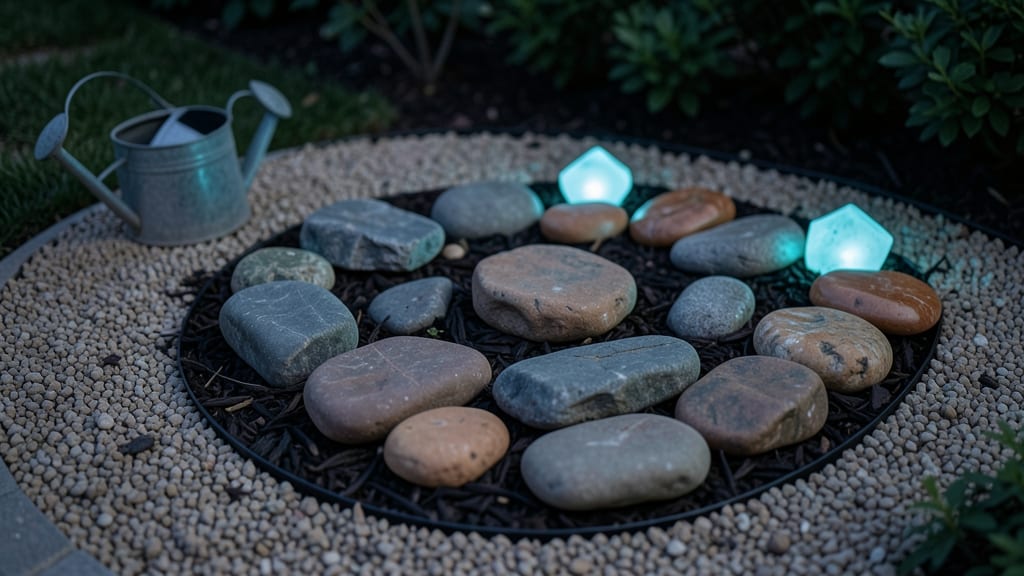
Glow-in-the-dark stones for garden create magical nighttime illumination lasting 8–12 hours after soaking up 6–10 hours of sunlight, with brighter glows in direct sun exposure. Strategically place them along walkways, near seating areas, or along borders to enhance safety and ambiance while maintaining even spacing for uniform lighting.
These luminous garden accents work by absorbing ultraviolet (UV) rays during daylight, then slowly releasing that energy as visible light.
The brighter the sunlight they receive, the longer and more vibrant their glow will be—think of them like rechargeable nightlights for your outdoor space. 💫 For best results, position them in areas that get consistent sun exposure, like south-facing pathways or near patio furniture where you'll appreciate the soft illumination after dark.
Beyond their practical benefits, these stones add a whimsical touch to any garden design. You can create custom patterns by arranging them in geometric shapes or outline flower beds for a subtle, glowing border effect.
Just remember to keep them clean and free of debris, as dirt or moisture can dull their glow over time.
💡 In This Article
- How UV Light Extends Glow-in-the-Dark Garden Stone Longevity
- Creative Garden Layouts for Glow-in-the-Dark Stones
How UV light extends glow-in-the-dark garden stone longevity
The magic behind these stones lies in their phosphorescent pigments, typically strontium aluminate or zinc sulfide, which absorb UV light during the day and release it as visible light over time.
When sunlight hits these stones, the UV rays (wavelengths between 100-400 nanometers) excite the phosphor molecules, causing electrons to jump to higher energy states.
This stored energy is then gradually released as visible light (400-700 nanometers) when the stones are in darkness—like a natural nightlight rechargeable by the sun. 💫
Sunlight intensity directly impacts glow duration—stones in full sun (6+ hours daily) can maintain brightness for 10-12 hours, while those in partial shade may only glow for 4-6 hours.
The quality of the phosphor compound matters too: premium stones use strontium aluminate, which emits a bright blue-green light and recharges faster than zinc sulfide's yellowish glow.
Weather also plays a role; rain can temporarily dim the stones by creating a thin water layer that scatters light, while humidity may accelerate phosphor degradation over time.
To maximize longevity, place stones in south-facing areas where they receive the most direct sunlight, especially between 10 AM and 4 PM when UV rays are strongest. For consistent performance, clean them every 2-3 months with a damp cloth to remove dust or pollen that blocks light absorption.
Avoid placing them under trees or near reflective surfaces that could create uneven glow patterns or reduce visibility.
Temperature affects performance too—stones glow best in 50-85°F ranges, as extreme heat (>90°F) can cause the phosphor to degrade faster, while cold (<40°F) slows the energy release, making the glow dimmer.
If you live in a cloudy climate, supplement with a UV flashlight (365nm wavelength) for 5-10 minutes daily to maintain brightness. This mimics sunlight and extends the stones' lifespan by preventing the phosphors from losing their charge completely.
For professional-grade results, look for stones with a minimum 10-hour glow duration after full sunlight exposure—a key indicator of high-quality phosphors. Pair them with solar-powered landscape lights for hybrid illumination that works even on overcast days.
The combination of natural UV absorption and artificial light creates a seamless transition from day to night, making your garden glow brighter and longer. ✨
Pro tip: Test a small batch of stones in different garden locations before committing to a full installation. Some areas may have better UV exposure than others, and this lets you adjust placement for optimal results without wasting materials. Think of it like a glow-in-the-dark garden audit! 🔥