
Planting
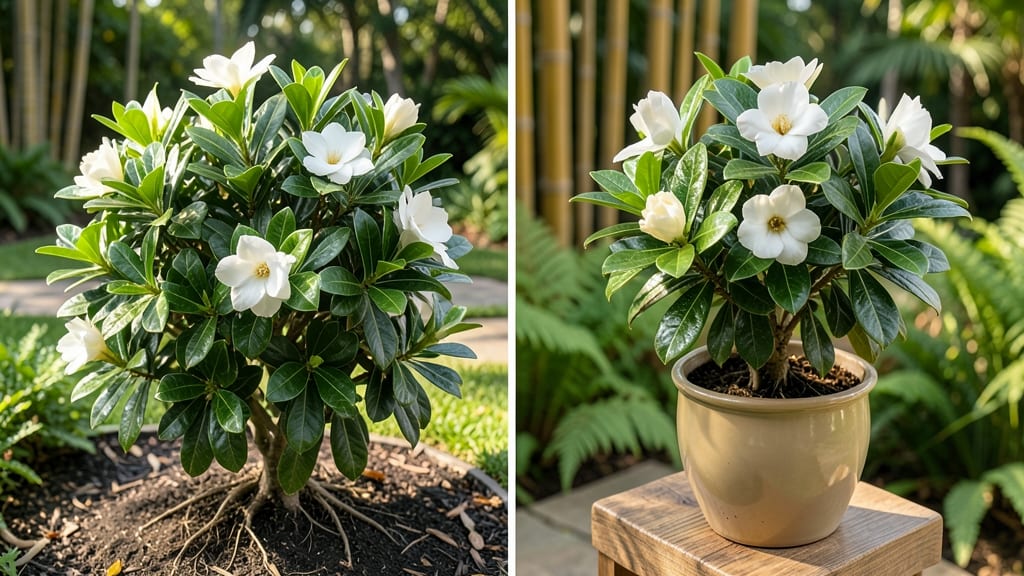
Gardenia plants can grow successfully as indoor or outdoor plants, but outdoor gardenias typically produce more abundant blooms when given full sun exposure (at least 6 hours daily) and high humidity. Indoor gardenias require bright, indirect light and consistent moisture to stay alive, though they may bloom less reliably. Your care approach should adjust based on whether you're growing them in containers or planted in the ground.
Gardenias are tropical plants that love warmth and moisture, so their growing environment makes all the difference. 🌿 Outdoor gardenias thrive in warm climates where they can soak up sunlight and benefit from natural humidity, often producing fragrant blooms year-round.
Indoors, you'll need to mimic these conditions with grow lights, pebble trays, or even a small humidifier—especially in dry winter months. The key difference is that outdoor plants get stronger stems and more flowers, while indoor plants focus their energy on survival.
Another important factor is soil acidity—gardenias prefer slightly acidic soil (pH 5.0-6.5). If you're growing them in containers, choose a well-draining potting mix designed for acid-loving plants.
For outdoor gardenias, amending garden soil with peat moss or compost can help maintain the right pH. Regular feeding with a balanced fertilizer (like 10-10-10) during growing season encourages healthier growth, whether your gardenia is inside or out.
💡 In This Article
- Gardenia Light and Humidity Needs for Optimal Growth
- Indoor vs. Outdoor Gardenia Care: Soil, Pruning, and Fertilizer Tips
Gardenia light and humidity needs for optimal growth
Gardenias originate from tropical regions where they receive bright, indirect sunlight and thrive in 60-70% humidity. The plant’s leaves have tiny pores called stomata that absorb carbon dioxide for photosynthesis, but they also release moisture through a process called transpiration.
When humidity drops below 50%, these stomata close to conserve water, which slows growth and can cause leaf edges to brown—a common sign of stress. Outdoor gardenias in warm climates naturally experience these ideal conditions, while indoor plants often struggle in dry air from heating systems.
The intensity of light directly impacts blooming. Gardenias need 6+ hours of sunlight daily, but direct midday sun can scorch delicate leaves. In tropical climates, they grow under dappled shade from taller trees, receiving filtered light.
Indoors, place your gardenia near an east or south-facing window where it gets morning sun and afternoon shade.
Fluorescent grow lights (10,000-12,000 lux) can supplement light in darker spaces, but they must stay on for 12-14 hours daily to mimic natural daylight cycles. 💧 Temperature also plays a role—gardenias prefer 65-75°F; below 60°F, they enter dormancy and may drop buds.
Humidity is the secret weapon for gardenia blooms. In tropical environments, gardenias receive natural humidity from morning dew and afternoon rains, which keeps their leaves lush and encourages flowering.
Indoors, you can recreate this with a pebble tray filled with water and gravel, or by misting leaves 2-3 times daily (avoid wetting flowers). A small humidifier near the plant can maintain ideal levels without overwatering.
Outdoor gardenias in dry climates may need afternoon misting to prevent leaf curl, a sign of dehydration.
Seasonal adjustments are key. In summer, outdoor gardenias may need afternoon shade to prevent leaf burn, while indoor plants benefit from fresh air (like an open window) to increase humidity. In winter, move indoor gardenias away from cold drafts and use a humidifier to combat dry heating air.
Outdoor gardenias in colder zones should be brought indoors before temperatures drop below 50°F, as frost can kill the plant. The transition between seasons is when gardenias are most vulnerable to stress and bud drop.
Pest resistance improves with proper humidity. Gardenias are less prone to spider mites and aphids when humidity stays above 50%, as these pests thrive in dry conditions. Aphids, for example, multiply rapidly in low humidity, sucking sap from leaves and causing them to yellow.
Regularly wiping leaves with a damp cloth removes dust and pests before they become a problem. Outdoor gardenias in humid climates rarely face pest issues, while indoor plants may need occasional neem oil sprays to keep pests at bay.
Here’s what happens when conditions are off: Too little light causes leggy growth and sparse blooms, while too much direct sun leads to crispy leaf edges. Low humidity results in dry, papery leaves, and temperatures above 80°F can cause buds to drop before opening.
The goal is to balance these factors—think of your gardenia like a tropical rainforest plant that needs warmth, moisture, and gentle light to flourish. 🌿