
Fertilization
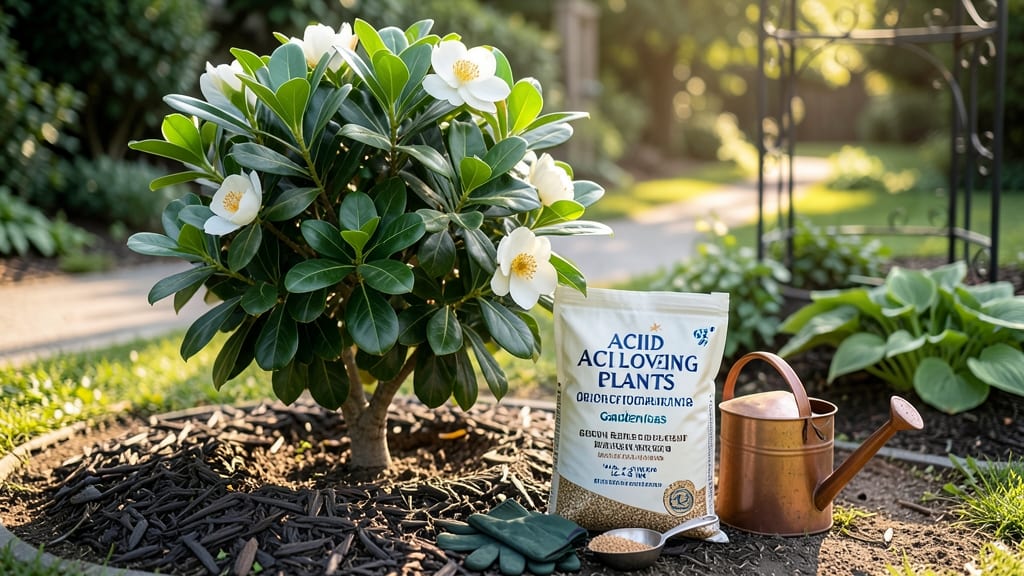
Feeding your gardenia tree 🌸 the right fertilizer is the key to lush blooms and vibrant foliage, but most gardeners overlook the specific needs these acid-loving plants demand.
Struggling to keep your gardenia tree blooming beautifully? The secret lies in feeding it the right fertilizer—at the right time—since these acid-loving plants demand precise care to thrive.
Too much fertilizer can scorch roots, while too little leaves your plant starved for nutrients, both of which lead to dropping leaves or sparse flowers. The solution? A balanced, acidic fertilizer applied in the right amounts during the growing season.
In this guide, I’ll walk you through the best fertilizers for gardenias, the ideal feeding schedule, and how to avoid common mistakes that kill blooms—so you can enjoy a flourishing gardenia all season long.
Best fertilizers for gardenia trees: acidic options and application tips
Your gardenia tree thrives when fed with the right acidic fertilizer, but choosing the wrong type can stunt growth or even kill those prized blooms. These plants crave a low pH environment (5.0-6.5) and need nutrients tailored to their foliage-heavy growth and summer flowering cycles.
Let’s break down the best options—whether you prefer organic slow-release or synthetic quick-feed solutions—and how to apply them for maximum impact.
First, test your soil’s pH using a home testing kit or send a sample to your local cooperative extension office. Gardenias refuse to bloom if the soil is too alkaline, so adjusting pH with sulfur or peat moss may be just as critical as choosing the right fertilizer.
Once you’ve got the acidity dialed in, focus on fertilizers with balanced NPK ratios (10-10-10 or 8-3-9) and added micronutrients like iron and magnesium—these are the secret weapons for vibrant blooms and glossy leaves.
Organic vs. Synthetic: Organic options like fish emulsion or cottonseed meal release nutrients slowly, feeding roots over time. Synthetic fertilizers, such as Miracle-Gro Acid-Loving Plant Food, provide an immediate boost but require more frequent applications. Both have their place depending on your gardenia’s current needs—new transplants benefit from slow-release, while established plants may need a quick pick-me-up before blooming season.
🌿 Gardenia Fertilizer Comparison
| Type | NPK Ratio | Best For | Application Rate | pH Adjustment |
|---|---|---|---|---|
| Fish Emulsion (Organic) | 5-1-1 | Root growth, early spring | 1 tbsp per gallon of water | None (but acidic) |
| Cottonseed Meal (Organic) | 6-2-1 | Slow-release, all-season | 1/4 cup per plant (spring) | Lowers pH over time |
| Miracle-Gro Acid-Loving (Synthetic) | 10-10-10 | Bloom production, summer | 1 tbsp per plant (every 4 weeks) | Includes pH buffer |
| Bone Meal (Organic) | 3-15-0 | Bloom stimulation, late spring | 1/2 cup per plant (spring) | None (but high phosphorus) |
| Peat Moss + Compost (Organic) | N/A (soil amendment) | Long-term soil health | 2-3 inches mixed into soil | Lowers pH significantly |
For young gardenias or those recovering from transplant shock, prioritize root development with a low-nitrogen fertilizer like fish emulsion. Mature plants, especially those preparing for summer blooms, need a higher phosphorus boost (look for the middle number in NPK ratios).
Pro tip: Mix a handful of bone meal into the soil in early spring to jumpstart flower production—this is a gardener’s trick for show-stopping blooms.
Container-grown gardenias have different needs than those planted in the ground. Since potted soil dries out faster and lacks organic matter, use a water-soluble fertilizer like Jobe’s Acid-Loving Plant Food every 2-3 weeks during the growing season.
Flush the soil with water monthly to prevent salt buildup, which can burn delicate roots. If your gardenia is in a large container (15+ gallons), you can extend the time between feedings to every 6 weeks.
One common mistake is over-fertilizing in fall or winter, when gardenias enter dormancy. New growth during these seasons is a red flag—your plant is telling you to stop feeding and focus on watering and mulching instead.
Always water your gardenia thoroughly before applying fertilizer to prevent root burn. Think of it like giving your plant a hydrating drink before a nutrient-rich meal.
If your gardenia’s leaves are turning yellow with brown edges, it’s often a sign of over-fertilization or high soil pH. Flush the soil with water and switch to a low-salt fertilizer like seaweed extract to help recover.
For pale green leaves, your plant may need more iron or magnesium—try a chelated iron supplement applied every
Gardenia tree fertilizing schedule: when and how to feed for maximum blooms
Timing your gardenia tree's fertilizer applications is just as important as choosing the right product. These delicate, fragrant plants thrive on a seasonal feeding schedule that matches their natural growth cycles. Skipping this step often results in sparse blooms or weak foliage—don't let that happen to your prized gardenia!
The key is feeding during active growth phases while avoiding over-fertilization, which can burn roots or stunt flowering.
Most gardeners make the mistake of fertilizing year-round, but gardenias actually prefer a rest period in cooler months. Think of it like their version of hibernation—no food needed!
We've created a simple seasonal guide to help you feed your gardenia at the perfect times, using the right amounts for each stage of growth. This approach will give you those show-stopping white blooms you're dreaming of.
🌸 Seasonal Gardenia Fertilizing Guide
-
🌱 Spring (March-May)
Light feed every 4 weeks -
☀️ Summer (June-August)
Heavy feed every 4-6 weeks -
🍂 Fall (September-November)
No feeding - plant rests -
❄️ Winter (December-February)
No feeding - dormancy period
Let's start with spring, when your gardenia awakens from dormancy. This is the perfect time to give it a light feeding with an acidic fertilizer (like a 10-10-10 formula) to stimulate root growth. Use about 1 tablespoon per plant mixed with water, applied directly to the soil surface.
The goal here is to wake up those roots gently—think of it as giving your plant a gentle morning coffee to start the day!
As summer arrives, your gardenia will need more frequent feeding to support its blooming phase. Increase to 2 tablespoons per plant every 4-6 weeks, using the same acidic formula. The key is to fertilize in the early morning when temperatures are cooler, which helps prevent fertilizer burn.
Always water thoroughly after application to help nutrients penetrate the soil and reach those hungry roots.
When fall rolls around, it's time to let your gardenia rest. Stop all fertilizing completely as the plant prepares for dormancy. This resting period is crucial for next year's blooms—think of it like giving your plant time to recharge its batteries.
You can lightly mulch around the base to protect roots from temperature fluctuations, but no fertilizer should be applied during these cooler months.
Winter is truly a hands-off season for gardenias. These plants are naturally dormant, and any fertilizer applied now would just sit in the soil without being utilized. Focus instead on protecting your gardenia from harsh winds and freezing temperatures.
A thick layer of mulch around the base will help insulate roots, while avoiding winter pruning gives the plant time to recover its energy stores.
Watch for these telltale signs of over- or under-fertilization: yellowing leaves often indicate too much fertilizer, while sparse blooms or slow growth suggest your gardenia needs more nutrients. With this seasonal schedule, you'll give your gardenia exactly what it needs—when it needs it—for years of fragrant, show-stopping blooms! 🌷