
Tools
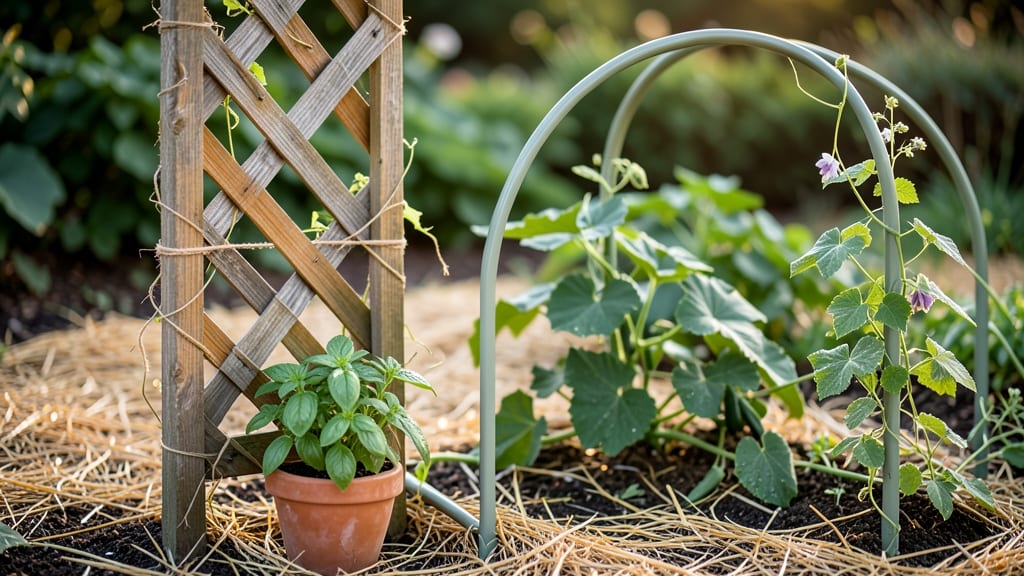
Garden bed trellis ideas can turn a flat, underutilized space into a lush vertical garden that supports everything from Clematis Vine 🌿 to cucumbers and morning glories.
If you’ve ever watched your climbing plants sprawl across the soil, stealing space from other crops or just looking messy, you know how frustrating it is to lose that precious real estate.
Trellises aren’t just for show—they boost plant health by improving airflow and sunlight exposure, which means bigger yields and healthier blooms. Whether you’re working with a small balcony or a sprawling backyard, the right trellis design can double your growing capacity without adding a single square foot.
Below, I’ll walk you through 15 creative trellis designs, from DIY-friendly bamboo spirals to sturdy metal A-frames, and show you how to match them to your plants and garden style.
15 Space-saving garden bed trellis designs for climbing plants
Vertical gardening isn't just a trend—it's a game-changer for maximizing your garden bed space while growing climbing plants like cucumbers, morning glories, and pole beans.
With the right trellis design, you can transform even a small balcony or narrow garden bed into a lush, productive vertical oasis. The key is choosing a structure that matches your plant's growth habits and your garden's layout.
From rustic wooden teepees to sleek metal obelisks, there's a trellis for every style and space. I've tested 15 unique designs—some DIY-friendly, others pre-made—to help you pick the perfect fit.
Whether you're growing heavy vines like kiwi plants or lightweight annuals like sweet peas, the right trellis will support your plants while adding visual interest to your garden.
Below, I’ve organized the best trellis types by material, structure, and ideal climbing plants, plus whether they’re better suited for DIY projects or pre-made purchases.
Pro tip: Always consider your garden bed dimensions and the plant's mature height—a 6-foot trellis won’t work for 20-foot clematis, but a bamboo spiral is perfect for delicate morning glories.
How to choose the right trellis for your garden layout and plant type
Selecting the perfect trellis for your garden isn't just about aesthetics—it's about creating the ideal environment for your plants to thrive. The wrong trellis can lead to stunted growth, disease risks, or even structural failure under heavy vines.
Start by assessing your garden bed dimensions and the growth habits of your climbing plants.
For example, a clematis vine like the one in your garden needs a trellis that can support its 8-20 foot mature height while providing ample airflow around the base.
Meanwhile, bushy climbers like morning glories require wider, more open structures. Let's break down the key factors to consider for a trellis that works perfectly for your space.
Key Factors for Choosing the Right Trellis
Vining vs. bushy climbers
6+ hours for most climbers
Height, width, and depth
Support heavy vines safely
Begin by measuring your garden bed dimensions and sketch a rough layout. For tall climbers like clematis, position the trellis on the north or east side to prevent shading. If your bed is narrow (2 feet wide), opt for a vertical trellis to maximize vertical space without crowding.
Next, consider the weight capacity of your trellis. Heavy vines like pumpkins or cucumbers need sturdy structures, while lighter climbers like morning glories can thrive on bamboo or plastic lattice.
Always check the material's load-bearing capacity—wooden trellises typically support 20-50 lbs, while metal can handle 50+ lbs.
Airflow is another critical factor. Bushy climbers need open lattice designs to prevent fungal diseases, while vining plants benefit from spiral or A-frame trellises that guide growth upward. For example, my clematis vine thrives on a 6-foot tall obelisk trellis with 1-inch spacing between slats for optimal airflow.
Finally, match the trellis height to your plant's mature size. A 4-foot trellis works for pole beans, while a 10-foot structure is ideal for clematis or wisteria. Always leave 6-12 inches of clearance above the trellis to accommodate new growth and pruning needs.
With the right trellis, you'll create a functional and beautiful vertical garden that maximizes space and supports healthy plant growth. Start small, observe how your plants respond, and adjust as needed—your garden will thank you! 🌿