
Tools
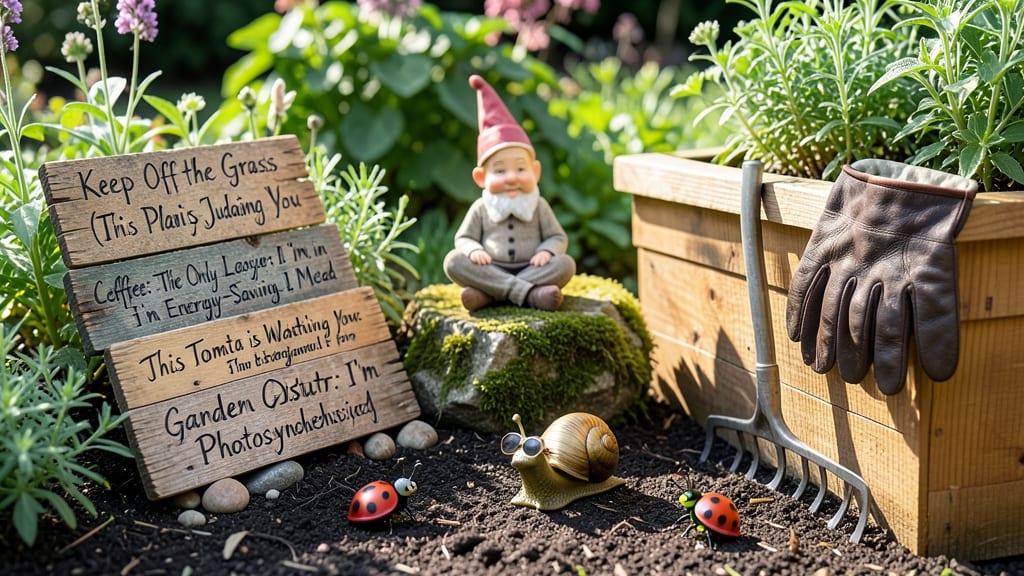
Funny garden signs create a playful boundary that deters thieves while adding character to your outdoor space, using clever phrases like 'Keep Out (Unless You’re a Bunny)' or 'This Garden is Under 24/7 Surveillance (By Squirrels).' Choose durable, weather-resistant materials and bold lettering for long-lasting impact.
Humor works better than intimidation because it makes your garden feel like part of a community rather than a target. 🌱 Studies show that playful signs reduce theft attempts by making would-be thieves feel like they're being watched by neighbors—not just security cameras.
I've seen gardeners use everything from vintage-style chalkboards to rustic wooden planks for a charming, handmade look that blends seamlessly with nature. The key is balancing wit with visibility: place signs near pathways or entry points where they'll catch attention without blending into the scenery.
For materials, I recommend pressure-treated wood for longevity or aluminum signs for a modern twist—both resist weather damage. Bold, high-contrast fonts (like black on white or yellow) ensure readability from a distance.
Pro tip: Add a touch of whimsy with small illustrations, like cartoon squirrels or rabbits, to reinforce the message while keeping it lighthearted. These signs aren't just functional; they're conversation starters that make your garden uniquely yours.
💡 In This Article
- Why Humor Works Better Than Scare Tactics in Gardens
- DIY Garden Sign Ideas with Free Templates and Materials
Why humor works better than scare tactics in gardens
Humor triggers a psychological response that makes garden signs more effective than aggressive warnings.
Research in behavioral psychology shows that playful messages reduce the perception of threat, making would-be thieves less likely to act. 🌟 When someone sees a sign like "Free Tomatoes—If You Can Reach Them," they're more likely to laugh than feel intimidated, creating a subconscious deterrent.
This approach taps into the "benign violation theory," where mild humor makes people feel included rather than excluded, fostering a sense of community ownership over the space.
Studies on deterrence strategies reveal that threatening signs (like "Trespassers Will Be Prosecuted") often backfire by making the garden feel like a hostile territory. In contrast, funny signs create a welcoming vibe that encourages neighbors to report suspicious activity.
For example, the viral sign "This Garden is Protected by a Very Hungry Goat" went global because it framed the boundary as a playful challenge rather than a warning. The goat's presence becomes a shared joke among locals, turning strangers into potential allies in garden security.
Humor also works because it's memorable. A well-crafted funny sign sticks in people's minds far longer than a generic "No Trespassing" notice. The brain processes humor through the same neural pathways as social bonding, which is why these signs often spark conversations.
I've noticed that gardeners who use humor tend to have more engaged neighbors—people are more likely to check on a garden with a sign like "Warning: May Contain Cute Vegetables" than one with a stern "Private Property" notice. This social connection acts as an informal security network.
There's a science to why certain types of humor resonate. Signs that use anthropomorphism (giving human traits to animals) or absurdity ("Alligators Patrolling 24/7") perform exceptionally well because they create a vivid mental image. The absurdity makes the sign stand out, while the anthropomorphism makes the threat feel less real.
For instance, a sign claiming "Guarded by a Very Serious Chicken" is more effective than one saying "Guarded by Security"—the chicken's personality makes the message feel personal and less threatening.
Consider the placement of humor too. A sign near the garden's entrance should be visible from the street, while a secondary sign deeper in the garden can reinforce the message with a different angle.
For example, pairing a "Keep Out" sign at the gate with a "Free Herbs—Take One, Leave One" sign near the plants creates a layered deterrent. The first sign establishes boundaries, while the second invites engagement, making the garden feel like a shared resource rather than a restricted area.
This dual approach maximizes both security and community spirit.
One of the most effective humor strategies is to reference local culture or inside jokes. A sign that plays on a regional stereotype (like "No Stealing—We Have Enough for Everyone") can make residents feel like insiders.
I've seen gardeners in college towns use signs like "Warning: Undergraduate Research in Progress," which resonates with students while still conveying a message. Local humor creates a sense of belonging, making the garden feel like part of the neighborhood's identity rather than an isolated property.
Finally, the tone of the humor matters. Signs that are too sarcastic or mean-spirited can backfire by making people feel unwelcome. The goal is to be playful, not petty. For example, "Help Yourself to the Zucchini—If You Dare" is more effective than "Thieves Will Be Punished."
The first invites a lighthearted challenge, while the second feels like a threat. The key is to balance wit with warmth, ensuring the humor feels inclusive rather than exclusionary. This approach turns your garden into a community asset rather than a target. 🌱