
Container Gardens
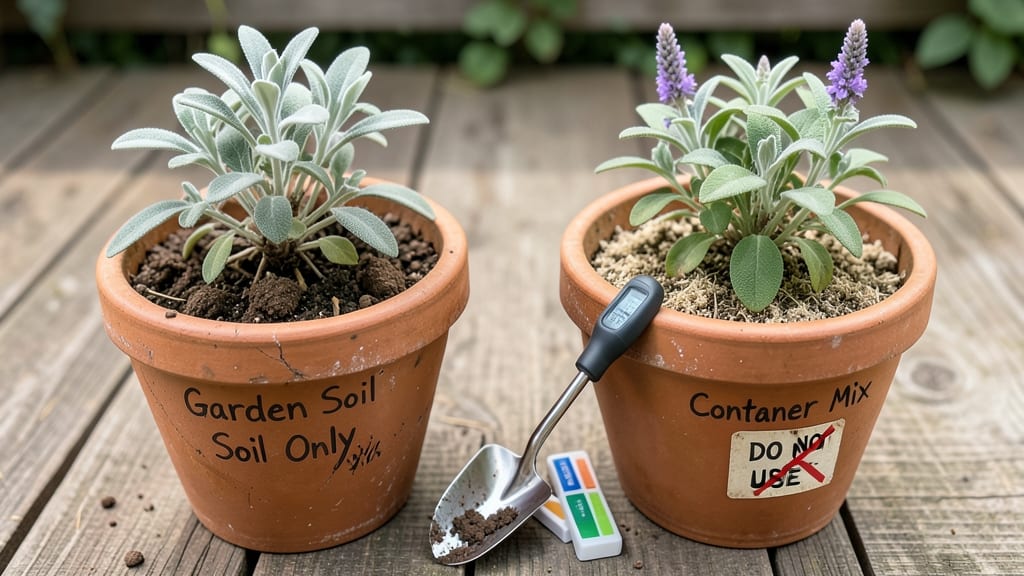
You shouldn't use garden soil in containers because it compacts easily, drains poorly, and may harbor pests or diseases. Instead, mix it with perlite or compost to improve aeration and drainage, or opt for lightweight potting mixes designed for container gardening.
Garden soil's heavy texture makes it ideal for in-ground planting, but containers need something lighter and more breathable. 🌱 The problem isn't just drainage—compacted soil also suffocates roots by limiting oxygen flow, which is critical for healthy growth.
I've found that even adding 20-30% perlite to garden soil can dramatically improve results, especially for container plants like herbs or lettuce that need quick-draining mixes. For heavy feeders like tomatoes, a pre-mixed container-specific potting mix with added worm castings works best.
Another key factor is nutrient balance. Garden soil often contains uneven amounts of organic matter, which can lead to over- or under-fertilization in small containers. Potting mixes are formulated to release nutrients gradually, preventing root burn while supporting consistent growth.
If you're committed to using garden soil, consider sterilizing it first by baking it in the oven at 200°F for 30 minutes to kill pathogens, then amending it with coconut coir or peat moss for better moisture retention.
💡 In This Article
- Why Garden Soil Fails in Container Planting
- Best Soil Blends for Container Gardening
Why garden soil fails in container planting
Garden soil is designed for in-ground planting where roots can spread freely, but containers create a confined space that exposes its fatal flaws.
The dense particles in garden soil pack tightly when watered, reducing air pockets by up to 70%—roots need at least 10-25% air space to breathe and absorb oxygen efficiently.
This suffocation leads to stunted growth or even root rot when excess moisture lingers. 🌱 The problem worsens in plastic containers where heat builds up, accelerating microbial activity that depletes oxygen even faster.
Drainage is another critical failure point. Garden soil's clay and silt particles form a dense matrix that holds water like a sponge, creating waterlogged conditions that suffocate roots. In containers, there's no natural capillary action to draw excess moisture away, so water pools at the bottom.
Ideal potting mixes contain 30-40% inorganic materials like perlite or vermiculite to create channels for water escape while maintaining moisture for roots. For example, a 50/50 mix of garden soil and perlite can improve drainage by 60% compared to pure garden soil.
Nutrient imbalance is the third major issue. Garden soil's organic matter decomposes unevenly, releasing nutrients in unpredictable bursts that can burn container plants' delicate root systems. Potting mixes use slow-release fertilizers and balanced organic amendments to provide steady nutrition without overloading.
For instance, a tomato plant in a 5-gallon container needs about 1-2 teaspoons of balanced fertilizer every 2-4 weeks, but garden soil might release a sudden nitrogen spike that scorches roots. 💥
Pathogens and pests also thrive in garden soil's dense environment. Fungal spores like Phytophthora and bacterial infections spread rapidly in compacted soil, while insects like fungus gnats lay eggs in moist, organic-rich conditions. Containers lack the natural predators found in garden beds, making plants more vulnerable.
Sterilizing garden soil by baking it at 200°F for 30 minutes kills most pathogens, but even this doesn't address the structural issues of compaction and poor aeration.
Consider the case of basil plants: in garden soil, they often develop yellow leaves within weeks due to root suffocation, while the same plants in a lightweight potting mix thrive for months.
The difference lies in the soil's porosity—potting mixes maintain 20-30% air space even when saturated, while garden soil drops to 5-10% air space under similar conditions.
This porosity also affects water retention: potting mixes release excess water quickly while holding 15-25% moisture available to roots, compared to garden soil's 30-40% retention that often leads to overwatering.
For container gardening, the goal is a loose, well-aerated medium that mimics the natural forest floor's structure—lightweight yet capable of holding moisture and nutrients. This is why professional potting mixes combine peat moss or coconut coir (30-40%), perlite or vermiculite (20-30%), and composted organic matter (20-30%).
The result is a balance that prevents compaction while supporting robust root growth. 🌿