
Container Gardens
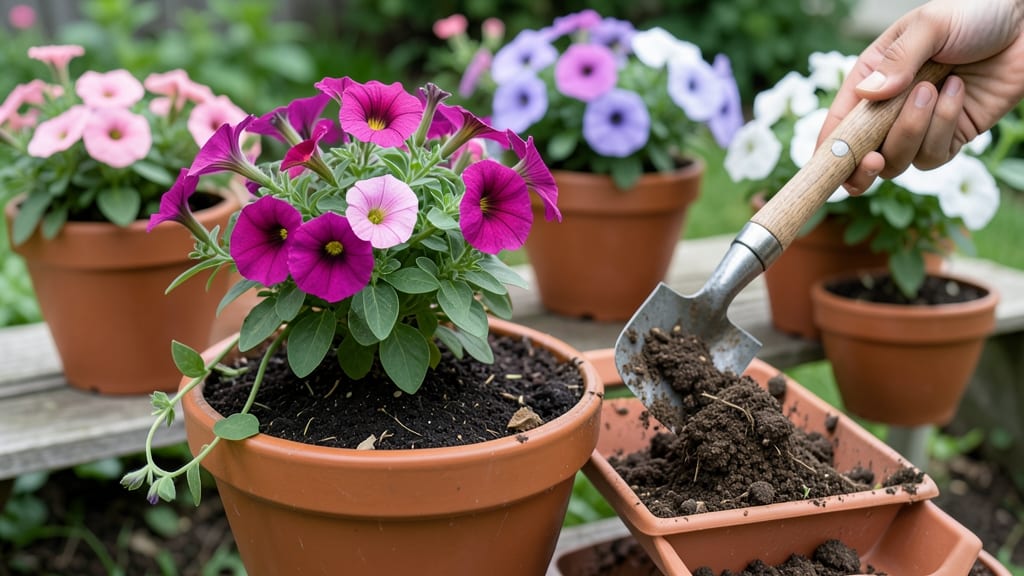
Using garden soil in pots can harm plants due to compaction, poor drainage, and disease risks from pathogens. Mix it with perlite or coconut coir (1:1 ratio) or use lightweight potting soil instead for better aeration and root health.
Garden soil packed into pots creates a dense, heavy medium that suffocates roots by blocking airflow and trapping excess moisture. 🌱 The larger clay particles in garden soil don't break down like potting mixes, leading to waterlogging that invites fungal growth.
I've seen firsthand how plants in garden soil pots develop yellowing leaves and stunted growth within weeks—this happens because the soil's natural structure isn't designed for confined spaces. For container gardening, you need a mix that mimics the loose, well-draining properties of forest floor soil where most potted plants evolved.
Instead of using garden soil directly, try blending it with 30% perlite or coconut coir to create a breathable medium. This combination prevents compaction while retaining enough moisture for root systems.
For heavy feeders like tomatoes, I recommend adding composted worm castings (10%) to replenish nutrients lost during the mixing process. The key is recreating the air pockets plants need in their natural habitats—something garden soil simply can't provide on its own.
💡 In This Article
- Why Garden Soil Fails in Container Gardening
- Best Soil Mixes for Potted Plants and How to Prepare Them
Why garden soil fails in container gardening
Garden soil's heavy clay and silt particles create a dense matrix that collapses under the weight of water and roots in containers. Unlike natural garden beds where soil can expand and contract with seasonal moisture, pots compress the soil into a compacted block that restricts oxygen flow to roots.
This suffocation effect occurs because garden soil contains 20-40% clay particles that bind tightly when wet, while ideal potting mixes have only 5-10% clay combined with organic matter and sand for structure.
The moisture retention difference is dramatic too. Garden soil holds water like a sponge, staying saturated for days and creating anaerobic conditions that suffocate roots. In pots, this trapped moisture becomes a breeding ground for Phytophthora and Pythium fungi, which cause root rot.
I've observed tomato plants in garden soil pots develop blackened roots within 10-14 days—a timeline accelerated by the confined space's poor drainage. The contrast with potting mixes is stark: they release excess water quickly while maintaining moisture availability for roots.
Nutrient availability becomes another critical issue. Garden soil's nutrients get locked up in the dense structure, making them inaccessible to roots. The organic matter in garden soil breaks down slowly over years, while potting mixes incorporate fast-release fertilizers and compost that feed plants immediately.
For example, a basil plant in garden soil might show nitrogen deficiency (yellow leaves) within 3-4 weeks because the soil's microbial activity can't keep up with the plant's rapid growth demands in confined spaces.
Pathogen risks escalate in pots because garden soil often contains weed seeds, insect larvae, and disease organisms that thrive in the warm, moist conditions created by poor drainage. Unlike outdoor beds where these pathogens get diluted, container gardens concentrate them.
I've seen damping-off disease wipe out entire seedling trays within 5-7 days when using garden soil—something that rarely happens with sterilized potting mixes.
Even the soil's texture becomes problematic. Garden soil's larger particles create uneven air pockets that can't support consistent root growth. Potted plants need a uniform, fine-textured medium that mimics the loose, well-aerated conditions of forest floors where many species evolved.
The particle size distribution in garden soil—typically 20% sand, 40% silt, 40% clay—creates a heavy, sticky medium that clings to pots and roots, making repotting difficult and damaging to delicate root systems.
What makes this especially frustrating is how quickly these problems manifest. Unlike in garden beds where issues develop over seasons, container plants show symptoms within 2-4 weeks—stunted growth, yellowing leaves, and wilting despite regular watering.
This rapid decline happens because the soil's physical properties create a perfect storm of poor aeration, waterlogging, and nutrient lockout in the confined pot environment.