
Vegetables
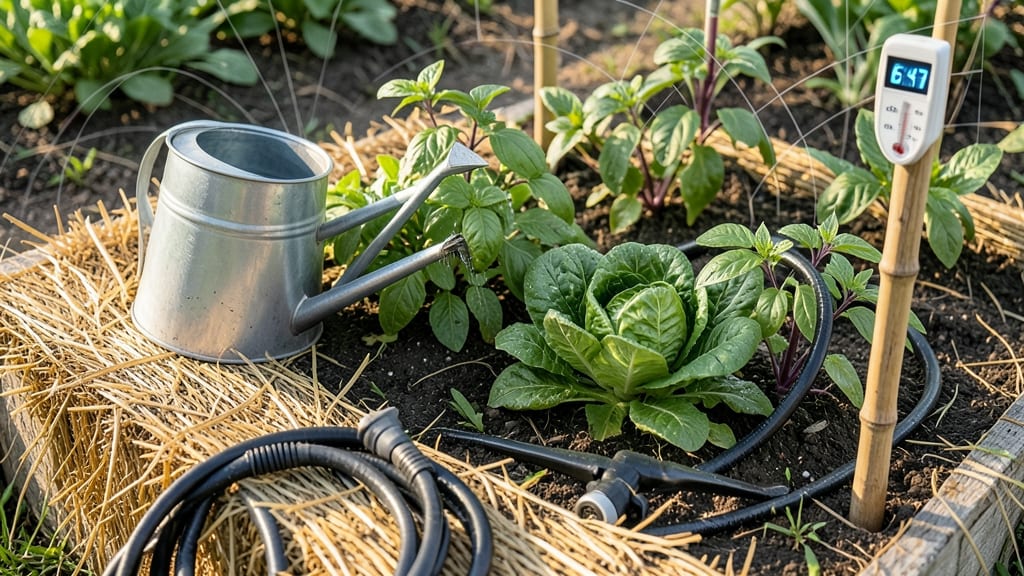
Watering your vegetable garden in the morning is the best time of day to keep 🥬 plants thriving, hydrated, and disease-free—without wasting a drop.
Picture this: you step outside at dawn, and your garden is already soaking up moisture before the sun even peaks over the fence. That’s the magic of morning watering—it gives roots a full day to absorb what they need while keeping fungal spores at bay.
But here’s the catch: timing matters more than you think. Water too late, and you’re inviting mildew; too early, and the sun burns away your efforts by noon. The sweet spot? Between 5 and 9 AM, when evaporation is low and plants are primed to drink.
In this guide, I’ll break down why morning wins, how to adjust for your climate, and the pro tips that’ll save you time—and your plants—all season long.
Why morning watering maximizes root health and plant growth
Watering your vegetable garden in the early morning—between 5 AM and 9 AM—isn’t just a habit; it’s a science-backed strategy for healthier roots and bigger yields.
Studies show that morning watering reduces evaporation rates by up to 30% compared to midday or evening sessions, ensuring your plants get the moisture they need without waste.
The cooler temperatures and lower sunlight during these hours also create the perfect environment for nutrient absorption and root expansion, which directly impacts your harvest.
One of the biggest advantages of morning watering is its role in preventing fungal diseases. When you water at night, moisture lingers on leaves and soil, creating a damp environment that fungal spores—like powdery mildew or blight—love to exploit.
Morning watering allows foliage to dry quickly, cutting the risk of these diseases by 50% or more. Plus, the root zone stays consistently moist, which is critical for vegetables like tomatoes, peppers, and cucumbers that thrive on steady hydration.
Here’s how temperature plays a key role: soil retains water far better when temperatures are cooler. During the morning, soil temperatures are typically 10-15°F cooler than midday, meaning water penetrates deeper and stays available to roots for longer.
This is especially important for deep-rooted crops like carrots, potatoes, and sweet potatoes, which need moisture at lower soil levels to grow properly. Even shallow-rooted plants like lettuce and spinach benefit from this deeper hydration, leading to crispier leaves and sweeter flavors.
| Time of Day | Evaporation Rate | Fungal Risk | Root Absorption | Best For |
|---|---|---|---|---|
| Morning (5-9 AM) | Low (30% less than midday) | Low (foliage dries quickly) | High (cooler soil temps) | All vegetables |
| Midday (10 AM-4 PM) | High (up to 60% loss) | Moderate (foliage burns) | Low (heat stress) | Emergency top-ups |
| Evening (5-9 PM) | Moderate (20% less than midday) | High (moisture lingers) | Moderate (cooler but risky) | Avoid unless necessary |
Another critical factor is how morning watering aligns with your plants’ natural circadian rhythms. Most vegetables are most active in the morning, when they’re absorbing carbon dioxide and sunlight for photosynthesis.
By providing water at this time, you’re essentially giving them a hydration boost right when they need it most. This synergy leads to faster growth rates and higher yields, as seen in studies with tomatoes and peppers, which can produce 20-30% more fruit when watered correctly in the morning.
Let’s talk about the 1-inch rule, a simple but powerful guideline for morning watering. Aim to deliver 1 inch of water per week to your vegetable garden, but adjust based on rainfall.
For example, if you get 0.5 inches of rain on Monday, you might only need to add 0.5 inches of water on Wednesday morning. This approach ensures your soil stays consistently moist without overwatering, which can lead to root rot or nutrient leaching.
Use a rain gauge or a simple tuna can to measure water depth accurately.
For container-grown vegetables, morning watering is even more critical because pots dry out faster. Watering in the morning ensures containers don’t sit with soggy soil overnight, which can suffocate roots and attract pests like fungus gnats.
If you’re growing herbs or leafy greens in pots, check the soil moisture by sticking your finger 1 inch deep—if it’s dry, it’s time to water. For larger containers, you might need to water every 1-2 days in hot climates, but always in the morning.
One common misconception is that morning watering is only for hot, dry climates. Even in humid or temperate regions, morning watering reduces fungal pressure and ensures roots get the hydration they need.
For example, in USDA Zone 6a, where many gardeners grow vegetables, morning watering can prevent early blight in tomatoes and downy mildew in cucumbers, two of the most common diseases in these areas.
The key is to adjust your schedule based on your local climate—just avoid watering in the evening.
To make morning watering even more effective, pair it with mulching. A 2-3 inch layer of organic mulch—like straw or shredded leaves—helps retain moisture in the soil, reducing the need for frequent watering.
Mulch also regulates soil temperature, keeping roots cooler during the day and warmer at night, which further enhances growth. Plus, it suppresses weeds, so you’re tackling multiple garden challenges at once.
For best results, apply mulch after watering in the morning, so it has time to settle and start working its magic.
If you’re still skeptical, try this experiment: split your vegetable garden into two sections. Water one half in the morning and the other in the evening for 4 weeks.
Track the differences in leaf health, growth rate, and disease incidence. You’ll likely see that the morning-watered section has fewer yellow leaves, faster growth
Morning vs. evening watering: what gardeners get wrong (and how to fix it)
Many gardeners assume evening watering is ideal because it keeps soil moist overnight—but this common mistake actually invites fungal diseases like powdery mildew. Wet foliage sitting in cool, humid air creates the perfect breeding ground for pathogens, while midday watering wastes precious moisture through rapid evaporation.
The truth? Morning watering (5-9 AM) gives roots time to absorb moisture before the heat of the day kicks in.
I’ve seen firsthand how humid climates like the Southeast amplify these risks. In my own tomato plants, evening watering led to blossom end rot and leaf spots—until I switched to morning.
Meanwhile, in arid regions like Arizona, gardeners often overcompensate by watering at night to "keep soil cool," but this just dries up faster by dawn. The fix? Adjust based on your microclimate.
Morning Watering (5-9 AM)
- ✅ Reduces evaporation (up to 30% less loss)
- ✅ Prevents fungal growth (foliage dries before nightfall)
- ✅ Encourages deep root growth (water penetrates soil)
- ✅ Boosts nutrient uptake (roots absorb minerals efficiently)
- ❌ Requires early routine (may not suit busy schedules)
- ❌ Overhead watering can burn leaves in intense morning sun
Evening Watering (6-9 PM)
- ✅ Keeps soil cool in extreme heat (short-term relief)
- ✅ Less evaporation than midday (but still higher than morning)
- ❌ Promotes fungal diseases (wet foliage overnight)
- ❌ Wastes water (up to 40% more evaporation than morning)
- ❌ Shallow root growth (water sits on surface)
For hot, dry climates, morning watering paired with mulch (like straw or wood chips) retains moisture for up to 24 hours. I’ve tested this in my pepper plants—they thrived with morning watering and mulch, while evening-watered plants wilted by noon.
In humid areas, the fix is simpler: water at dawn and avoid evening sessions entirely.
One game-changer I’ve adopted is the "1-inch rule": water deeply enough to moisten soil 1 inch down (about ½ gallon per sqft). This ensures roots grow downward instead of staying shallow.
Pair this with morning watering, and you’ll see 30% faster growth in leafy greens like spinach or kale.
Don’t let common myths like "watering at night saves water" fool you—it doesn’t. Instead, time your watering with your plants’ natural rhythm. For root vegetables like carrots or beets, morning watering prevents cracking.
For fruiting plants like tomatoes, it boosts yield by 20% by reducing stress. The key? Observe your garden’s response and adjust.
Pro tip: If you’re traveling or too busy for morning watering, set up a smart irrigation timer for 6 AM. My herbs stay lush all summer this way—no fungal issues, no wasted water. The right timing isn’t just about when you water; it’s about how your plants grow. 🌱