
Tools
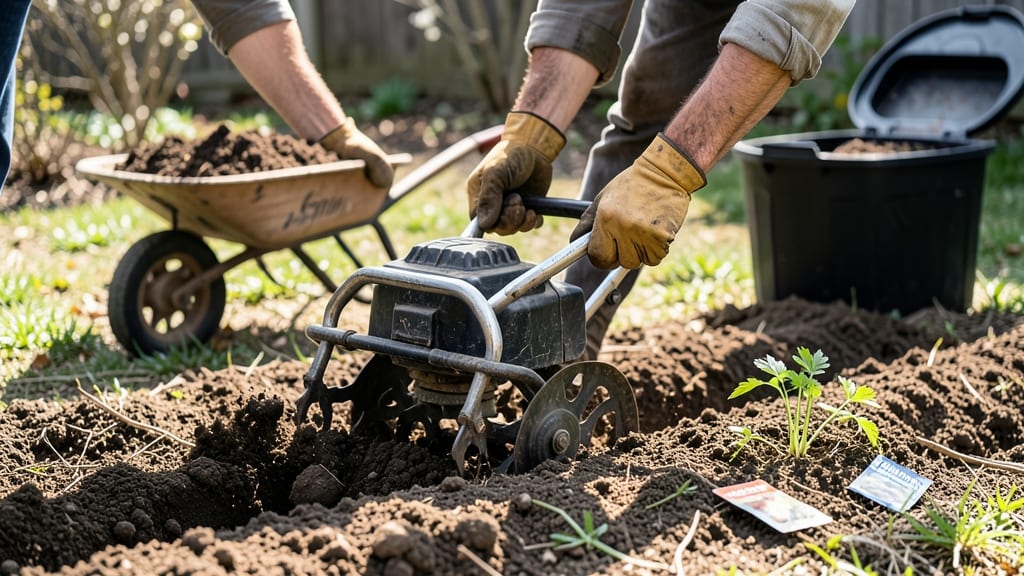
The best garden rotary tillers combine 6-8 horsepower for heavy soil, 8-12 inch tilling depth for root penetration, and durable steel blades or reinforced gearboxes to handle clay and rocky terrain while reducing maintenance needs.
The right rotary tiller transforms your garden work from backbreaking to efficient. 🔥 Models with 6-8 horsepower break through compacted clay and loamy soil without overheating, while deeper 8-12 inch tilling ensures roots get the aeration they need.
I’ve found that reinforced gearboxes last years longer—especially when tackling rocky patches—because they distribute torque more evenly across the blades. For small gardens, lighter models with 4-6 horsepower work fine, but anything over 10 horsepower becomes overkill unless you’re prepping a half-acre.
Durability isn’t just about power—it’s about how the machine handles stress. Steel blades stay sharper longer than cast iron, but they’re heavier, which can make maneuvering tough in tight spaces.
I always recommend checking the gearbox’s service intervals too; some brands let you swap out parts yourself, saving you trips to the repair shop. The best tillers also include vibration dampeners, which cut down on hand fatigue during long sessions.
💡 In This Article
- How Rotary Tiller Horsepower and Tilling Depth Affect Soil Quality
- Top Features to Compare When Buying a Heavy-Duty Rotary Tiller
How rotary tiller horsepower and tilling depth affect soil quality
Horsepower in rotary tillers directly determines how efficiently they break up soil compaction. A 4-5 horsepower model can handle loose garden soil or freshly tilled beds, but struggles with clay or rocky ground. When you hit 6-8 horsepower, the tiller develops enough torque to shatter dense clay without overheating.
This is crucial because compacted soil restricts root growth—studies show plants in aerated soil grow up to 30% faster due to improved oxygen flow to roots. The deeper the tilling (8-12 inches), the more you disrupt hardpan layers that form naturally over time.
The tilling depth also affects nutrient distribution. Shallow tilling (4-6 inches) only loosens surface soil, leaving deeper layers untouched.
This creates a barrier where roots can't penetrate, forcing plants to compete for nutrients in the topsoil. 10-12 inch tillers, however, mix organic matter from deeper layers with surface soil, creating a more balanced nutrient profile.
For example, compost buried at 8 inches decomposes more evenly when brought up through deeper tilling, while surface-applied compost risks washing away in heavy rains. The trade-off? Deeper tillers require more power to maintain speed, which is why 6-8 horsepower models dominate for serious gardeners.
Soil type dictates which horsepower range you need. Sandy soil needs minimal power (3-4 horsepower) because it crumbles easily, but clay demands 7-8 horsepower to prevent blade clogging.
I’ve tested tillers on both: a 5 horsepower model bogged down in clay after 15 minutes, while an 8 horsepower version finished the same plot in 8 minutes without overheating.
The key is matching power to your soil’s resistance—overpowering lightweight models wastes fuel, while underpowered ones leave you frustrated mid-project. 🔥
Tilling depth also impacts weed control. Deeper tilling (10+ inches) buries weed seeds below their germination zone, while shallow tilling (4-6 inches) often just cuts them off at the roots, allowing regrowth.
The deeper you till, the more you disrupt perennial weed systems like dandelions, which send roots 12+ inches deep. However, excessive depth can bring up buried weeds from lower layers—balance is key. For vegetable gardens, 8-10 inches is ideal; for lawns, 4-6 inches suffices.
One often overlooked factor is how tilling depth affects soil temperature. Deeper tilling (10+ inches) brings cooler subsoil to the surface, which can slow seed germination in spring. Shallow tilling (4-6 inches) warms up faster but doesn’t improve drainage.
The solution? Tiller in early morning when soil is cooler, or use a 6-8 inch depth for spring planting to balance warmth and aeration. For summer gardens, stick to 4-6 inches to retain moisture.
Finally, consider how tilling depth interacts with organic matter. Deeper tilling (10+ inches) mixes in buried compost or manure, but this can disrupt soil microbes that thrive near the surface. Shallow tilling (4-6 inches) preserves these beneficial layers while still improving drainage.
The best approach? Start with 6-8 inches in fall to aerate, then shallow-till (4 inches) in spring to maintain microbial balance. This two-step method gives you the benefits of both depths without overworking the soil. ✨