
Landscaping
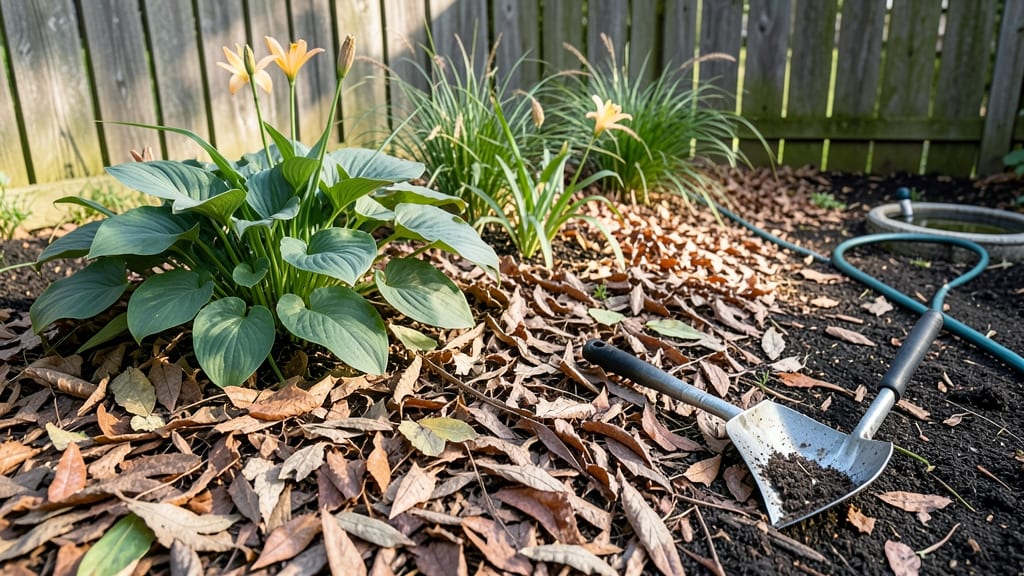
Mulched leaves in garden improve soil fertility by decomposing into nutrient-rich compost, suppress weeds by blocking sunlight, and retain moisture while regulating soil temperature. Use 2-4 inches of dry leaves for best results.
When you spread shredded leaves across garden beds, you're essentially creating a natural blanket that works overtime for your soil. 🌿 The decomposition process releases essential nutrients like nitrogen and potassium, which feed plants over time.
Unlike synthetic fertilizers, leaf mulch improves soil structure gradually, helping roots grow deeper and stronger. Plus, it's free and reduces yard waste—just make sure to shred leaves first to avoid matting.
For best results, apply 2-4 inches of dry leaves in early fall or late spring, right after tilling or weeding. Pair it with a thin layer of compost to boost microbial activity, and avoid piling leaves against plant stems to prevent rot.
I've seen gardens transform dramatically after just one season of consistent leaf mulching—healthier soil, fewer weeds, and less watering needed.
💡 In This Article
- How Leaf Mulch Enhances Soil Fertility and Structure
- Best Practices for Applying Leaf Mulch in Gardens
How leaf mulch enhances soil fertility and structure
Leaf mulch works its magic primarily through decomposition, where microorganisms break down organic matter into simpler compounds. The carbon-to-nitrogen ratio in leaves (typically 40:1 to 80:1) creates the perfect environment for beneficial bacteria and fungi.
These microbes convert complex organic material into humus, a dark, spongy substance that improves soil structure by increasing its ability to hold water and nutrients. Over time, this process releases essential minerals like phosphorus and potassium, which are slowly absorbed by plant roots.
The breakdown process also enhances soil aeration by creating tiny air pockets between leaf particles. This is especially valuable for compacted soils, where roots struggle to access oxygen.
For example, a 3-inch layer of shredded leaves can improve soil porosity by up to 20% within a season, allowing roots to spread more easily. The mulch also acts as a natural insulator, protecting soil from extreme temperature fluctuations that can stress plant roots during winter or summer heatwaves. 🌱
One often-overlooked benefit is the gradual release of nutrients. Unlike chemical fertilizers that provide an immediate but short-lived boost, leaf mulch delivers nutrients over months as it decomposes. This slow-release system mirrors natural forest ecosystems, where fallen leaves nourish the soil continuously.
The mulch also attracts earthworms, which further aerate the soil and create channels for water penetration, reducing runoff and improving drought resistance in your garden.
However, not all leaves decompose at the same rate. Oak and maple leaves, for instance, break down more slowly due to their higher lignin content, while birch and aspen leaves decompose faster.
The key is to shred leaves first—this increases surface area by up to 300%, accelerating decomposition and preventing thatch buildup. A 2-4 inch layer strikes the perfect balance: thick enough to suppress weeds and retain moisture, but thin enough to allow water and air to reach the soil below.
For gardeners concerned about leaf mold—a dense, slow-decomposing layer—shredding and mixing with compost solves the problem. The compost introduces nitrogen-rich materials that balance the carbon-heavy leaves, creating an ideal environment for rapid decomposition.
This combination also prevents the soil from becoming too acidic, which can occur if you rely solely on leaf mulch from trees like pine or oak. The result is a more balanced soil pH and a thriving microbial community that keeps your garden healthy year-round. 🌿