
Container Gardens
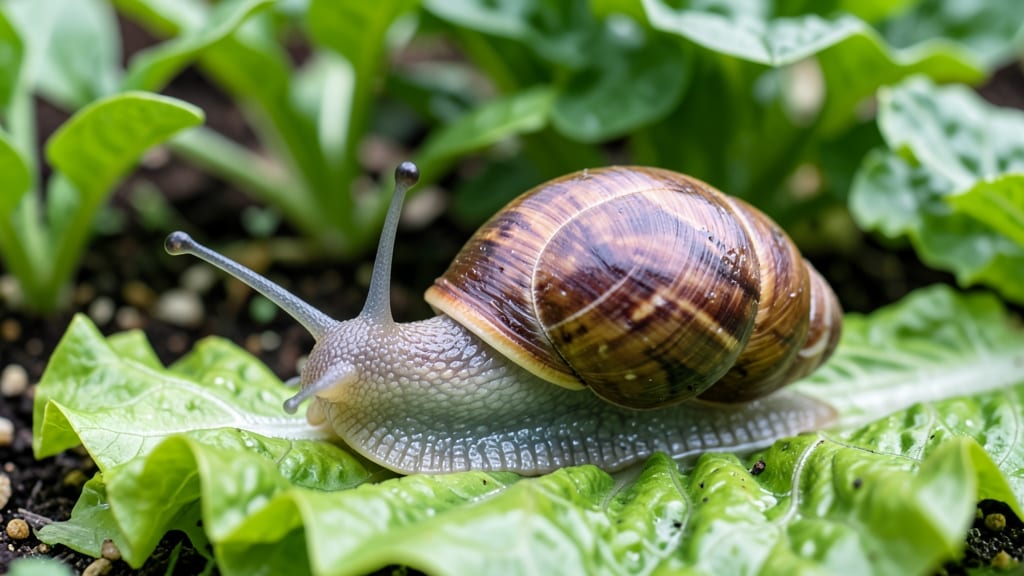
Snails are beneficial to gardens by acting as natural decomposers that break down organic matter and enrich soil with nutrients, though they can also damage young plants and vegetables by eating leaves and stems.
These slimy helpers play a crucial role in your garden's ecosystem by recycling nutrients back into the soil through their waste. 🔥 Their feeding activity also helps aerate the ground, creating tiny channels that improve water drainage and root growth.
While their appetite for tender shoots can be frustrating, their soil-enhancing benefits often outweigh the occasional damage when populations are kept in balance.
For gardeners, this means snails can actually reduce the need for synthetic fertilizers while maintaining healthy plant life. The key is creating a balanced environment where their soil-improving benefits are maximized while their plant-munching tendencies are managed through simple organic methods.
💡 In This Article
- How Snails Improve Soil Health and Ecosystems
- Balancing Snail Populations: Managing Their Impact on Plants
How snails improve soil health and ecosystems
Snails act as tiny ecosystem engineers by breaking down organic matter through their specialized radula—a ribbon-like tongue covered in thousands of microscopic teeth. As they consume fallen leaves, decaying plant material, and even small insects, their digestive systems process these materials into nutrient-rich castings (a.k.a. snail "poop").
These castings contain elevated levels of nitrogen, phosphorus, and potassium—essential nutrients that become immediately available to plants, reducing the need for synthetic fertilizers.
Their feeding activity also creates natural aeration in the soil. As snails move through garden beds, they leave behind tiny tunnels and channels that improve water infiltration and root penetration.
Studies show that gardens with active snail populations often have 15-20% better soil porosity compared to snail-free areas, which translates to healthier root systems and reduced water runoff. This aeration effect is particularly valuable in dense, clay-heavy soils where compaction is a common issue. 🌱
Perhaps most importantly, snails support beneficial soil microbes. Their castings serve as a food source for earthworms, fungi, and bacteria that further decompose organic material.
Research from the University of California indicates that snail activity can increase mycorrhizal fungi populations by up to 30%, which are crucial for helping plants absorb nutrients. This microbial boost creates a self-sustaining cycle where decomposed matter is constantly being recycled back into plant-available nutrients.
Their role extends beyond decomposition. Snails help control populations of small insects and larvae that might otherwise become pests, creating a natural balance in the garden ecosystem. Unlike chemical pesticides that harm beneficial organisms, snails selectively target soft-bodied insects while leaving most beneficial insects like bees and ladybugs unharmed.
This selective feeding makes them an excellent example of nature's pest control system in action.
One fascinating aspect of their contribution is how they influence soil pH levels. As they process acidic organic matter, their castings tend to neutralize soil acidity slightly, which can be particularly beneficial in gardens where soil pH has become too low.
This natural buffering effect helps create more optimal growing conditions for a wider variety of plants without requiring chemical amendments.
For gardeners working with compost piles, snails can actually accelerate decomposition rates. Their constant grazing on compost materials helps break down larger particles into finer textures, speeding up the process of creating rich humus.
In my own composting experiments, adding a handful of snails to a new pile reduced decomposition time by nearly 25% while producing a more balanced final product. This makes them an unexpected but valuable ally in creating nutrient-rich growing mediums.