
Pests
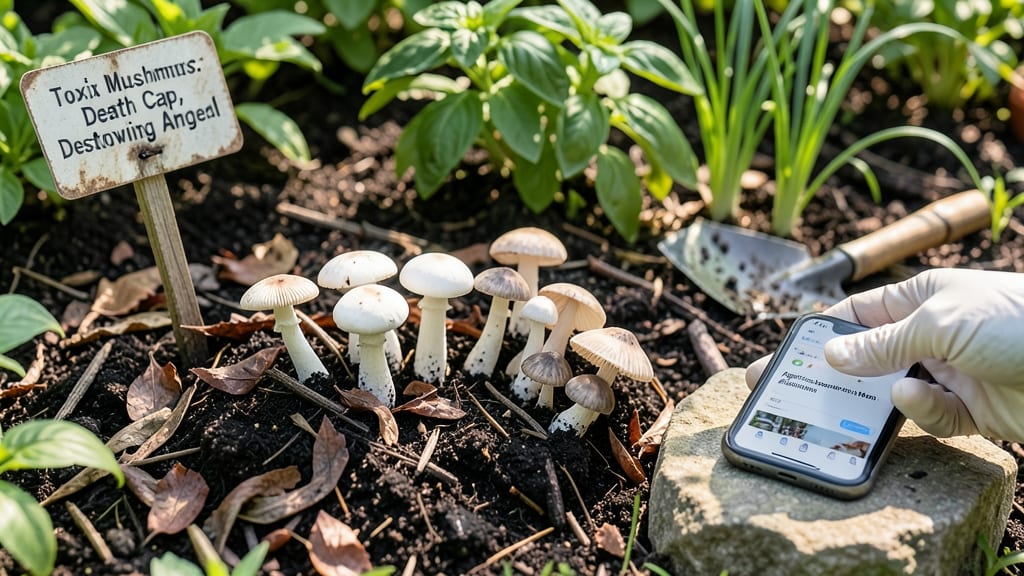
Mushrooms in your garden may not always be bad—most are harmless decomposers that recycle organic matter, but some varieties can indicate soil problems or pose toxicity risks if touched or inhaled. Always identify the type before deciding whether to remove them.
Not all mushrooms are harmful—many play a crucial ecological role by breaking down dead plant material and returning nutrients to the soil. 🌱 However, some species, like the Death Cap or Destroying Angel, can be toxic if ingested or even inhaled as spores.
The key is distinguishing between beneficial fungi (such as Oyster mushrooms) and potentially dangerous ones, which often appear in clusters or have distinctive caps. If you're unsure, it's best to avoid disturbing them or consult a mycologist for safe identification.
For removal, use a mix of vinegar or hydrogen peroxide to dissolve mycelium without harming plants, and avoid digging too deep to prevent spreading spores. Adjusting soil moisture or pH can also discourage unwanted growth. Always wear gloves and a mask when handling unknown mushrooms to minimize exposure risks.
💡 In This Article
- Identifying Harmful vs Helpful Garden Mushrooms
- Safe Mushroom Removal Methods for Gardeners
Identifying harmful vs helpful garden mushrooms
The first step in assessing garden mushrooms is understanding their roles. Beneficial mushrooms like Oyster mushrooms or Shiitake decompose organic matter, enriching soil with nutrients. Their caps often have a velvety texture and grow in clusters on decaying wood or mulch.
In contrast, toxic varieties such as Death Cap (Amanita phalloides) or Destroying Angel (Amanita bisporigera) have smooth, often white caps with a bulbous base and can be deadly if ingested. 🍄 The key difference lies in their structure and growth patterns: beneficial fungi typically appear in groups, while harmful ones often grow singly.
Toxic mushrooms often share specific visual traits that set them apart. The Death Cap, for example, has a greenish-yellow cap that turns olive-brown with age, while its stem features a distinctive sac-like "volva" at the base.
Meanwhile, Oyster mushrooms grow in overlapping clusters and have a fan-like shape with a soft, edible texture. Always examine the gills (spore-bearing underside)—toxic varieties often have white or yellowish gills, while edible ones may have pink or brown hues.
If you spot a mushroom with a volva, ring on the stem, or white gills, assume it’s dangerous until confirmed otherwise.
Ecological context matters too. Mushrooms growing on decaying wood or mulch are usually harmless, breaking down cellulose and returning nutrients. However, mushrooms sprouting in compacted or overly moist soil may indicate poor drainage or excess organic matter, which can harm plant roots.
Some species, like Armillaria root rot (Honey Fungus), attack living plants by spreading mycelium through roots, causing wilting or death. If your garden plants show signs of stress alongside mushroom growth, this could signal a pathogenic presence requiring intervention. 🌱
When in doubt, use a field guide or app like iNaturalist to compare specimens. Never rely on smell or taste—some toxic mushrooms lack a strong odor, and tasting can be fatal. For unknown mushrooms, take a photo from multiple angles (including the base and gills) and consult a mycologist.
Local university extension offices often provide free identification services, ensuring you handle potentially dangerous species safely.
Consider the season and location. Most toxic mushrooms appear in late summer to fall, while edible varieties like Morels emerge in spring. If mushrooms keep reappearing in the same spot, it may indicate persistent mycelium networks in the soil.
In such cases, targeted removal methods (like vinegar or hydrogen peroxide) can disrupt their growth without harming beneficial organisms. Always prioritize safety—when unsure, err on the side of caution and avoid contact.
Remember that not all mushrooms are equal. While some are harmless decomposers, others can be deadly if ingested or harmful to your garden’s health. The key is observation: note the cap shape, gill color, stem structure, and growth pattern.
With practice, you’ll learn to distinguish between the fungi that help your garden thrive and those that pose risks. 💫