
Planting
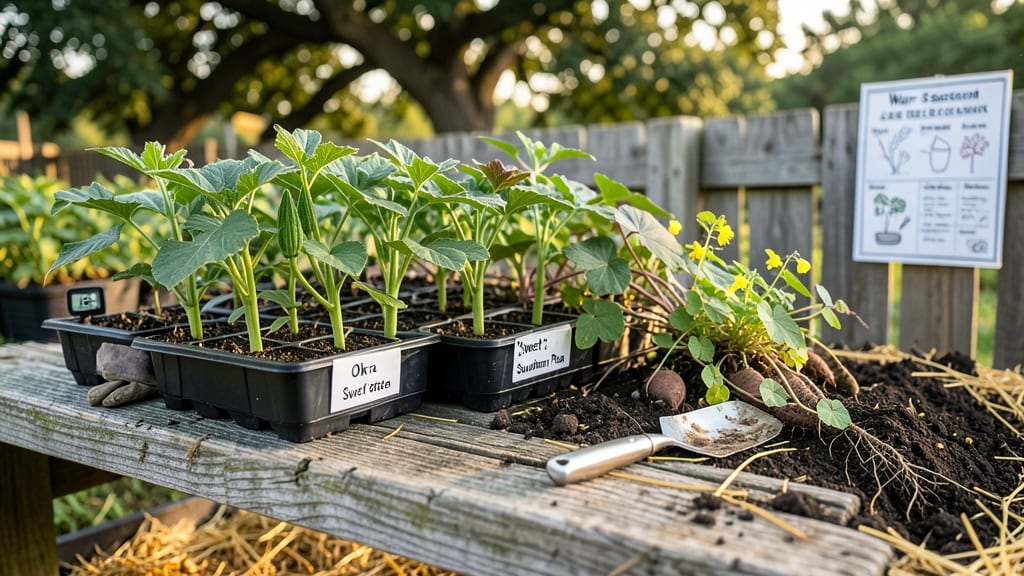
To plant a garden in Oklahoma, time your sowing around frost-free windows: start cool-season crops like lettuce and spinach in early spring (February–March) or fall (September–October), and plant warm-season favorites like tomatoes and peppers only after the last frost in April–May. Always verify your exact USDA Zone 6b–7a planting dates.
Oklahoma's planting schedule shifts dramatically between its northern and southern regions, with USDA Zones 6b–7a creating a 2-3 week difference in frost timing.
For example, Oklahoma City typically sees its last frost around April 15, while Tulsa may be frost-free by April 1. 🌱 Cool-season crops like broccoli and kale thrive when soil temperatures stay below 60°F, while warm-season plants like okra and basil need soil above 65°F to germinate properly.
Microclimates near lakes or hills can also push planting dates by 1-2 weeks earlier or later.
For maximum success, I recommend checking the Oklahoma Mesonet for real-time soil temperature data—this helps avoid planting too early when unexpected late frosts can still occur. Many gardeners in Zone 7a areas even extend their growing season by starting cool-season crops in late August for fall harvests.
💡 In This Article
- Oklahoma’s Frost Dates and Planting Zones Explained
- Best Planting Calendar for Oklahoma Gardens by Season
Oklahoma’s frost dates and planting zones explained
Oklahoma’s planting success hinges on understanding its USDA Zones 6b–7a, which dictate when to plant based on average frost dates. The state typically experiences its first fall frost between October 15 and November 15, while the last spring frost usually arrives between March 15 and April 15.
These dates create a 5-6 month frost-free window—critical for warm-season crops like tomatoes and peppers, which can’t tolerate temperatures below 50°F. 🌿
Microclimates within Oklahoma create local variations: Oklahoma City’s Zone 7a often sees its last frost by April 1, while northern areas like Woodward (Zone 6b) may still face frost until April 15.
Elevation matters too—higher areas like the Ozark Mountains can experience 2-3°F cooler temperatures, delaying planting by 1-2 weeks. Even within cities, urban heat islands can push soil temperatures 5-10°F warmer than rural areas, creating microclimates where early planting is possible.
The Oklahoma Mesonet provides real-time data showing how these zones interact with current conditions. For example, in 2023, Oklahoma City’s soil reached 60°F (ideal for warm-season planting) by March 28, while Tulsa hit that mark by March 15.
This 2-week difference explains why gardeners in southern Oklahoma can plant earlier. Late frosts are also a risk—historical records show 10-20% chance of frost after April 15 in northern zones, which is why many gardeners wait until May 1 for heat-loving plants.
What most gardeners overlook is how soil temperature differs from air temperature. Warm-season plants like squash need soil at 65–75°F to germinate, while cool-season crops like peas thrive in 40–50°F soil.
Using a soil thermometer is key—planting too early when soil is still cold can lead to poor germination or seed rot. In Oklahoma’s Zone 7a, this often means waiting until late April for tomatoes, even if air temperatures feel warm.
Another critical factor is chilling hours—many cool-season crops need 300–600 hours below 45°F to trigger flowering. Spinach, for example, requires 400+ hours, which is why it’s planted in September–October for fall harvests.
Southern Oklahoma’s longer frost-free season allows for two full growing cycles (spring and fall), while northern areas may only manage one without row covers or cold frames.
For precision, I recommend using the National Weather Service’s frost probability maps—they show 10% frost risk dates that are safer for planting. In Oklahoma City, this often lands around April 22, giving gardeners a 2-week buffer beyond the average last frost date. 🌱