
Planting
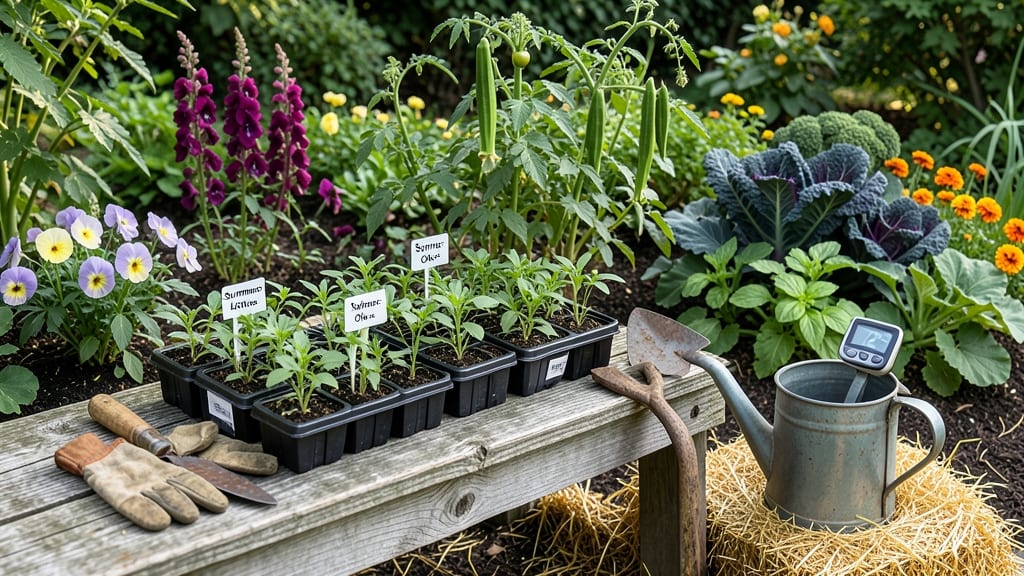
Planting a garden in Georgia means timing your spring and summer windows just right—miss the last frost dates, and your seedlings could face a slow, sad demise.
Georgia’s diverse climate means your planting schedule should shift dramatically from the chilly Blue Ridge Mountains to the steamy Coastal Plain—get it wrong, and your garden could wither before it thrives.
Whether you’re growing tomatoes in the Piedmont or azaleas along the coast, knowing when to plant is the difference between a bumper crop and a wasted season.
Below, I break down the exact frost dates by region, the best months for cool-season vs. warm-season crops, and how to adjust for Georgia’s microclimates—so you can start planting with confidence.
Georgia’s planting zones & frost dates by region (2024 guide)
Georgia’s 11 USDA hardiness zones (5A-8B) create a gardening landscape as diverse as its peach orchards and azalea blooms. In the Blue Ridge Mountains (Zone 5A-6B), frost lingers until mid-April, while coastal areas like Savannah (Zone 8A-8B) enjoy frost-free winters.
Understanding these frost-free windows is key to timing your cool-season vs. warm-season crops perfectly.
Your planting calendar should align with last frost dates (typically March 15-April 15 statewide) and first frost windows (October 15-November 15). For example, Zone 7A (Athens, Macon) has a 220-day growing season, while Zone 8B (Savannah, Brunswick) stretches to 270 days.
This means tomatoes planted in late March in Athens may need row covers, while coastal gardeners can sow them in early February.
Let’s break down your region-specific frost dates and ideal planting windows for both cool-season crops (lettuce, broccoli) and warm-season staples (peppers, okra). Use this as your 2024 planting roadmap to avoid frost damage or wasted seed packets.
| USDA Zone | Region Examples | Last Frost Date | First Frost Date | Cool-Season Planting | Warm-Season Planting |
|---|---|---|---|---|---|
| 5A-6B | Blue Ridge (Dahlonega, Blairsville) | April 15-May 1 | October 15-November 1 | March 1-April 15 | May 15-June 15 |
| 6A-7A | Piedmont (Athens, Macon) | March 15-April 1 | October 30-November 15 | February 15-March 30 | April 15-May 30 |
| 7B-8A | Central GA (Columbus, Augusta) | February 28-March 15 | November 1-15 | January 15-February 28 | March 15-April 30 |
| 8B | Coastal (Savannah, Brunswick) | January 15-February 15 | November 20-December 15 | December 1-January 31 | February 15-March 30 |
For cool-season crops like lettuce and spinach, start seeds indoors 6-8 weeks before your last frost date. In Zone 5A, that means mid-January sowing, while Zone 8B gardeners can direct-sow as early as December.
Use row covers to extend your season by 2-4 weeks in cooler zones.
Warm-season crops (tomatoes, peppers, squash) need soil temperatures above 60°F to thrive. In Zone 6A, wait until May 1 to plant, but Zone 8B gardeners can start as early as February 15. Test soil temperature with a soil thermometer—if it’s below 55°F, hold off until conditions improve.
Pro tip: Succession planting works year-round in Georgia. After harvesting early bush beans in June, replant with Southern peas or okra for a fall harvest. Coastal gardeners can even grow winter greens like kale until January.
Watch for microclimate variations—urban areas (e.g., Atlanta) may frost 1-2 weeks later than rural spots. Use a frost calendar from your local Cooperative Extension office for hyper-local precision. And remember: Azaleas bloom in April
Best months to plant common vegetables & flowers in Georgia
Georgia’s diverse microclimates mean your planting calendar should adapt from the Blue Ridge Mountains to the Coastal Plain. In Zone 7a-8b, timing is everything—plant too early, and a late frost will kill seedlings; too late, and summer’s heat will stress tender crops.
Let’s break down the best months for your favorite vegetables and show-stopping flowers, including succession planting tricks to keep your harvest flowing.
For cool-season crops like lettuce and peas, aim for late winter to early spring (February–March) before the last frost (typically mid-March in most regions). Warm-season lovers such as tomatoes and peppers need to wait until soil warms to 60°F+, usually April–May in the Piedmont and March–April in the Coastal Plain. Flowers like azaleas and camellias thrive when planted in fall (September–October), giving roots time to establish before winter.
- February–March: Plant cool-season veggies (lettuce, spinach, peas) and spring-blooming flowers (pansies, snapdragons). Bulbs like tulips go in now for spring color.
- April–May: Warm-season veggies (tomatoes, peppers, squash) and annual flowers (marigolds, zinnias) thrive after last frost. Succession plant lettuce every 2 weeks for continuous harvests.
- June–July: Heat-loving crops (okra, sweet potatoes) and fall flowers (cosmos, sunflowers) can handle Georgia’s summer heat. Transplant seedlings for late-season harvests.
- August–September: Fall veggies (kale, carrots, broccoli) and bulbs (daffodils) prep for winter. Plant perennials (azaleas, camellias) before first frost.
- October–November: Garlic and winter wheat go in for spring harvests. Mulch established perennials to protect roots.
Don’t overlook succession planting—this technique ensures a continuous harvest by staggering plantings every 2–3 weeks. For example, lettuce sown in February, March, and April will give you salad greens from spring through fall.
Similarly, bush beans planted in May, June, and July will keep pods coming until September.
Flowers like azaleas and camellias are best planted in fall (September–October) so roots can establish before winter. For annuals, sow marigolds and zinnias in April–May for summer blooms, then replant in July–August for a fall display. Perennials like black-eyed Susans can go in spring or fall, but fall planting gives them a head start.
Pro tip: Use row covers or cold frames to extend your growing season in cooler regions like the Blue Ridge. This lets you plant lettuce in March or harvest greens in November before frost hits.
For heat-prone areas like Savannah, opt for shade-loving varieties (e.g., Malabar spinach) or plant in partial shade to avoid bolted greens.
With these region-specific timelines and succession planting strategies, your Georgia garden will stay productive year-round. Start with cool-season crops in February, transition to warm-season favorites in April, and prep for fall by August—your harvest will thank you! 🌿