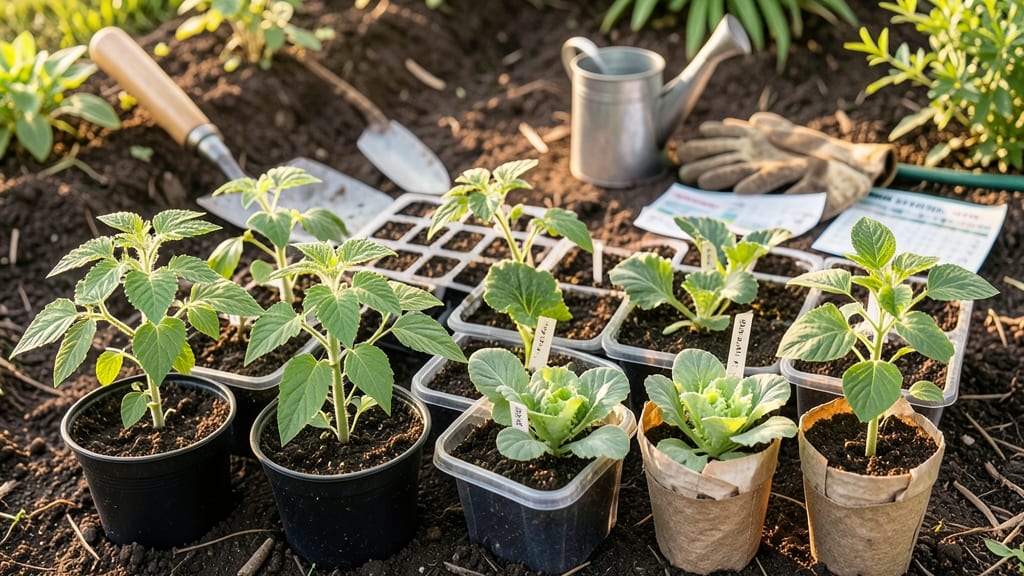
Planting a vegetable garden in Oklahoma requires timing it just right—miss the window, and you could lose your entire harvest to frost or scorching heat.
Oklahoma’s 6b-8a zones and unpredictable weather mean the difference between a thriving 🌱 garden and a failed crop can hinge on a few weeks. Whether you’re sowing cool-season greens in early spring or heat-loving tomatoes in summer, knowing the exact frost-free timeline is the key to success.
In this guide, I’ll break down the perfect planting windows for Oklahoma’s most popular vegetables, from spinach to squash, and share my top tips for extending your growing season—even when the weather throws curveballs.
You’ll learn how to adjust for late frosts, choose the right varieties for your region, and keep your garden producing from April through November without the guesswork.
🌱When to Plant Vegetable Garden Garden
Jan❄️
Feb🌱
Mar🌱
Apr🌱
May🌱
Jun🌱
Jul🌱
Aug🌱
Sep🌱
Oct🍂
Nov🍂
Dec❄️
Ideal Time
Also Good
Oklahoma’s frost-free planting zones: when to start seeds indoors vs. outdoors
Oklahoma’s climate varies dramatically from the panhandle’s dry heat (Zone 7b) to the Arkansas border’s humid south (Zone 8a). These differences mean your last frost date could range from March 15 in northern OK to April 1 in southern regions.
Understanding your microclimate ensures you avoid frost damage while maximizing your growing season.
For frost-sensitive crops like tomatoes, peppers, and eggplants, starting seeds indoors 6-8 weeks before transplanting gives them a head start.
Meanwhile, cold-hardy crops such as kale, spinach, and peas can handle early spring temperatures as low as 25°F, making them ideal for direct sowing in late February in southern Oklahoma or early April in the north.
Use this comparison table to align your planting strategy with Oklahoma’s two distinct growing seasons: the spring cool-season and the summer warm-season. Timing is everything—get it right, and you’ll enjoy a bountiful harvest from May through October.
Crop Type
Start Indoors
Transplant Outdoors
Direct Sow Outdoors
Notes for Oklahoma
Tomatoes
6-8 weeks before last frost
2-3 weeks after last frost
Not recommended
Use heat-tolerant varieties like 'Celebrity' or 'Better Boy'.
Peppers
8-10 weeks before last frost
2-3 weeks after last frost
Not recommended
Peppers need warm soil (70°F+)—wait until mid-April in north OK.
Eggplants
8-10 weeks before last frost
2-3 weeks after last frost
Not recommended
Slow to mature—plant early for longer harvest window.
Kale
Not needed
4-6 weeks before last frost
Late February (south OK) to early April (north OK)
Thrive in cool weather—harvest before bolting in summer.
Spinach
Not needed
4-6 weeks before last frost
Late February (south OK) to early March (north OK)
Bolt-resistant varieties like 'Bloomsdale' work well in spring and fall.
Peas
Not needed
4-6 weeks before last frost
Late February (south OK) to early April (north OK)
Plant in cool, moist soil for best germination.
Squash
3-4 weeks before last frost
2 weeks after last frost
Late April (north OK) to early May (south OK)
Direct sow after soil reaches 60°F+.
Best vegetables to plant in Oklahoma by season: spring, summer, and fall timelines
Oklahoma’s spring and fall seasons offer ideal windows for growing vegetables, while summer’s heat demands strategic planning. Cool-season crops like broccoli and carrots thrive in spring, while warm-season favorites such as okra and squash need summer’s warmth.
Timing is everything—plant too early and face frost, too late and miss peak harvests.
For spring planting, start cool-season crops like lettuce and peas in February or March, 4-6 weeks before your last frost date (typically March 15). Warm-season crops like tomatoes and peppers should wait until April 15 or after, when soil temperatures reach 60°F.
Vegetable
Best Planting Time
Sunlight Needs
Days to Harvest
Broccoli
Feb–March, Aug–Sept
Full Sun (6+ hrs)
50–70 days
Okra
May–June (after last frost)
Full Sun (8+ hrs)
50–65 days
Squash (Zucchini)
April–May, July
Full Sun (6–8 hrs)
45–55 days
Carrots
March–April, Aug–Sept
Full Sun (6+ hrs)
60–80 days
Tomatoes
April–May (after frost)
Full Sun (8+ hrs)
70–85 days
In summer, focus on heat-tolerant crops like sweet potatoes and eggplant, which thrive in Oklahoma’s 90°F+ temperatures. Plant these in May or June, spacing them widely to allow airflow and reduce disease risk. Succession planting is key—sow beans or lettuce every 2 weeks for continuous harvests.
Fall planting starts in late July for cool-season crops like spinach and kale. These can handle light frosts and often produce sweeter flavors after a light freeze.
Aim to plant 6–8 weeks before your first frost (typically November 15) to ensure a full harvest before winter sets in.
Extend your harvests with row covers or cold frames to protect tender crops like cabbage and radishes from early frosts. Succession planting in fall—sowing every 3 weeks—keeps your garden productive well into October or even November in milder microclimates.
For continuous harvests, rotate crops like lettuce or bush beans every 2–3 weeks in spring and fall. This space-saving technique maximizes yield in Oklahoma’s short growing season, ensuring fresh produce from April through November. 🌱