
Planting
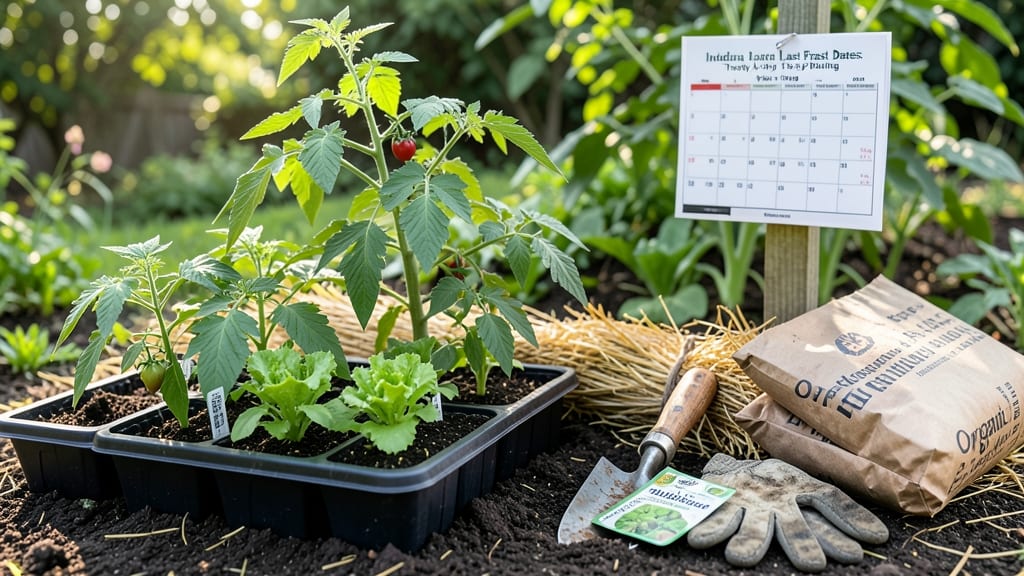
To plant a garden in Indiana, timing is everything—spring and fall windows are your best bets, with frost dates shifting from mid-April in the north to late March in the south.
Indiana’s unpredictable frost dates can turn a gardener’s dream into a nightmare—unless you know the exact windows for planting.
One late frost and your cool-season crops like spinach or peas can bolt before you even harvest, while warm-season plants like tomatoes need to wait until the soil warms to 60°F.
This guide breaks down Indiana’s USDA Zones 5b-6b, from early-spring plantings (think peas and lettuce) to late-summer/fall harvests (kale, garlic, and broccoli). We’ll cover frost-free days, soil prep, and how to adjust for northern vs. southern Indiana microclimates.
Ready to maximize your yields? You’ll learn the ideal planting months, how to read frost forecasts, and even a few tricks for beating Indiana’s unpredictable weather—so your garden thrives, not just survives.
Indiana’s frost dates and planting zones: key timelines for success
Indiana’s USDA Plant Hardiness Zones 5b-6b create a unique gardening challenge, where late spring frosts and early fall freezes can derail even the most careful plans. Understanding the average last frost date (typically mid-April) and first frost date (usually mid-October) is your first step to avoiding frost damage.
These dates vary by 1-2 weeks between northern Indiana (Zone 5b) and southern Indiana (Zone 6b), so let’s break it down by region.
For precise planning, I always check the Indiana State Climate Office for real-time frost data. Their records show that northern Indiana (e.g., Fort Wayne, Gary) often experiences 2-3 weeks later last frosts than southern Indiana (e.g., Louisville, Evansville).
This regional shift means gardeners in Zone 6b can start planting tomatoes and peppers 10-14 days earlier than those in Zone 5b.
Microclimates add another layer of complexity. A south-facing slope or urban heat island can create pockets where spring arrives 1-2 weeks earlier than the official frost date. Conversely, low-lying areas or water bodies often hold frost longer.
I’ve seen radishes thrive in my south-facing raised bed by early April, while the same variety in a nearby shady spot didn’t germinate until mid-May.
To extend your growing season, I rely on row covers and cold frames to push cool-season crops like spinach and peas 2-3 weeks earlier.
For warm-season plants such as tomatoes and peppers, I wait until the soil temperature consistently reaches 60°F—usually 2 weeks after the average last frost date. A soil thermometer is my secret weapon for nailing this timing.
For fall planting, I aim to get cool-season crops like kale and carrots in the ground by mid-August in northern Indiana and late August in southern Indiana.
This gives them 60-75 days of growth before the first frost. I’ve had garlic overwinter successfully when planted by October 1, even in Zone 5b.
Don’t forget about perennials and shrubs, which thrive when planted in early spring or fall. In Indiana, spring planting (April) gives roots time to establish before summer heat, while fall planting (September-October) allows roots to grow before winter dormancy.
I’ve found that daylilies and coneflowers handle Indiana’s climate beautifully when planted in these windows.
Pro tip: Bookmark the Purdue Extension’s Planting Calendar for real-time updates. Their frost probability maps adjust yearly based on local weather patterns. For example, in 2023, northern Indiana saw its last frost on May 5, delaying tomato planting by 2 weeks for many gardeners.
Microclimates aren’t just about frost—they also affect heat tolerance. A
Best months to plant common vegetables in Indiana: a seasonal guide
Indiana’s frost-free growing season typically spans from mid-April to mid-October, but the exact timing for planting varies by crop. Cool-season vegetables like lettuce and peas thrive in early spring, while tomatoes and peppers need warmer soil temperatures. Understanding these windows ensures your garden avoids frost damage and maximizes harvests.
For warm-season crops, wait until soil temperatures reach at least 60°F—usually late April to early May in most of Indiana. Cold-hardy greens can handle earlier planting, even with light frosts.
Row covers are your best friend for extending both spring and fall seasons by 2-4 weeks on either end.
🌱 Indiana Planting Calendar by Month
- March: Start cool-season crops like spinach, peas, and lettuce under row covers. Soil temps should be 40-50°F.
- April: Plant potatoes, onions, and radishes as soon as soil is workable. Tomatoes and peppers can start indoors.
- May: Transplant tomatoes, peppers, and eggplants after last frost (usually mid-May). Direct-sow beans, corn, and squash.
- June: Succession plant lettuce, carrots, and beets for fall harvest. Cucumbers and melons thrive in heat.
- July: Plant fall garlic and broccoli. Use row covers for late-season tomatoes to extend harvest.
- August: Direct-sow kale, spinach, and turnips for winter harvests. Harvest warm-season crops before first frost.
⏰ Pro Tip: Use the 30-day rule—plant crops that need 30+ frost-free days no later than July 1st for fall harvests.
Indiana’s northern regions (like Gary) may have 2-3 weeks later frost dates than southern areas (like Evansville). Check the Indiana State Climate Office for your specific last frost date—it’s the key to avoiding frost damage to tender seedlings.
For fall planting, focus on cold-hardy crops like kale, Brussels sprouts, and garlic. These can handle light frosts and even taste sweeter after exposure. Row covers are invaluable here, protecting plants until the first hard frost (usually mid-October).
Don’t forget succession planting! By staggering lettuce, beans, and carrots every 2-3 weeks in spring and summer, you’ll ensure a continuous harvest instead of one big glut. It’s the secret to a productive garden all season long.
With these month-by-month guidelines, you’ll turn Indiana’s unpredictable climate into a gardener’s advantage. Happy planting—and may your harvests be bountiful! 🌿