
Picking
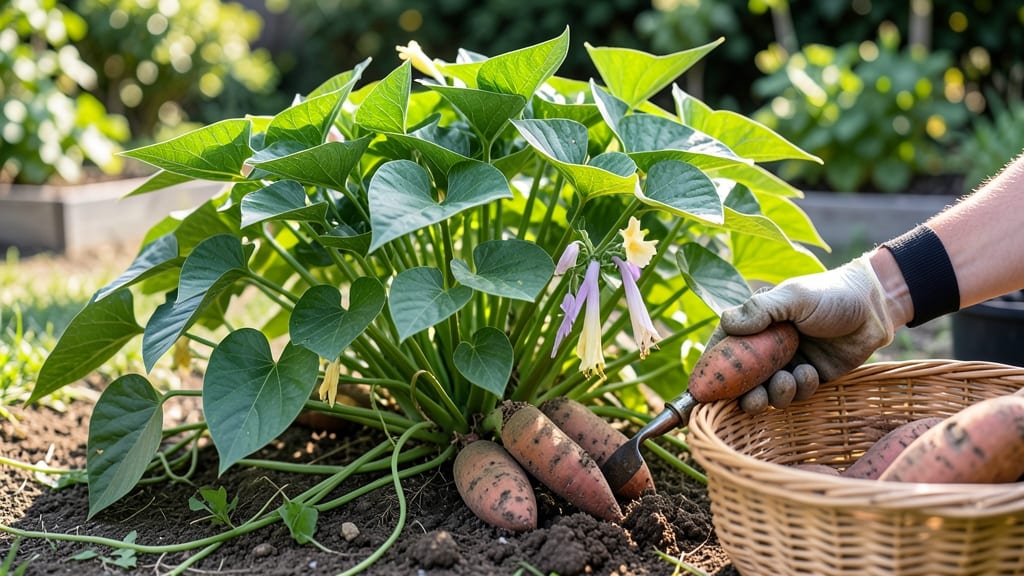
Knowing when to pick sweet potatoes from the garden means the difference between tender, flavorful tubers and woody, bland ones 🍠 — and the key is knowing when the vines start to die back.
Sweet potatoes left too long in the ground turn tough and lose their sweetness, while harvesting too early means small, underdeveloped tubers. I’ve dug up batches that were ready one week and still green the next, and the difference in taste? Night and day.
In this guide, you’ll learn the skin slip test, vine dieback signs, and how to adjust for your region—because frost sensitivity means timing can shift from October to November depending on where you garden.
By the end, you’ll know exactly when to pull those golden tubers for the sweetest harvest, plus how to store them so they stay fresh through winter.
How to use the skin slip test for perfect sweet potato harvest timing
The skin slip test is the most reliable way to determine when your sweet potatoes are ready for harvest. Unlike guessing based on days after planting, this hands-on method checks tuber maturity by examining the skin's resistance to slipping.
When done correctly, it ensures you harvest at peak sweetness and texture—no woody surprises!
Sweet potatoes mature underground, and their skin color shifts from smooth to slightly rough as they ripen. A green vine means tubers are still growing, while yellowing leaves signal it's time to test.
The skin slip test combines these visual cues with physical pressure to give you a precise harvest window.
Here's how to perform the test properly: grab a handful of vine leaves near the base of the plant and gently tug upward. If the vine slips easily from the stem, the tubers are still growing.
But if the vine resists slightly and feels tougher, it's time to dig. This resistance indicates the skin has thickened, a key sign of maturity.
- Step 1: Choose a sunny morning after light watering to test. Wet soil makes the test inaccurate.
- Step 2: Locate the main vine near the plant's base. Gently grasp a 6-inch section of vine between your thumb and forefinger.
- Step 3: Apply firm pressure and attempt to slip the vine from the stem. If it resists and feels slightly stiff, the tuber is mature.
- Step 4: Check the skin color where the vine meets the soil. A dull, rough texture (not shiny) confirms readiness.
- Step 5: For extra confirmation, gently scratch the skin with your fingernail. If it doesn't puncture easily, the tuber is harvest-ready.
The skin color is another critical clue. Immature sweet potatoes have a smooth, shiny skin that's easy to puncture with a fingernail. Mature tubers develop a dull, slightly rough texture—this is your cue to harvest soon.
A deep orange or reddish hue under the skin also signals sweetness has peaked.
Regional differences matter! In warmer climates (like USDA Zone 9+), sweet potatoes may mature earlier due to longer growing seasons. Conversely, in cooler zones (like Zone 6), vines may yellow sooner, but the skin slip test remains accurate. Always prioritize the test over calendar dates.
If you harvest too early, your tubers will be small and watery, lacking the rich flavor and texture you crave. Waiting too long risks woody, fibrous tubers that store poorly. The skin slip test bridges this gap by focusing on physical maturity rather than guesswork.
For container-grown sweet potatoes, the test works the same way, but check tubers more frequently since they mature faster in pots. If the vine slips easily even when leaves yellow, the tubers may have outgrown their container—time to harvest or repot!
After confirming maturity, harvest on a dry, sunny day to let tubers dry slightly before storage. Cure them in a warm (80°F), humid space for 10 days to develop flavor and improve shelf life.
The skin slip test isn't just about timing—it's your ticket to homegrown sweet potatoes that taste like a gourmet harvest.
Remember: the skin slip test is your secret weapon against guesswork. Combine it with vine dieback and leaf color changes for foolproof harvest timing every season. Happy digging!
Vine dieback and other signs your sweet potatoes are ready to harvest
When your sweet potato vines start showing signs of yellowing and dieback, it’s nature’s signal that the tubers below are reaching peak maturity. This process typically begins 8-10 weeks after flowering, but the exact timing depends on your climate and variety.
For example, Beauregard sweet potatoes often show dieback around 90-100 days, while Georgia Jet may take closer to 120 days.
Beyond vine dieback, watch for leaf color changes—healthy green leaves gradually turn yellow or orange as nutrients shift to the tubers. This is especially noticeable in morning sunlight, where the color shift becomes more pronounced.
Additionally, the leaves may curl or wilt slightly, signaling the plant is redirecting energy underground.
Another key indicator is tuber size and firmness. Mature sweet potatoes typically reach 4-6 inches long, though some heirloom varieties can grow larger. Gently brush away soil from a few vines to check—if the tubers feel firm and dense (not soft or spongy), they’re likely ready.
Pair this with the skin slip test for absolute certainty.
When to Pick Sweet Potatoes: Key Indicators
✅ Do Pick When...
- Vines yellow and die back
- Leaves wilt or drop
- Tubers are 4-6" and firm
- Skin slips easily (test)
❌ Don’t Pick If...
- Vines stay green and growing
- Tubers are small (<3 inches)
- Skin is smooth and soft
- Frost threatens (harvest immediately)
Combine these signs with the skin slip test for foolproof timing!
For regional adjustments, note that sweet potatoes in warmer climates (like Florida or California) may show dieback earlier, while those in cooler zones (like Zone 5) might need extra weeks.
If a frost warning appears before your vines yellow, harvest immediately—frozen tubers become inedible. Always prioritize the skin slip test over vine color alone for accuracy.
One final tip: Harvest gradually if you’re unsure. Dig up a few tubers to test for size and sweetness, then leave the rest to mature. This two-step approach minimizes risk while maximizing yield.
Keep a garden journal to track vine dieback timing—it’ll help you refine your harvest schedule for next year.
Remember, patience pays off with sweet potatoes. Rushing the harvest means small, watery tubers, while waiting too long results in woody, tough roots. Balance these secondary signs with the skin slip test, and you’ll nail the perfect harvest window every time. Happy digging!