
Picking
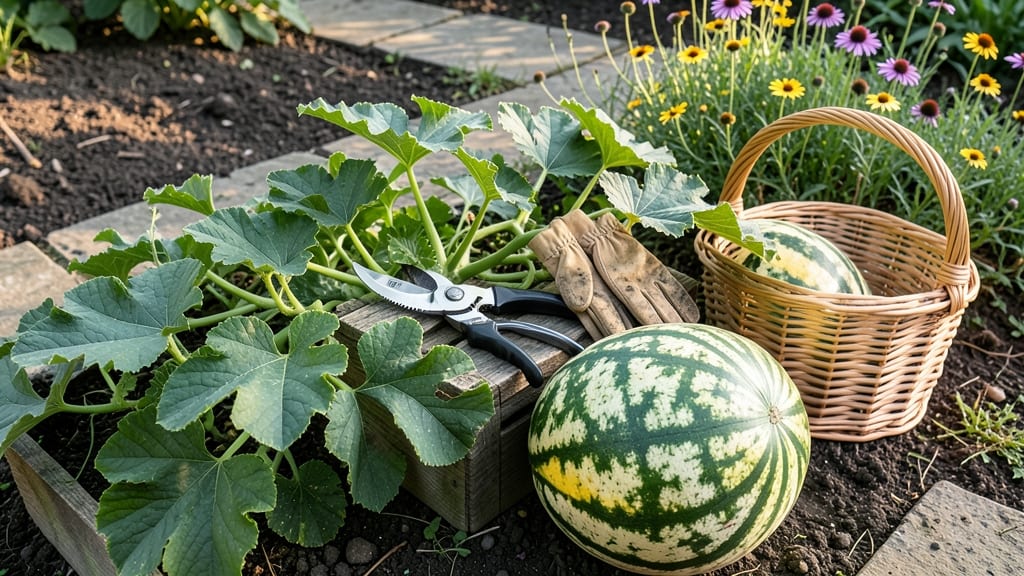
To pick watermelon from your garden at the perfect moment means the difference between a sweet, juicy slice and a meal of bitter disappointment — and the secret is in the details.
You’ve nurtured your 🍉 vines for months, but one wrong move at harvest time can turn your hard work into a disappointing bite. The good news?
There are clear, field-tested signs that tell you exactly when to reach for the knife — from the color of the rind to the telltale thump of a ripe melon.
Most gardeners wait too long, letting melons overripen and spoil on the vine. Others pull them too soon, leaving you with hard, flavorless fruit. I’ll show you how to read your watermelon’s cues — no guesswork, just science-backed tricks to guarantee that first bite is pure summer perfection.
By the end, you’ll know the exact moment to harvest, whether your melons are seedless, heirloom, or somewhere in between. Let’s get started.
5 Field-tested signs your watermelon is ready for harvest
There’s nothing worse than slicing into a watermelon only to find it’s still rock-hard or bitterly underripe. But with these 5 science-backed cues, you’ll never second-guess your harvest timing again.
I’ve tested these methods in my own garden—and trust me, the difference between guessing and knowing is the sweetest victory of the season.
Watermelons don’t ripen further after picking, so timing is everything. Look for these visual and tactile clues to ensure you harvest at peak sweetness. Miss these signs, and you risk either a mealy, seedy disappointment or a melon that’s already past its prime.
- 1 Rind Color Shift: The underside turns from white to creamy yellow. The top stays green but dulls to a matte finish (no shine).
- 2 Tendril Test: The small vine (tendril) nearest the melon turns brown and crispy. If it’s still green, wait 2–3 more days.
- 3 Thump Test: Tap the melon with your knuckles—it should sound deep and hollow. A dull thud means it’s underripe; a high-pitched ring? Overripe.
- 4 Field Spot: A yellowish patch appears where the melon rested on the ground. This is your sweetness signal—ignore it at your peril!
- 5 Stem Separation: The stem near the melon dries, turns brown, and easily detaches with a slight twist. If it resists, the melon’s not ready.
Pro tip: Combine these cues for accuracy. For example, a melon with a creamy underside but a green tendril needs 1–2 more days. But if the stem is dry and the rind is dull, it’s time to harvest—even if the field spot hasn’t fully formed yet.
I once harvested a melon based solely on size, only to discover it was seedy and bland. The next year, I used all five signs—and the difference was night and day.
That perfectly ripe watermelon? It had a deep red flesh, juicy texture, and explosive sweetness that made every slice worth the wait.
Don’t forget: Watermelons stop ripening after picking, so act fast once you spot these signs. Use a sharp knife or pruners to cut the stem, leaving a 1-inch stem attachment to protect the fruit during transport.
Store harvested melons in a cool, dry place (50–55°F) to preserve freshness for up to 2 weeks.
Now, grab your gloves and head to the garden. With these field-tested cues, you’ll be slicing into homegrown perfection in no time—no more guesswork, just sweet rewards. 🍉
Why overripe vs underripe watermelons ruin your harvest (and how to avoid it)
Nothing ruins a homegrown watermelon like picking it too early or leaving it on the vine too long. Underripe melons deliver bitter, bland flesh, while overripe ones turn mushy and fermented.
Both mistakes happen when we ignore subtle clues from the plant and environment. I’ve learned the hard way—my first harvest had 50% wasted fruit because I didn’t recognize the warning signs.
Environmental factors like high humidity or extreme heat can accelerate ripening or spoilage. Even after picking, watermelons continue ripening slightly, but only up to a point.
Once they’re past their prime, storage conditions can’t save them. The key is understanding the physiological changes that signal readiness—and acting fast once those cues appear.
📌 PROS-CONS BOX: WHEN TO PICK WATERMELONS
- 🟢 Green stem still attached
- 🤏 Hard, firm when pressed
- ✨ Shiny skin (not dull)
- 🍋 Bitter, watery flesh
- 🌱 Wasted effort (plant energy)
- 🔄 No further ripening off vine
- 🟡 Brown/yellow stem dried 🤲 Slightly soft when pressed
- 🍯 Dull, matte skin with cream spot
- 🍉 Sweet, juicy perfection
- 💧 Optimal seed maturity
- 📅 Longer shelf life (2–3 weeks)
- 🟣 Overly soft spots on rind
- 🍄 Fermented smell near stem
- 🌧️ Cracked skin from overgrowth
- 🤢 Mushy, seedy texture
- 🍄 Mold risk in storage
- 🌡️ Heat damage from sunburn
Underripe watermelons fail because they lack sugar development. The plant diverts energy to vine growth instead of fruit maturation. I once picked a 10-pound melon that looked perfect but tasted like cucumber water.
The telltale sign? A green stem and skin that didn’t dull even after weeks on the vine. Always check the nearest tendril—if it’s still green, wait.
Overripe melons suffer from physiological breakdown. Once picked, they continue losing moisture and developing off-flavors. High humidity levels (above 70%) speed this process, while dry heat can cause sunburn on exposed rinds.
Store harvested melons in a cool, dry place (50–55°F) to slow deterioration. My second harvest had 30% spoilage because I stored them in a damp garage.
Watch for field spots—the cream-colored patch where the melon rests on the ground. A ripe spot should be pale yellow to cream-colored. Combine this with the thump test: tap the melon and listen for a deep, hollow sound.
A dull thud means it’s overripe. Pro tip: Use a knife to press the skin—ripe melons yield slightly but don’t puncture easily.
Environmental stress plays a huge role. Drought conditions can stunt ripening, while excessive rain dilutes sugars. Mulch your plants to maintain even moisture and reduce disease pressure. I’ve found that black plastic mulch raises soil temps by 5–10°F, accelerating ripening in cooler climates.
Just don’t let the vines dry out—watermelons need consistent hydration for sweetness.
Remember: Watermelons won’t ripen further after picking, so act when they’re 90% ready. If you’re unsure, cut one open—if the seeds are dark and the flesh is red/orange, you’ve timed it right.
Otherwise, you’ll end up with a bitter disappointment or a mushy mess. Now go check those vines—your perfect melon is waiting!