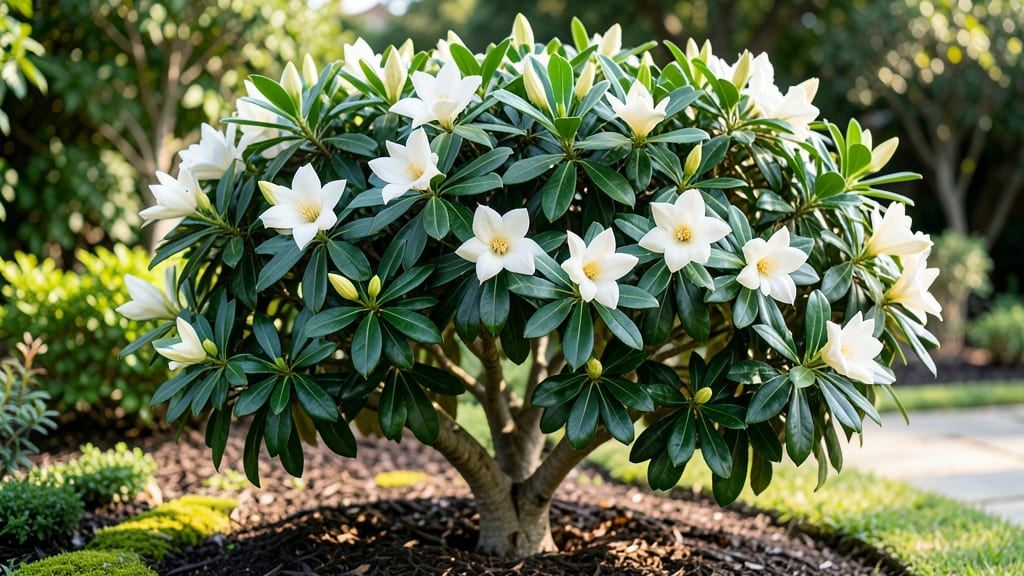
A gardenia tree’s size can range from a compact 3-foot dwarf to a towering 15-foot shrub, depending on the variety and care you provide.
If you're dreaming of fragrant white blooms but wondering whether a gardenia tree will tower over your backyard or stay compact enough for containers, you’re in the right place.
The difference between a dwarf 'Radicans' and a standard 'Kleio' isn’t just height—it’s also how much pruning, sunlight, and space they need to thrive.
Most gardenias grow at a moderate pace, adding 1-2 feet per year in ideal conditions, but their final size hinges on pruning habits and soil quality.
In USDA Zone 6a, where spring planting is key, choosing the right variety and spacing can mean the difference between a manageable shrub and an unruly giant.
Below, I break down how to pick the perfect gardenia for your space, control its growth with smart pruning, and avoid common mistakes that lead to overgrown—or stunted—plants.
Dwarf
3-5 ft
Container friendly
Semi-Dwarf
6-10 ft
Most popular
Standard
10-15 ft
Full orchard size
Gardenia tree size by variety: dwarf to giant growth habits
Choosing the right gardenia variety is key to fitting its mature size into your landscape. Some varieties stay under 3 feet tall, perfect for containers or small gardens, while others reach 20 feet—ideal for privacy screens or large backyards.
The growth rate also varies, with some growing just 6 inches per year and others shooting up 12+ inches annually. Let’s explore the most popular varieties and their space requirements.
Before selecting, consider your sunlight conditions and pruning goals. Gardenias thrive in partial shade but need protection from harsh afternoon sun. Dwarf varieties like 'Radicans' can handle container life with proper care, while larger types need 6-10 feet of spacing to avoid crowding.
I’ll cover spacing needs, growth habits, and how to control size through pruning.
Here’s a quick comparison of 8 top gardenia varieties, their mature heights, and ideal spacing:
| Variety |
Mature Height |
Spread |
Growth Rate |
Ideal Spacing |
Best For |
| Gardenia jasminoides 'Radicans' |
2–3 ft |
3–4 ft |
6–12 in/year |
3–4 ft apart |
Containers, small gardens |
| Gardenia jasminoides 'Kleio' |
3–5 ft |
4–5 ft |
8–12 in/year |
4–5 ft apart |
Borders, patio edges |
| Gardenia jasminoides 'Fortuniana' |
4–6 ft |
5–6 ft |
10–14 in/year |
5–6 ft apart |
Foundation plantings |
| Gardenia augusta 'Veitchii' |
6–8 ft |
6–8 ft |
12–18 in/year |
6–8 ft apart |
Privacy screens |
| Gardenia jasminoides 'Mystery' |
8–10 ft |
8–10 ft |
14–20 in/year |
8–10 ft apart |
Large landscapes |
| Gardenia jasminoides 'Kleim's Hardy' |
10–12 ft |
10–12 ft |
16–24 in/year |
10–12 ft apart |
Cold-hardy zones |
| Gardenia jasminoides 'Radicans Compacta' |
1.5–2.5 ft |
2–3 ft |
4–8 in/year |
2–3
How to control gardenia tree size: pruning, training & container tips
Keeping your gardenia tree at your desired size requires a mix of smart pruning techniques, strategic training methods, and container choices.
Since gardenias naturally grow between 3 to 20 feet, you’ll need to intervene early to maintain compact growth—especially if you’re working with limited space or dwarf varieties. The key is understanding when to prune, how to shape your plant, and which containers will keep roots contained without restricting growth.
For container gardenias, dwarf varieties like 'Radicans' thrive in 15- to 20-gallon pots, while standard types need 25+ gallons to prevent root-bound stress. In-ground plants benefit from annual pruning after flowering to encourage bushier growth.
Whether you’re trimming leggy branches or training a young specimen, timing and technique make all the difference in controlling size without sacrificing those fragrant blooms.
Step-by-Step Guide to Managing Gardenia Size
-
Step 1: Choose the Right Variety
Select dwarf gardenias (3–5 ft) for containers or small yards, or semi-dwarf types (6–10 ft) for ground planting. Avoid standard varieties unless you have ample space.
-
Step 2: Prune After Flowering
Trim 1/3 of new growth in late spring or early summer to encourage denser branching. Use clean, sharp pruners to avoid tearing bark.
-
Step 3: Train Young Plants
Guide stems along a trellis or stake to shape growth early. For multi-stemmed bushes, remove weak or crossing branches to improve airflow.
-
Step 4: Container Care
Repot every 2–3 years to 1–2 sizes up in container diameter. Use well-draining soil with perlite or sand to prevent root rot.
-
Step 5: Adjust Seasonal Care
Reduce watering in winter to slow growth. Fertilize lightly in spring and summer with high-phosphorus feed (5-10-10) to promote blooms.
If your gardenia starts to outgrow its space, don’t panic—radical pruning in early spring can reset growth. Cut back overly long branches by half to stimulate new shoots. For container plants, root pruning (trimming roots when repotting) also helps control size by preventing root-bound stress.
Just remember: less pruning = taller growth, while aggressive pruning = bushier shape.
For compact gardenias, consider topiary training to shape into hedges or small trees. Use soft pruning shears for curved edges and trim just above a leaf node to encourage regrowth. This method works best with dwarf varieties like 'Kleio' or 'Fortuniana,' which naturally stay smaller with proper care.
One common mistake is pruning too late in the season, which can delay spring blooms. Always prune after flowering (late spring to early summer) to allow time for new growth before winter dormancy.
Pair this with regular deadheading—removing spent blooms—to redirect energy into new flowers instead of seed production.
With these techniques, you’ll keep your gardenia healthy, fragrant, and perfectly sized—whether it’s a container centerpiece or a backyard focal point. 🌿✂️🪴
★★★★★4.8(13 reviews)
|